
A completed installation is only as good as the process used to produce it. In a workshop environment where vehicles are fitted with complex electrical systems, networked safety technologies, and precision-mounted mechanical components, the difference between a reliable installation and one that fails in the field often comes down to whether quality was checked once at the end, or built in throughout. Quality assurance installation practice is not a final gate. It is a structured system of checkpoints, documentation, and verification steps that run from the moment a vehicle arrives in the workshop to the moment it is handed back to the client.
EIG’s workshop installation process applies a staged quality assurance framework to every vehicle that passes through the Perth facility. This article explains what that framework involves, why each stage matters, and how systematic installation quality checks protect both the installed equipment and the people who rely on it.
What Quality Assurance Means in a Workshop Installation Context
Quality assurance in a workshop installation context refers to the planned, systematic activities that confirm installation work has been carried out to the required standard at each stage of the process. It is distinct from quality control, which typically refers to inspection at a single point, usually the end of the process.
The difference matters. A quality control check at the end of an installation can identify defects, but by the time they are found, earlier work may need to be undone to correct them. A quality assurance installation framework applies checks throughout the process, at defined hold points, so that each stage is confirmed before the next begins. Errors are caught where they occur, not after they have been built over.
In a vehicle installation context, this staged approach is particularly valuable because of the interdependency between installation phases. Electrical work depends on mechanical mounting being correct. Systems commissioning depends on wiring being correctly terminated. If a problem exists in an earlier phase and is not caught, it affects every phase that follows.
Why Installation Quality Checks Matter for Mining and Heavy Industry
The operational context for most of EIG’s workshop output is mining and heavy industry, where the consequences of installation failure extend well beyond inconvenience. A system that fails on a mine site can result in vehicle downtime, production delays, safety incidents, or a failed compliance inspection at the mine gate.
Mine operators impose strict vehicle entry requirements. Vehicles must meet documented standards before they are permitted on site, and installations that do not comply are identified and rejected. Returning a vehicle for rectification after a failed site inspection is costly in both time and money, and it reflects on the operator who specified the work.
Beyond site entry compliance, installation quality checks matter because heavy vehicles operate under sustained stress. Vibration, heat cycling, dust ingress, and load variation are continuous in mining and transport environments. An installation that appears functional in the workshop but has not been properly verified may degrade rapidly under field conditions. Connections that were not correctly torqued work loose. Wiring that was not properly protected chafes through. Components that were not correctly aligned introduce fatigue loads at mounting points.
Systematic installation quality checks at the workshop stage are the most cost-effective way to prevent these outcomes. Rectification in the workshop is straightforward. Rectification in the field, or after a failure, is expensive, disruptive, and sometimes dangerous.
EIG’s QA Framework: A Staged Approach
EIG’s quality assurance installation framework is built around a hold-point system. A hold point is a defined stage in the installation process at which work stops for a formal check before proceeding. The checks at each hold point are documented, signed off by a qualified technician, and recorded in the job file.
The hold-point system ensures that quality is not left to the discretion of individual technicians on any given day. The checks are defined, the criteria are specified, and the outcomes are recorded. This structure produces consistent results across different technicians, different vehicles, and different installation programmes.
EIG applies hold points at three primary stages: pre-installation, in-process, and post-installation. Each stage has its own set of installation quality checks appropriate to what has been completed and what is about to begin.
Pre-Installation Quality Checks
Pre-installation quality checks are the first layer of EIG’s quality assurance installation system. Before any work begins on a vehicle, a series of checks confirms that the conditions for a quality installation are in place.
Component verification confirms that all parts, harnesses, modules, and hardware required for the installation are present, correctly identified, and free from damage. Any discrepancies between the bill of materials and what has been received are resolved before work begins. Fitting a substitute or incorrect component is a preventable failure; component verification eliminates this risk at the source.
Vehicle intake inspection confirms the condition of the vehicle against a pre-installation checklist. The vehicle’s existing systems, mounting surfaces, electrical architecture, and any prior modifications are assessed and documented. If the vehicle does not match the specification used to develop the installation design, this is flagged and resolved before installation proceeds.
Drawing confirmation verifies that the engineered drawings and wiring schematics being used for the installation are the current, approved versions. Using an outdated drawing is a common source of installation non-conformance in workshops that do not have a controlled document management process. EIG’s pre-installation checks include a drawing version check as a standard item.
In-Process Quality Checks
In-process installation quality checks are applied during the installation itself, at defined points in the work sequence. These checks do not wait for the installation to be complete; they confirm quality at the stage where it is being created.
For electrical work, in-process checks cover wiring harness routing against the loom drawing, cable protection at known abrasion and heat risk points, and connector termination before harnesses are secured. Confirming termination quality before loom clips are applied means that any termination issues can be corrected without undressing the harness.
For mechanical work, in-process checks cover bracket alignment and fastener engagement before final torque is applied. Confirming that components are correctly positioned and that fasteners are correctly engaged allows adjustments to be made before the installation is committed. Post-torque adjustments to misaligned brackets often require undoing work; in-process checks prevent this.
For systems integration work, in-process checks confirm that communication is established between installed modules before final harness routing and enclosure closure. Discovering a communication fault after the wiring has been dressed and the enclosure closed adds significant rework time. In-process checks at the systems level catch these issues early.
The quality assurance installation record is updated at each in-process hold point, creating a contemporaneous log of what was checked and when.
Post-Installation Quality Checks and Functional Testing
Post-installation installation quality checks are the final verification layer before a vehicle is released from the workshop. These checks confirm that the completed installation meets all specified requirements and that all systems function correctly.
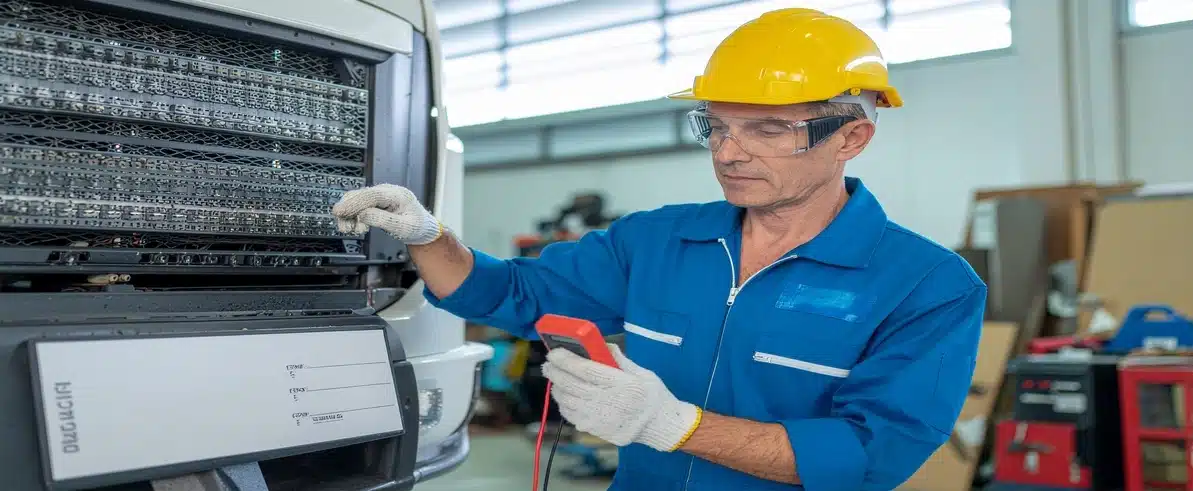
Electrical testing at the post-installation stage includes continuity testing on all installed wiring circuits, insulation resistance testing to confirm cable and connection integrity, and functional testing of all switches, sensors, and operator interfaces. Test results are recorded against the wiring schematic and form part of the handover documentation.
Torque verification is performed on all critical mechanical fasteners as a post-installation check. Fasteners are checked with calibrated torque wrenches and results are recorded. Any fasteners found outside specification are re-torqued and re-checked.
System commissioning is completed for all networked technologies installed on the vehicle. Commissioning confirms that system parameters are correctly configured, that communication between modules is established and stable, and that the system performs as specified under normal operating conditions. Commissioning records are completed and included in the handover package.
The post-installation quality assurance check is signed off by a senior technician or workshop supervisor before the vehicle is released. This sign-off confirms that all hold points have been completed, all tests have been passed, and all documentation is in order.
Documentation and Traceability
Documentation is not the administrative burden at the end of a quality assurance installation programme. It is the evidence that the programme was actually followed, and it is what makes the installation traceable for the life of the vehicle.
EIG’s workshop documentation system captures the outcomes of every hold point, every test, and every commissioning activity for each vehicle. Job cards record the installation scope, the technicians involved, and the dates on which work was completed. Test records capture the actual measurements and outcomes from electrical and mechanical testing. Photographs document the as-installed condition of the vehicle at key stages.
This documentation serves multiple purposes. It provides the client with objective evidence that the installation was completed to specification. It supports ongoing maintenance by recording the exact configuration of installed systems. It provides a reference point for future modifications or upgrades. And it supports site compliance processes by providing the documentation that mine operators and safety auditors require.
For clients managing fleets across multiple sites, EIG’s facility-based installations documentation output can be integrated into fleet management systems, providing a consistent, accessible record of every vehicle’s installation history.
How Quality Assurance Installation Practices Protect Your Assets
The value of a rigorous quality assurance installation programme is most visible in what does not happen. Vehicles do not fail compliance inspections at the mine gate. Systems do not develop faults in the field that trace back to installation errors. Warranty claims do not arise from workmanship issues. Unplanned maintenance events attributable to installation quality do not disrupt production schedules.
For fleet operators and procurement managers, this translates directly into reduced total cost of ownership for installed systems. The upfront investment in a properly structured installation quality checks programme pays back many times over through avoided downtime, avoided rectification, and extended system service life.
For site supervisors and safety managers, it means vehicles arrive on site meeting the required standards, with the documentation to prove it. The compliance process becomes straightforward rather than adversarial.
EIG applies the same quality assurance framework to every vehicle that passes through the workshop, whether it is a single unit or part of a large fleet programme. The standard does not vary with programme size.
For clients whose vehicles are not able to come to the workshop, EIG’s field installation services apply the same quality assurance principles in remote and on-site environments.
Conclusion
Quality assurance in a workshop installation is not a box-ticking exercise. It is a structured programme of checks, documentation, and verification that runs from the moment a vehicle arrives to the moment it is handed back. The hold-point system, the pre-, in-process, and post-installation installation quality checks, and the traceability built into every job record are what separate a reliable installation from one that creates problems down the line.
For clients operating in mining and heavy industry, where the cost of installation failure is measured in downtime, compliance failures, and safety risk, EIG’s quality assurance installation framework provides the assurance that the work has been done correctly and that the evidence exists to prove it. Every vehicle that leaves EIG’s Perth workshop carries with it a complete documentation record, a verified installation, and the confidence that comes from a process that has been applied consistently and thoroughly from start to finish.
Quality installations start with a quality process. To discuss how Engineered Installations Group can apply its workshop quality assurance framework to your fleet, call +61 (08) 9419 7318 to speak with the team.



Leave A Comment