
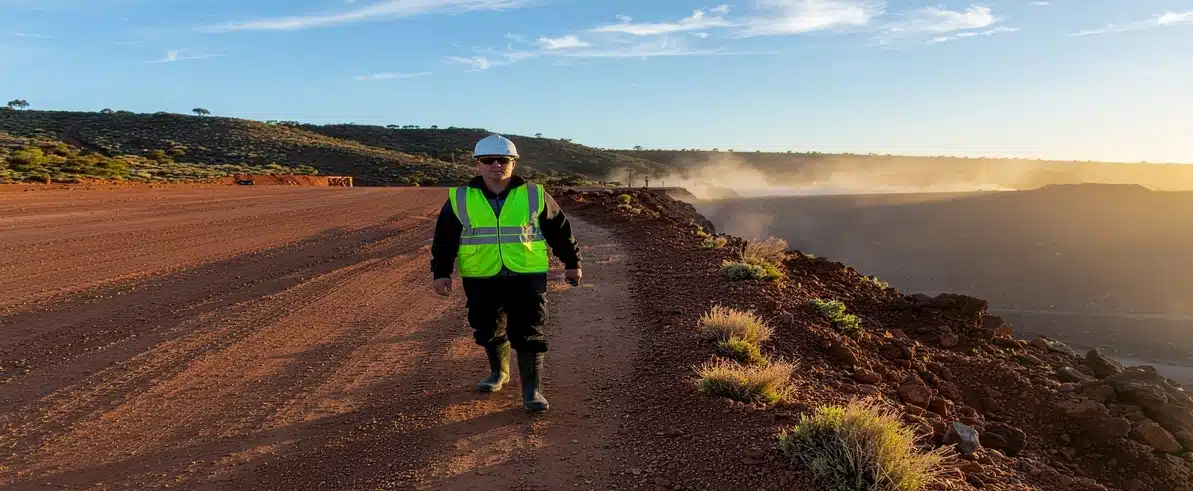
Not every vehicle that needs a professional installation can come to a workshop. In the mining and transport sectors, many of the vehicles and assets that require fitouts, system upgrades, or safety technology installations are stationed at remote sites hundreds or thousands of kilometres from the nearest facility. For these situations, the capability to deploy certified field technicians directly to site is not a supplementary service. It is a core requirement.
EIG maintains a field technician deployment capability that extends across Australia, supporting mining and transport clients at remote and regional locations in Western Australia, Queensland, and beyond. This article explains how that capability works, how remote site technicians are prepared and supported, and what clients can expect when EIG’s field team comes to site.
The Challenge of Remote Site Installations
Remote site installation work presents a fundamentally different set of challenges compared with workshop-based installations. The controlled environment, fixed tooling, and ready access to components and technical support that define the workshop setting are absent at a remote location. What replaces them is logistical discipline, thorough pre-mobilisation planning, and a technician team that is experienced enough to execute complex installation work without the infrastructure safety net that a workshop provides.
Geographic reach is the first challenge. Many of the sites where EIG’s field technicians australia-wide capability is most needed are in remote areas of the Pilbara, Goldfields, and Queensland mining regions. Getting technicians, tooling, and materials to these locations requires careful planning of travel, accommodation, and logistics ahead of the deployment.
Site access requirements add another layer of complexity. Mine sites and heavy transport depots have specific induction, certification, and PPE requirements for personnel entering the site. Field technicians must hold the appropriate certifications and complete site inductions before work can begin. Managing this process efficiently is part of EIG’s pre-mobilisation planning.
Working conditions at remote locations can be demanding. Heat, dust, and limited shelter are common. Work may need to be scheduled around operational constraints, shift changes, or site access windows. EIG’s remote site technicians are selected and prepared for these conditions, and the deployment planning process accounts for them from the outset.
EIG’s Field Technician Capability: Who Goes to Site
The technicians EIG deploys to remote mining and transport sites are not generalists who have been adapted for field work. They are qualified, experienced installation technicians whose certifications and practical experience are specifically relevant to the systems being installed.
Trade qualifications held by EIG’s field technician team include electrical trade certifications relevant to the vehicle electrical systems being installed. System-specific training covers the collision avoidance systems, fleet management technologies, and safety hardware that make up the majority of EIG’s field installation scope. Site safety certifications include the standard mining industry safety inductions and any site-specific requirements applicable to the client’s location.
For remote deployments, technician selection is matched to the scope of the work. A deployment involving complex electrical system integration requires technicians with the specific electrical qualifications and system experience to execute that scope without supervision from a workshop environment. EIG does not deploy generalist labour to specialist installation work; the field technicians australia-wide deployment model is built on matching capability to scope.
Preparing for a Remote Deployment
The quality of a remote site installation is largely determined before the first technician boards a flight. Pre-mobilisation planning is where the conditions for a successful field deployment are established, and where the risks that could disrupt on-site execution are identified and addressed.
Scope confirmation is the first step. The installation scope is reviewed against the engineered drawings and specifications to confirm that all design questions are resolved before mobilisation. Any outstanding design issues that cannot be resolved in the field are addressed at this stage, not discovered on site.
Tooling and equipment preparation confirms that all tools required for the installation are available, calibrated where relevant, and packaged for transport. For remote deployments, tooling must be self-contained. There is no tool store around the corner, and waiting for a replacement tool to be shipped to a remote site adds days to the programme.
Parts and materials staging confirms that all components, wiring harnesses, hardware, and consumables required for the installation are packed and dispatched ahead of the mobilisation. The bill of materials is checked against the installation scope, and any shortfalls are resolved before the technicians depart.
Site-specific requirements are incorporated into the deployment plan. This includes the site’s safety management system requirements, induction processes, access procedures, and any operational constraints that will affect when and where work can be performed. EIG’s logistics team coordinates with the client’s site contact to confirm these details before the field technicians depart.
Site Safety and Compliance in Remote Environments
Safety management on a remote mining or transport site is non-negotiable. EIG’s field technicians operate within the client’s site safety management system as a matter of standard practice, not as an optional accommodation.
Before work begins on any vehicle or system at a remote site, the field team completes the required site induction, obtains the necessary work permits, and confirms that all isolation and lockout/tagout (LOTO) procedures are in place. Vehicles are properly isolated before electrical work begins. Working at height, in confined spaces, or with heavy components is managed under appropriate risk controls.
PPE requirements are met as a baseline, with EIG’s field technicians carrying their own PPE appropriate to the work scope and supplementing it with any site-specific requirements communicated during the pre-mobilisation planning phase. Daily pre-start safety reviews are conducted at the beginning of each working day on site, covering the planned work, identified hazards, and relevant controls.
EIG’s on-site installation support model is built on the principle that safety performance in the field should be indistinguishable from safety performance in the workshop. The environment is different; the standard is not.
What Remote Site Technicians Do On-Site
EIG’s remote site technicians carry out the same categories of installation work in the field as the metro workshop team performs in Perth, adapted for the field environment and supported by the pre-mobilisation planning that makes field execution possible.
Vehicle fitouts at remote sites follow the same engineered drawings and job card documentation used in the workshop. Electrical installation work covers wiring harness installation, system module fitment, sensor and switch installation, and integration with the vehicle’s existing electrical architecture. Mechanical installation work covers bracket and mount fitment, component securing, and structural hardware installation. Systems integration and commissioning confirms that all installed technologies are functioning correctly before the field team signs off the vehicle.
For clients with large vehicle fleets at a single site, EIG’s field technicians can work concurrently across multiple vehicles, managing the installation programme as a coordinated workflow rather than a sequential series of individual jobs. This parallel approach reduces the total time required to complete a fleet installation programme at a remote site.
Quality assurance in the field follows the same hold-point structure applied in the workshop. Pre-installation checks confirm vehicle condition and scope alignment. In-process checks confirm installation quality at defined stages. Post-installation checks and functional testing confirm that the completed installation meets specification before the vehicle is returned to service.
Quality Assurance in the Field
Maintaining installation quality standards in a remote environment requires the same discipline as maintaining safety standards: the environment changes, but the standard does not. EIG’s field teams apply the same hold-point QA framework in the field as the workshop team applies in Perth.
Pre-installation inspection in the field documents vehicle condition and confirms scope alignment before work begins. In-process checks are applied at defined stages of the installation, confirming quality as the work progresses rather than waiting until the end. Post-installation functional testing and inspection verifies the completed installation before sign-off.
Field documentation is completed contemporaneously, with inspection records, test results, and commissioning data recorded on site and transmitted to EIG’s central documentation system. The quality record for a field installation is equivalent in structure and content to the record produced for a workshop installation, ensuring that the client receives the same documentation standard regardless of where the work was performed.
For clients who require electrical engineering solutions as part of their field installation scope, EIG’s engineering team provides remote support to field technicians during the execution phase, ensuring that any technical issues encountered on site can be resolved without delay.
Logistics and Mobilisation Planning
Logistics management is one of the defining differences between a well-executed remote deployment and a costly, disruptive one. EIG’s logistics process for field deployments is managed as a discrete workstream, separate from the technical installation planning, with its own checklist, timeline, and confirmation requirements.
Travel and accommodation arrangements are confirmed well in advance of the deployment date. For remote sites, accommodation options are limited and early booking is essential. Flight schedules, charter arrangements, or road travel plans are confirmed against the site access schedule to ensure technicians arrive at the time the work is planned to begin.
Parts and materials are dispatched to site or to a nominated staging point ahead of the technician mobilisation, with delivery confirmation required before travel proceeds. Arriving at a remote site to find that a critical component has not arrived is an avoidable outcome that proper logistics management prevents.
For extended deployments, consumables resupply is planned as part of the programme management process. Wiring consumables, fasteners, connectors, and protective materials are staged in sufficient quantity to complete the programme without interruption.
Communication and Reporting During Field Deployments
Client visibility during a remote deployment is important. Fleet operators and procurement managers need to know that the programme is progressing as planned, that any issues are being managed, and that the vehicles being worked on will be returned to service on schedule.
EIG’s field teams provide regular progress reporting to the client’s nominated contact throughout the deployment. Daily or weekly reporting, depending on programme duration, covers vehicles completed, vehicles in progress, any scope variations identified, and the schedule outlook for the remainder of the programme.
Issue escalation is managed promptly. Where a scope variation, a pre-existing vehicle condition, or an unexpected technical challenge is identified on site, the relevant information is communicated to the client and, where necessary, to EIG’s engineering team for resolution. Decisions that affect programme cost or schedule are not made unilaterally by the field team; they are escalated and resolved through the client communication process.
Field reporting integrates with EIG’s central documentation system, ensuring that all progress records, inspection findings, and commissioning data captured on site are incorporated into the final installation documentation package provided to the client at programme completion.
Conclusion
Deploying certified field technicians to remote mining and transport sites is a logistically complex, technically demanding capability that requires more than simply sending qualified people to a location. It requires pre-mobilisation planning that resolves scope, tooling, parts, and site requirements before departure. It requires a safety management approach that meets the standards of Australia’s most demanding mine sites. And it requires the same installation quality standards and documentation rigour that EIG applies in its Perth workshop.
EIG’s field technicians australia-wide deployment model is built on all of these foundations. For clients with vehicles and assets at remote locations that cannot come to the workshop, Engineered Installations Group provides the field capability to bring the installation to them, without compromising on quality, safety, or documentation.
To discuss a remote site deployment or to understand how EIG’s field technicians australia-wide capability applies to your operations, call +61 (08) 9419 7318 and speak with the field services team.



Leave A Comment