
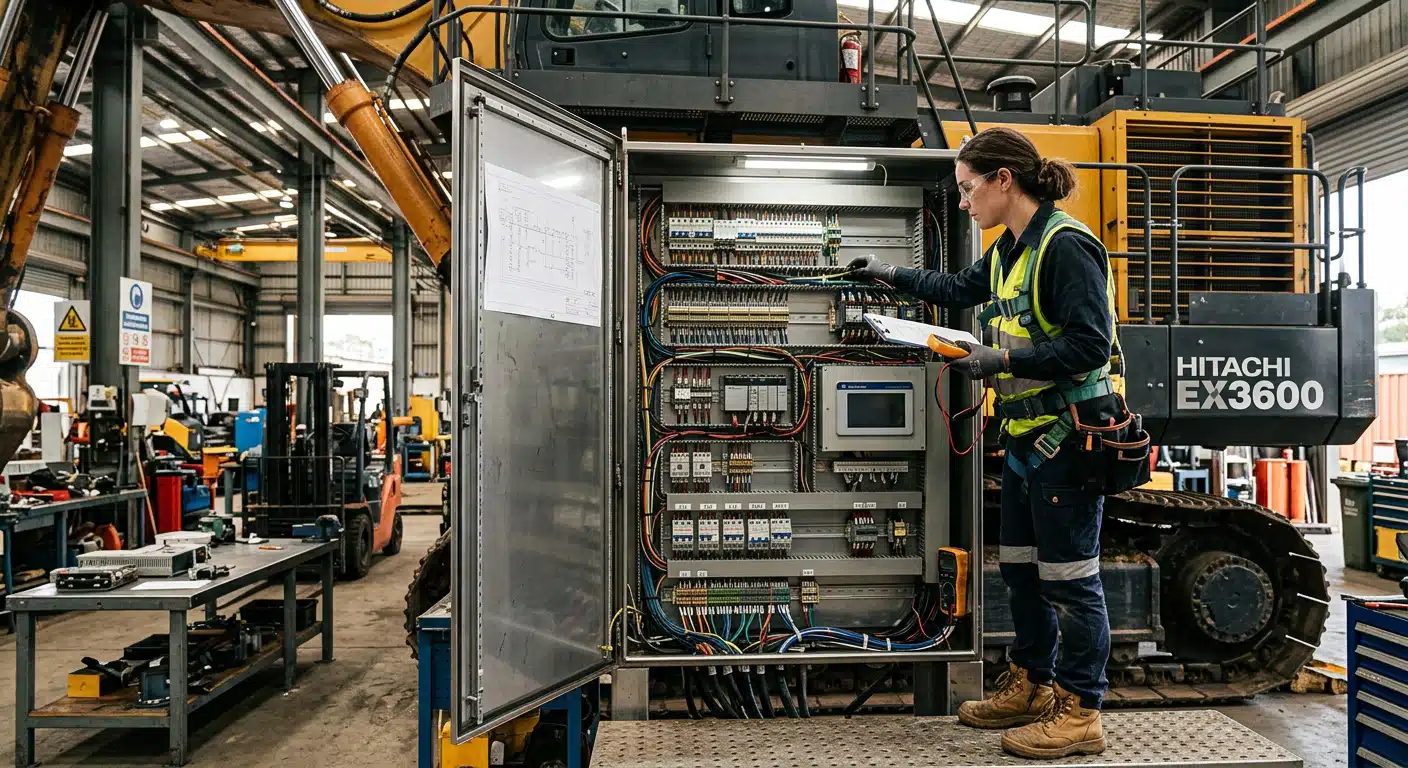
In practice, heavy equipment electrification is not only a battery or charger decision. It changes electrical architecture, control logic, thermal load, safety planning and service access.
Machines that once relied on simpler auxiliary circuits may need stronger integration. The architecture must support power, controls and field maintenance together.
Electrical Architecture Design Sets the Direction for Electrification
In practice, electrical architecture design gives an electrified machine a workable technical structure. It defines how power, controls, protection and communication systems connect.
Without that structure, electrification can become a group of separate upgrades. Each upgrade may work alone but create problems when combined.
Engineered Installations Group’s system design supports fully integrated solutions. That matters when heavy equipment electrification affects several machine systems at once.
A clash between the loom and the structure can be captured as an architecture fit scan before metal is cut.
Why Architecture Comes Before Component Selection
Component selection is easier after the architecture is known. Batteries, converters, harnesses, sensors and control modules all need defined roles.
A strong architecture also protects future flexibility. It can leave room for upgraded monitoring, new safety systems or different operating requirements.
For mining and transport assets, this planning can reduce rework during commissioning.
Heavy Equipment Electrification Needs Clear Load Mapping
Electrical schematics set the power and control map for electrical architecture design.
In practice, heavy equipment electrification introduces new load profiles. Energy storage, traction support, cooling, auxiliary equipment and safety systems may all compete for capacity.
Load mapping helps define cable sizes, protection devices and distribution points. It also helps identify thermal and voltage drop risks.
Engineered Installations Group’s electrical engineering solutions include electrical schematics and harness design. Those services support structured load planning for complex assets.
Control Systems Need Stable Inputs
Electrified machines often depend on clean signals and stable sensor data. A noisy or overloaded electrical layout can affect those functions.
Control modules should have clear power supply logic and protected communication paths. This is especially important where safety systems rely on consistent readings.
Good architecture separates high-energy circuits from sensitive control wiring wherever practical.
Mechanical Packaging Affects Electrical Decisions
The power and control layout is where structure and electrics meet, before the loom is cut.
Electrical architecture is not separate from the machine body. Cable routes, enclosure positions, cooling airflow and service access all depend on physical layout.
A design can fail if it ignores the real machine. Heavy equipment may have limited space around frames, trays, guards and hydraulic systems.
A mount that will see repeat shock is an architecture mount check before it is treated as ready.
3D services can support component design, scanning, processing and custom deliverables. That helps align electrical choices with the available space.
Battery and Power Electronics Need Protected Locations
Battery modules and power electronics need protection from impact, heat, dust and vibration. They also need access for inspection and service.
The best location is not always the easiest mounting point. It must suit weight distribution, cable routing and maintenance needs.
Poor packaging can create hard-to-reach faults that slow down field repair.
Validation Helps Reduce Electrification Risk
Electrified heavy equipment can place new stresses on frames, brackets and enclosures. Extra weight and different vibration behaviour need careful review.
Structural checks can support better design choices before parts are made. They can also help test whether mounting points suit real operating loads.
For heavy vehicle and industrial systems, Engineered Installations Group provides finite element analysis. This can support validation where electrical systems need strong structural protection.
If the question is structural load rather than the electrical map, that is an architecture load case.
Vibration and Heat Should Not Be Afterthoughts
Vibration can damage connectors, brackets and circuit boards over time. Heat can shorten component life and complicate cable routing.
Engineered Installations Group can draw that electrical layout from the Forrestdale or Paget workshop.
Architecture should include routing, mounting and cooling assumptions from the start. These decisions affect how the machine is serviced once it enters use.
If a system is only checked after installation, options become more limited.
Installation and Commissioning Must Follow the Architecture
A good design still needs disciplined installation. Field technicians must understand the architecture, isolation points, labels and commissioning checks.
On-site services can support installation, commissioning and maintenance. That delivery link helps connect design intent with the installed machine.
Commissioning should confirm more than power-on success. It should check protection, signal stability, documentation and access for future work.
Documentation Makes Electrified Assets Easier to Support
Electrified equipment should not rely on memory or informal notes. Schematics, route records and test results need to match the final asset.
Documentation helps maintenance teams diagnose faults. It also supports future modifications when the asset changes duty or site location.
For mixed fleets, consistent documentation can reduce confusion across similar machines.
The Engineering Team’s Integrated Model Supports Practical Electrification
The transition to electrified heavy equipment needs design, analysis, manufacturing and field logic. It cannot be reduced to a parts list.
A later look at the installed loom, once the asset has left the workshop, is an architecture field check.
Engineered Installations Group works across heavy vehicle, mining and industrial applications. Its service range supports the practical connection between engineering plans and site delivery.
That integrated model helps electrification projects stay buildable, inspectable and easier to maintain.
FAQ
What Is Electrical Architecture Design?
In practice, electrical architecture design maps how power, control, protection and communication systems work together. It sets the structure before detailed installation decisions.
Why Is Electrified Heavy Equipment Harder to Design?
Electrified equipment carries higher loads and tighter integration needs. It also needs stronger planning around safety, heat, vibration and service access.
Does Every Electrification Project Need Structural Validation?
Not every project needs the same level of analysis. Validation becomes important when new systems affect weight, mounting points or enclosure behaviour.
What Should Commissioning Confirm?
Commissioning should confirm protection, signal stability, cable routing, documentation and access. A basic power check is not enough for complex machinery.
Repeat parts for the same machine class can be held as architecture repeat kits.
What to Settle Before the Job Moves
The electrical architecture design decision is easier when the asset, the site rule and the access limit are written down first. A verbal brief tends to drop the one constraint that changes the fit.
Pair that note with heavy equipment electrification. The field step should use the same names for parts, mounts and records, or the workshop file and the site file drift apart.
Records That Should Travel With the Asset
A useful electrical architecture design pack names what was checked, what was fitted and what still needs a site look. It is a work record, not a promise that the asset will perform a certain way.
Photos of access, a parts list and the open questions on heavy equipment electrification are more useful than a slogan on the cover sheet.
Where Workshop Work Stops and Field Work Starts
Some preparation for electrical architecture design can be finished at Forrestdale or Paget. What remains depends on the asset as it sits on the day, not on a generic bench claim.
That is why heavy equipment electrification still needs a named handoff. The person who did the workshop work and the person who sees the asset on site should be looking at one list.
Questions Worth Asking Before Fabrication
Ask where the electrical architecture design work will be inspected, who signs the site record, and which part has to stay reachable. Those answers change the job more than a generic label.
What that design job includes should be read as an architecture scope list before build starts.
Use heavy equipment electrification as the second check, not as a new topic. If the second check disagrees with the first sketch, stop and revise the sketch before metal or film is cut.
If the power and control layout is still open, contact us before the loom is cut.
Electrical architecture design is the map of power, protection and communication before anyone cuts a loom. Energy storage, cooling and auxiliary loads can compete for the same capacity, so the drawing has to show that conflict early. A convenient mounting point is not automatically the right one. Weight, cable length and later access all belong on the same sheet. The person who builds the machine and the person who services it should be reading one set of assumptions, not two.



Leave A Comment