
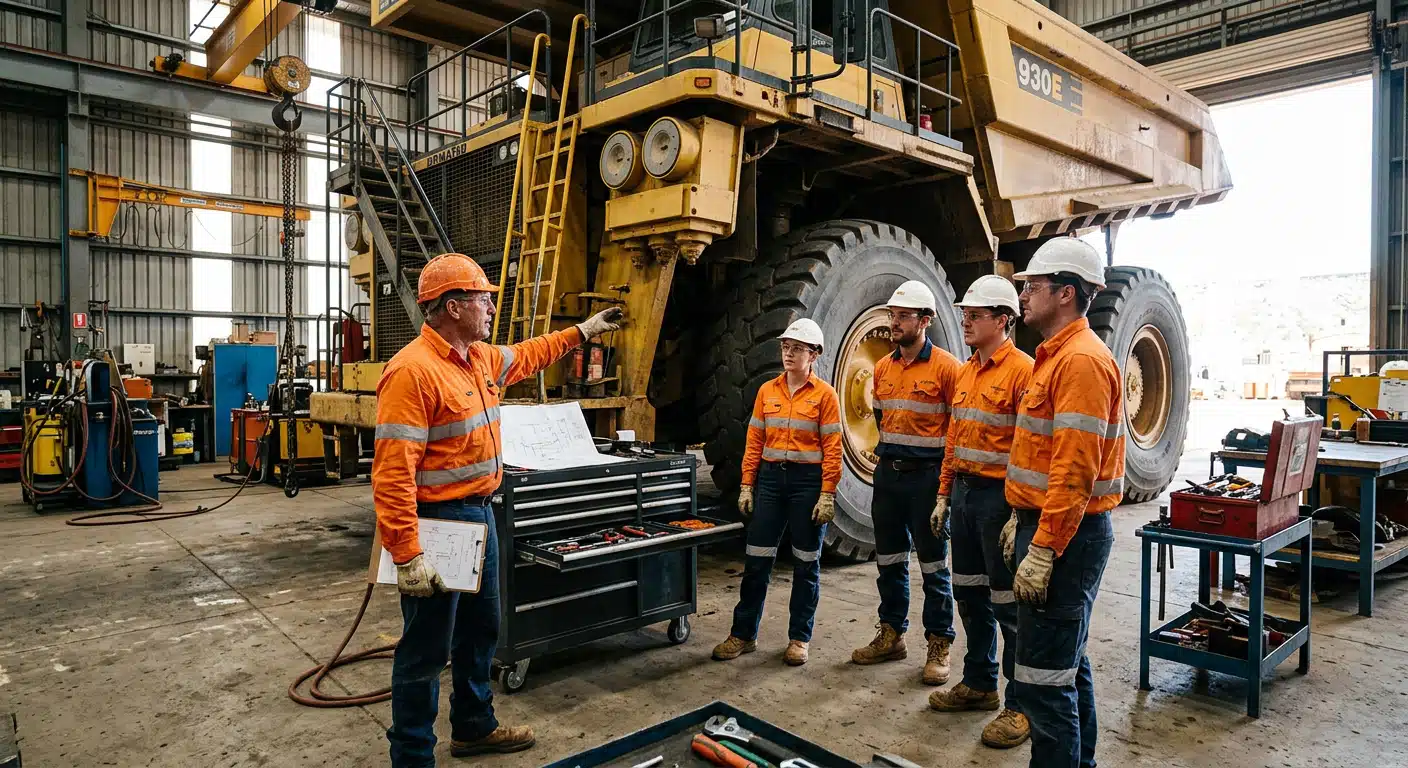
In practice, shutdown labour hire requires more than filling positions quickly. Mine-site shutdowns operate within strict timeframes, controlled access conditions, and high operational pressure where delays can directly impact production schedules.
In practice, project backfill support must also be carefully structured to check continuity of work without disrupting internal team performance or site safety requirements.
Shutdown Labour Hire Should Start With Scope Clarity
In practice, shutdown labour hire should always begin with clear scope definition before personnel are assigned. This includes understanding the task list, trade mix, shift structure, site records requirements, and site-specific rules.
In practice, the engineering team’s labour hire service supplies skilled industrial and technical personnel. That gives project teams a practical starting point.
The best partner asks what the crew must achieve. It should not treat shutdown work as simple headcount supply.
A Perth step before a regional shutdown, when used, is shutdown metro staging, not the workshop.
Project Backfill Support Needs Continuity
Shutdown labour supply is booked against the task list for shutdown labour hire, not as a blank crew call.
In practice, project backfill support helps keep work moving when internal teams are stretched. It must still fit the client system and reporting process.
On-site services can support field work that needs installation, commissioning or maintenance capability. This matters during busy site periods.
Backfill personnel should understand handover quality. Poor notes can create confusion after the site window closes.
Site Records Readiness Protects the Work Window
Shutdown field cover is the site end of that plan.
Mine-site shutdowns can fail before work begins if site records are incomplete. Inductions, licences, verification records and permits need early attention.
A labour hire partner should explain what is ready and what still needs confirmation. Silence on site records is a risk sign.
Good mobilisation planning keeps access, tooling and documentation on the same timeline.
Technical Fit Is as Important as Availability
Availability alone does not prove suitability. A person may be free but lack the right equipment exposure or task background.
Electrical engineering solutions can help define technical requirements when electrical tasks are involved. This supports better role matching.
In practice, shutdown labour hire should match the actual asset type, not only the trade title.
WA Support Benefits From Connected Facilities
WA mine work often benefits from a practical preparation base. Workshop checks can reduce surprises during remote mobilisation.
Auto electrical work inside that shutdown is shutdown electrical trades, named on the task list.
Engineered Installations Group works across mining, transport and heavy vehicle environments. That experience helps connect labour planning with technical delivery.
A written scope should turn a shutdown request into a controlled plan.
Commercial Fit Matters During Shutdown Planning
A shutdown labour hire partner should understand the cost of a missed window. Labour cost is only one part of the decision.
The wider risk includes equipment delay, production interruption and repeated mobilisation. A cheaper booking can become expensive if the crew is wrong.
In practice, project backfill support should also protect internal team capacity. It should let permanent staff focus on planning, supervision and critical decisions.
That only works when the backfill crew can take useful ownership of defined tasks. It should not create another management burden.
Questions to Ask Before Choosing a Partner
Ask how the provider confirms skills before assigning people. Ask how site records are checked before the first shift.
Engineered Installations Group can book that shutdown cover from the Forrestdale or Paget workshop.
Also ask how technical questions are escalated. A labour hire partner should not disappear once people reach the site.
The partner should explain what can be prepared in advance. This may include parts checks, drawings, access notes and task sequencing.
Parts that have to be on site for that window can be staged as shutdown parts kits.
Strong answers usually sound practical, not generic. They should refer to the asset, site and work package being planned.
Signs a Labour Hire Partner Is Not Ready
A weak labour hire partner often gives vague answers about skills, records and mobilisation timing. That creates risk before the crew is even named.
Another warning sign is poor technical questioning. A provider should ask what asset, task and site conditions apply.
If the partner cannot explain site records status, the site team may inherit the problem later. Shutdowns leave little room for that kind of delay.
A strong partner should be able to say what is confirmed, what is pending and what needs client input.
Planning Backfill Around Internal Teams
In practice, project backfill support should complement the internal team. It should not replace supervision or create unclear reporting lines.
The best arrangement gives backfill personnel defined responsibilities. It also makes handover points obvious to supervisors and permanent staff.
This matters when internal teams are already overloaded. Clear role boundaries help reduce distraction and keep the shutdown focused.
What the partner is actually booked to cover should be read as a shutdown scope list.
Practical Evidence Before Booking
Before booking shutdown labour hire, the client should gather the latest work list, asset notes and access requirements. That information helps the provider avoid guesswork.
It is also useful to confirm whether the work is corrective, preventive or project based. Each type can need a different crew profile.
The final check is simple. The partner should be able to explain why each supplied person fits the work.
That explanation should be specific and written.
The note should also name the supervisor.
FAQ
When Is Shutdown Labour Hire Most Useful?
It is most useful when a project has a short work window and not enough internal capacity. It can also support specialist tasks.
What Makes Project Backfill Support Effective?
Effective backfill support fits the role, site and reporting process. It should reduce pressure rather than create supervision problems.
Should Site Records Be Checked Before the Shutdown?
Yes. Records and site requirements should be reviewed before mobilisation. Gate delays can affect the whole work schedule.
Is Fixed Headcount Enough for a Mine-Site Shutdown?
No. Headcount must match the task, trade mix and work environment. Availability alone does not prove readiness.
Where two trades meet on the same asset during the window, that is a shutdown interface plan.
What to Settle Before the Job Moves
The shutdown labour hire decision is easier when the asset, the site rule and the access limit are written down first. A verbal brief tends to drop the one constraint that changes the fit.
Pair that note with project backfill support. The field step should use the same names for parts, mounts and records, or the workshop file and the site file drift apart.
Records That Should Travel With the Asset
A useful shutdown labour hire pack names what was checked, what was fitted and what still needs a site look. It is a work record, not a promise that the asset will perform a certain way.
Photos of access, a parts list and the open questions on project backfill support are more useful than a slogan on the cover sheet.
Where Workshop Work Stops and Field Work Starts
Preparation for shutdown labour hire can be done before travel. The site still has to confirm access, the people and the task on the day. This is not bench fabrication.
That is why project backfill support still needs a named handoff. The person who booked the crew and the person who sees them on site should be looking at one list.
Questions Worth Asking Before Fabrication
Ask where the shutdown labour hire work will be inspected, who signs the site record, and which part has to stay reachable. Those answers change the job more than a generic label.
A physical clash that blocks the shutdown task is a shutdown fit question, not a headcount problem.
Use project backfill support as the second check, not as a new topic. If the second check disagrees with the first sketch, stop and revise the sketch before metal or film is cut.
Before the backfill window closes, reach out to us with the task list and site rules.
Shutdown labour hire starts with the task list, not with a headcount. Trade mix, shift pattern and site rules have to be clear before people are named. Backfill should support the permanent crew, not replace the supervisor or blur who reports to whom. A late change to the asset or the permit should be written down, not passed as a verbal aside. The useful record is what was asked, who went, and what was still open at the end of the window.



Leave A Comment