
Finite Element Analysis
Expert Mechanical Services
Finite Element Analysis
Finite Element Analysis (FEA) is critical for understanding how structures respond to various forces. It enables engineers to predict performance and optimize designs effectively.
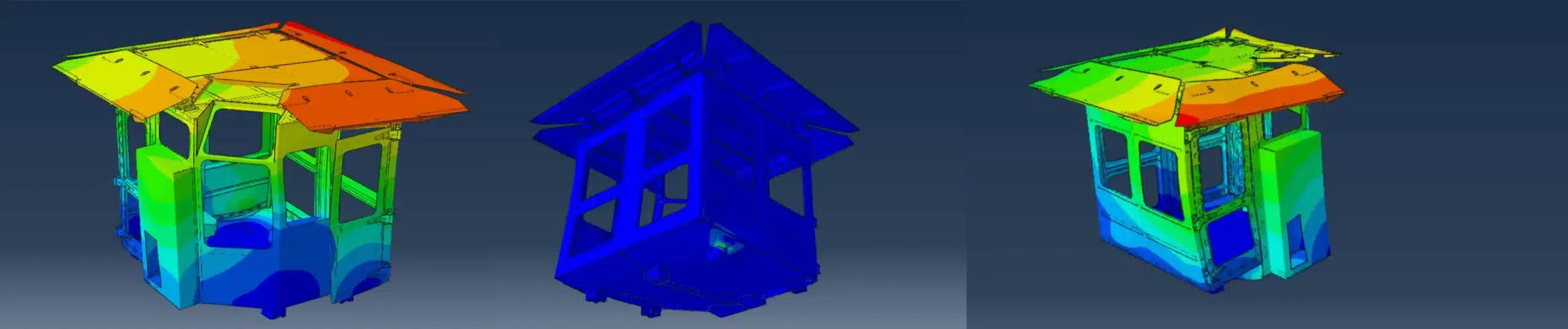
Our Approach To Finite Element Analysis
The Crucial Role of Finite Element Analysis (FEA)
Finite Element Analysis (FEA) is the industry-standard methodology for simulating physical phenomena, allowing engineers to test and predict how machinery, components, and structures will react under real-world conditions before they are built or modified. It is an indispensable tool for minimizing risk and optimizing performance in the design phase.
Key Reasons to Prioritize FEA
-
Design Validation & Optimization: FEA allows for the virtual testing of design variations. This rapid iteration process identifies stress concentrations, predicts deformation, and optimizes material usage, leading to a lighter, stronger, and more cost-effective final product without the expense of physical prototypes.
-
Preventing Structural Failure: By accurately modeling real-world loads (static, dynamic, thermal), we can pinpoint potential points of failure, such as fatigue, fracture, or buckling. This predictive capability eliminates expensive design flaws that can lead to catastrophic breakdowns or operational downtime.
-
Ensuring Safety and Compliance: For critical applications—especially in heavy machinery and mobile assets—FEA provides the detailed, verifiable data required to prove that components meet strict Australian and international regulatory safety standards. This is crucial for avoiding costly recalls and liability issues.
-
Root Cause Analysis (RCA): When a component fails unexpectedly, FEA can reverse-engineer the failure scenario. By simulating the precise forces and conditions leading up to the incident, we can determine the true root cause and recommend design modifications to prevent recurrence across your entire fleet.
-
Predicting Component Lifespan: FEA can model cyclic loading to accurately estimate the fatigue life of a component. This data informs your maintenance planning, allowing you to move from general guidelines to a precise, asset-specific predictive replacement schedule.

By integrating FEA into your design process, you shift from guessing and over-engineering to data-driven confidence, delivering a final product that is demonstrably safe, efficient, and compliant.
