
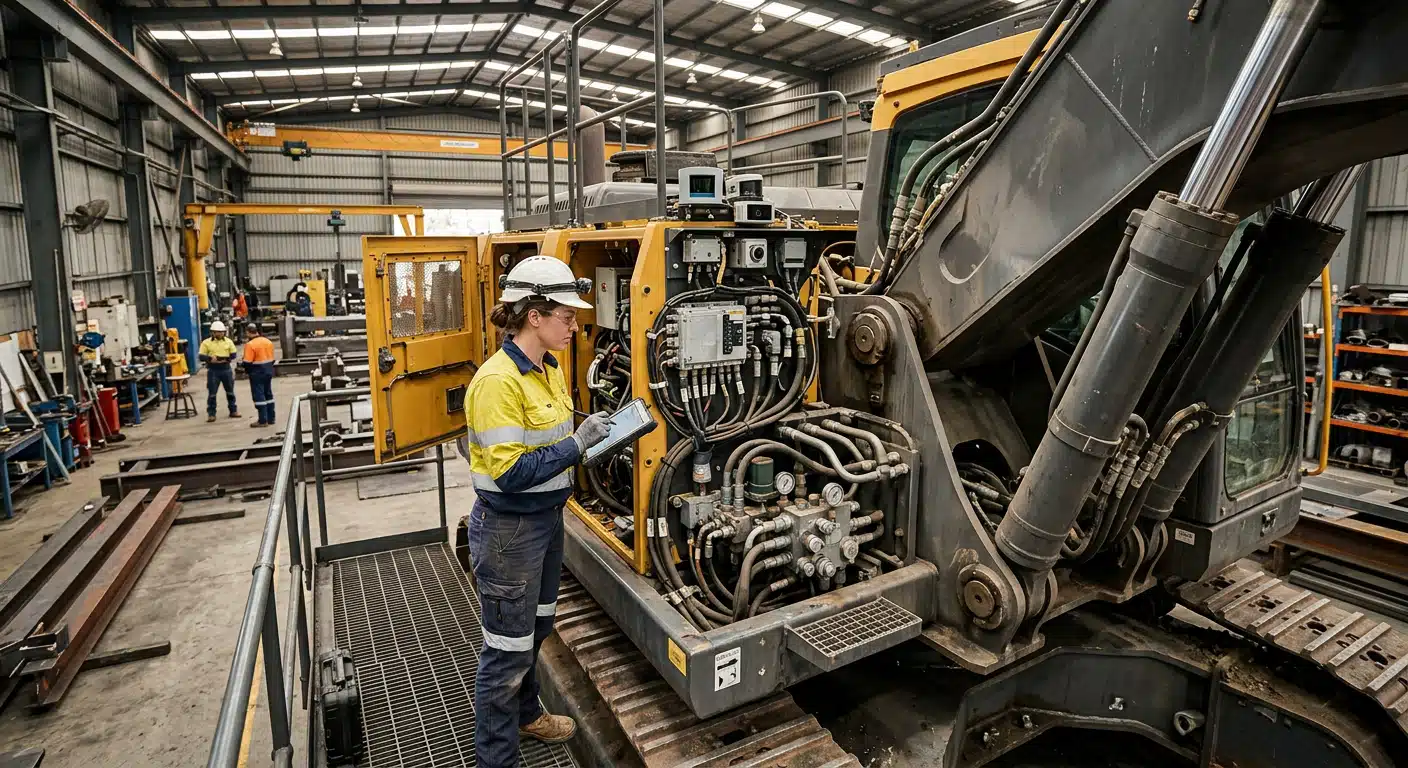
In practice, mechatronic system design connects mechanical movement, electrical control and digital logic. autonomous mine equipment depends on that connection working under pressure.
A machine can have advanced sensors and still perform poorly. The full system must be designed around how the asset moves, senses and reacts.
Mechatronic System Design Connects Machine Behaviour and Control
In practice, mechatronic system design brings mechanical systems, electrical architecture and control logic into one plan. This is essential for autonomous mine equipment.
Autonomous machines need predictable behaviour in difficult conditions. They must interpret signals, control movement and protect operators, assets and nearby equipment.
Engineered Installations Group’s system design supports fully integrated solutions. That type of planning helps avoid isolated upgrades that do not work together.
If the sensor bracket question is structural load, that is sensor mount loads, not a software fault.
Why Autonomy Needs Integrated Engineering
Autonomy is not only software. It depends on sensors, brackets, harnesses, power supply, machine geometry and site conditions.
If one layer is weak, the whole system can miss inputs. Poor mounting or noisy electrical signals can affect decision quality.
Integrated engineering helps each layer support the next.
Autonomous Mine Equipment Needs Reliable Electrical Architecture
Control and power layout has to be set before the build starts.
In practice, autonomous mine equipment needs stable power, clean signals and protected communication paths. Electrical architecture therefore becomes a core safety and performance issue.
Control systems cannot work well if sensors lose power or wiring suffers interference. Harness routes and protection devices must match the duty.
Electrical engineering solutions can support schematics, harness design and control architecture. These foundations help autonomous systems remain serviceable.
Sensors Need a Stable Physical and Electrical Base
Sensors can only provide useful data when mounted and powered correctly. Position, vibration, visibility and cable strain all affect performance.
A camera, radar unit or terrain sensor may fail through poor installation rather than poor technology. That risk grows in harsh mining environments.
Mechatronic design treats the sensor as part of the machine, not an accessory.
Mechanical Design Shapes Autonomous Performance
Mechatronic integration is where sensing, power and structure meet for mechatronic system design.
Autonomous functions depend on how the equipment physically behaves. Weight distribution, bracket stiffness, enclosure position and vibration can all affect control quality.
Mechanical design should therefore support the control system. It should protect sensors, energy systems and communication equipment from avoidable stress.
Engineered Installations Group’s 3D services can support component design, scanning and custom deliverables. That helps fit autonomous hardware to real asset geometry.
Structural Validation Can Reduce Field Failures
Autonomous systems often need added brackets, guards, enclosures and mounts. These parts should withstand the asset’s operating environment.
Finite element analysis can help assess design integrity and stress points. This is useful before hardware enters harsh mine service.
A look at the installed sensing once the asset has left the workshop is a mechatronic field check.
Strong validation can reduce repeated field changes and avoidable repeat visits.
Vibration Control Protects System Accuracy
In practice, autonomous mine equipment needs consistent data. Vibration can affect sensors, connectors, processors and mounted enclosures.
A small movement problem may distort readings or cause intermittent faults. These issues can be difficult to trace after deployment.
Vibration data analysis can help identify dynamic risks. It can also support better mounting and dampening decisions.
Calibration Depends on Physical Stability
Calibration assumes the system remains physically stable. If a sensor mount moves, the calibration may no longer reflect the actual machine.
This can affect perception, navigation or safety alerts. Regular checks may be needed where assets work in severe conditions.
Engineered Installations Group can plan that layout from the Forrestdale or Paget workshop.
A mechatronic approach plans for that maintenance need early.
Field Installation Turns Design Into a Working Asset
Sensor vibration checks matter when autonomous mine equipment will see repeat shock.
A well-designed autonomous system still needs careful installation. Cable routes, labels, torque settings and commissioning checks all matter.
On-site services can support installation, commissioning and maintenance. This helps connect design decisions to field-ready delivery.
Commissioning should confirm physical installation, electrical stability and control behaviour. It should also record the baseline condition for future checks.
Documentation Supports Long-Term Autonomy
Autonomous equipment may be modified as site needs change. Documentation helps teams understand what was installed and why.
Good records should cover schematics, component locations, mounting details and test results. They also help future technicians avoid unsafe assumptions.
For autonomous assets, documentation is part of the support system.
It also supports change control when sensors, guards or electrical modules are adjusted later. The team can compare the change against the original design.
That comparison reduces the chance of fixing one problem while creating another. autonomous mine equipment needs that discipline through its service life.
The Engineering Team’s Model Fits Mechatronic Delivery
Sensor mount scanning helps when the clash is hard to see on a sketch.
Engineered Installations Group works across mining, heavy vehicle and industrial systems. Its live service range covers design, analysis, electrical solutions and site support.
That range suits mechatronic system design because autonomy crosses several disciplines. The project needs one connected view of machine behaviour and control.
The next generation of mine equipment will depend on that integration.
FAQ
What Is Mechatronic System Design?
In practice, mechatronic system design integrates mechanical systems, electrical architecture and control logic. It helps machines sense, move and respond predictably.
Repeat sensor and loom parts for the same machine class can be held as mechatronic repeat kits.
Why Does Autonomous Mine Equipment Need It?
Autonomous equipment depends on sensors, power, structures and controls working together. Weak integration can affect how the machine responds.
How Does Vibration Affect Autonomous Systems?
Vibration can move sensors, fatigue connections and distort readings. It can also create intermittent faults that are hard to diagnose.
What Should Be Documented After Installation?
Documentation should include schematics, mounting locations, test results, cable routes and calibration notes. These records support future maintenance.
What to Settle Before the Job Moves
The mechatronic system design decision is easier when the asset, the site rule and the access limit are written down first. A verbal brief tends to drop the one constraint that changes the fit.
Pair that note with autonomous mine equipment. The field step should use the same names for parts, mounts and records, or the workshop file and the site file drift apart.
Records That Should Travel With the Asset
A useful mechatronic system design pack names what was checked, what was fitted and what still needs a site look. It is a work record, not a promise that the asset will perform a certain way.
Photos of access, a parts list and the open questions on autonomous mine equipment are more useful than a slogan on the cover sheet.
Where Workshop Work Stops and Field Work Starts
Some preparation for mechatronic system design can be finished at Forrestdale or Paget. What remains depends on the asset as it sits on the day, not on a generic bench claim.
That is why autonomous mine equipment still needs a named handoff. The person who did the workshop work and the person who sees the asset on site should be looking at one list.
Questions Worth Asking Before Fabrication
Ask where the mechatronic system design work will be inspected, who signs the site record, and which part has to stay reachable. Those answers change the job more than a generic label.
What that design includes should be read as a mechatronic scope list before the build starts.
Use autonomous mine equipment as the second check, not as a new topic. If the second check disagrees with the first sketch, stop and revise the sketch before metal or film is cut.
When sensing, power and structure still sit in separate files, contact us before the build starts.
Mechatronic system design fails when sensing, power and structure are planned in separate files. Autonomous mine equipment needs those three to agree before the asset is built. A sensor that moves, a supply that is noisy, or a mount that was never checked will show up as a bad input, not as a software fault. Keep the assumptions with the drawing. The person who commissions the machine should not have to guess which file is current.



Leave A Comment