
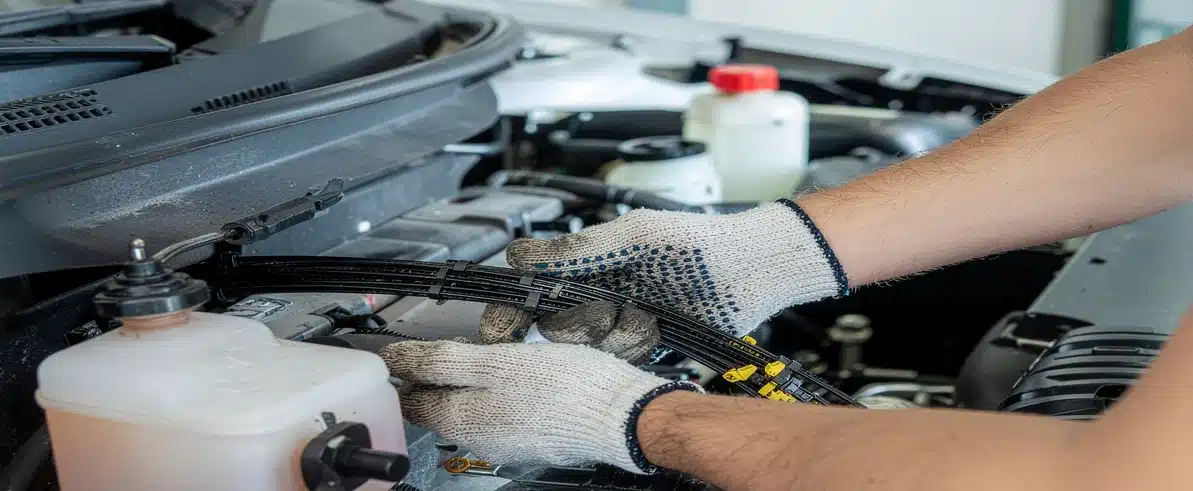
Fitting components to a heavy vehicle is not the same as fitting components to a light commercial or passenger vehicle. The scale, complexity, and operational demands of heavy vehicles introduce a different set of technical requirements, and the margin for error is considerably smaller. A bracket fitted out of alignment, a wiring harness routed without adequate protection, or a connector terminated under the wrong torque specification can result in system failure, vehicle downtime, or a rejection at the mine gate. Getting the fitment right the first time requires controlled conditions, qualified technicians, and a structured process built around engineering documentation.
Metro installation services provide exactly that environment. By conducting heavy vehicle installation work within a dedicated workshop facility, EIG’s metro team can apply the tools, standards, and processes needed to achieve accurate, repeatable fitment across every vehicle that comes through the bay.
What Are Metro Installation Services?
Metro installation services refer to vehicle installation work conducted within a fixed workshop facility, as distinct from field-based or on-site installations carried out at remote locations. The term “metro” reflects the workshop’s proximity to metropolitan infrastructure and supply chains, which supports faster component procurement, access to specialised tooling, and consistent working conditions.
For heavy vehicle installation programmes, the workshop environment is often the preferred delivery model when vehicles can be brought to the facility. The controlled setting allows technicians to work with precision tooling, overhead lifting equipment, engineered drawings, and proper component staging, none of which are reliably available in the field.
EIG’s metro installation capability is based at the Forrestdale, Perth facility, which is equipped to handle a range of heavy vehicle types including haul trucks, service vehicles, light rigid and heavy rigid configurations, and mine-spec equipment. The facility operates across concurrent bays, allowing fleet programmes to be processed efficiently without compromising individual vehicle quality.
Why Precision Matters in Heavy Vehicle Installation
The consequences of imprecise fitment on a heavy vehicle extend well beyond aesthetics. For vehicles operating in mining, transport, or heavy industry environments, every installed component must perform reliably under sustained load, vibration, temperature variation, and exposure to dust and moisture. A component that is fitted correctly in a controlled workshop will behave predictably in the field. One that is not may fail at the worst possible time.
Precision component fitting is particularly critical for electrical systems, where incorrect routing, inadequate loom protection, or poorly terminated connectors introduce fault pathways that are difficult to diagnose and expensive to rectify in the field. For collision avoidance systems, fleet management modules, and other networked safety technologies, fitment accuracy directly affects system performance and, by extension, site safety outcomes.
Mechanical fitment precision matters equally. Brackets that are not correctly aligned place unintended load on mounting points. Fasteners that are not correctly torqued can work loose under vibration. Structural components that are not fitted to specification may not perform as designed under dynamic load conditions. In a heavy vehicle installation context, these are not theoretical risks; they are documented failure modes that proper workshop processes are specifically designed to prevent.
For mine-spec vehicles, there is an additional compliance dimension. Many mine sites require vehicles to meet specific fitment standards before they are permitted on site. Vehicles that fail inspection at the gate must be returned for rectification, at significant cost and delay. Precision component fitting at the workshop stage eliminates this risk.
The Workshop Advantage: Controlled Conditions for Accurate Fitment
The workshop environment provides technical advantages that directly support precision component fitting in heavy vehicle installation work.
Fixed tooling and calibrated equipment are available at the point of installation. Torque wrenches, crimping tools, cable testing instruments, and alignment aids are calibrated, maintained, and on hand. Technicians are not improvising with whatever fits in a field tool kit.
Overhead lifting equipment allows full vehicle access. For heavy vehicles, access to underbody mounting points, chassis rail runs, and cab roof structures is significantly easier when the vehicle can be raised on a hoist or positioned in a dedicated bay. Work that would require difficult body positioning in the field can be completed safely and accurately in the workshop.
Component staging means that parts, harnesses, and hardware are prepared and verified before installation begins. There is no hunting for parts mid-job, no substituting components because the correct item did not make it to site, and no delays caused by supply chain issues discovered during the work.
Environmental conditions are controlled. Electrical work in particular benefits from working in a clean, dry, well-lit environment. Connector terminations, heat shrink application, and loom assembly all produce better outcomes when they are not being performed in wind, dust, or rain.
Together, these factors make the workshop the most reliable environment for achieving consistent precision component fitting across a heavy vehicle fleet.
Engineered Drawings and Specifications: The Foundation of Precise Fitment
Every heavy vehicle installation carried out by EIG’s metro team is executed against engineered drawings and job-specific documentation. These documents define exactly what is to be installed, where each component is to be located, how wiring is to be routed and terminated, and what torque specifications apply to mechanical fasteners.
Working from engineered drawings eliminates ambiguity from the installation process. Technicians do not make judgement calls about component placement or wiring routes. Every decision is documented in advance, reviewed for engineering accuracy, and confirmed against the vehicle specification before work begins.
For fleet programmes involving multiple vehicles of the same type, the engineered drawings serve as the consistent reference point that ensures uniform outcomes across every unit. This repeatability is one of the defining characteristics of a professional heavy vehicle installation programme and a direct output of the metro workshop model.
Where vehicles deviate from the expected specification, whether due to prior modifications, different build variants, or component substitutions, the engineering documentation is updated before installation proceeds. EIG’s team does not proceed with a heavy vehicle installation on assumptions; the drawings are confirmed current before the first component is fitted.
Electrical System Fitment: Getting It Right the First Time
Electrical work accounts for a significant portion of most heavy vehicle installation scopes, and it is also the area where precision component fitting has the greatest impact on long-term reliability.
EIG’s metro team routes and secures wiring harnesses according to engineered loom drawings, which specify cable runs, protection requirements, support intervals, and termination details. Harnesses are dressed to the vehicle’s structure using appropriate loom clips, conduit, and protective sleeving to prevent abrasion, heat damage, and moisture ingress at known risk points.
Connector termination is carried out with calibrated tooling and verified against the wiring schematic. Incorrect termination is one of the most common sources of electrical system faults in heavy vehicles, and it is almost always avoidable with proper process. EIG’s technicians follow a termination and verification sequence that confirms each connection before the harness is secured in place.
Cable sizing is confirmed against the current draw of the installed systems. Undersized cables are a fire risk and a performance risk. The metro workshop process includes a review of cable sizing as part of the electrical installation planning phase, ensuring that the installed wiring is appropriate for the load it will carry.
Post-installation electrical testing includes continuity, insulation resistance, and functional verification of all circuits. These tests are completed and documented before the vehicle proceeds to final inspection, providing objective evidence that precision component fitting of the electrical system has been achieved to specification.
Mechanical and Structural Component Fitment
Mechanical fitment in a heavy vehicle installation covers brackets, mounting plates, enclosures, structural supports, and any hardware required to secure installed equipment to the vehicle. The precision requirements for this work are often underestimated.
Bracket alignment affects the load path through the mounting arrangement. A bracket that is fitted slightly out of plane introduces bending stress at the mounting point that the design may not have accounted for. Over time, under the vibration loads typical of heavy vehicle operation, this can result in fatigue cracking at welds or fastener holes.
EIG’s metro team fits mechanical components against fabrication drawings that specify mounting locations, hole patterns, and orientation. Where components are fabricated in-house, they are checked against drawings before installation. Where proprietary mounting hardware is used, it is fitted according to the manufacturer’s specification.
Fastener torque verification is applied to all critical connections. Torque values are specified in the job documentation and checked with calibrated torque wrenches. Results are recorded in the quality assurance record for the vehicle.
For installations that involve penetrations through body panels or chassis members, these are carried out with appropriate tooling and sealed against moisture ingress. The integrity of the vehicle’s structure and corrosion protection is maintained throughout the heavy vehicle installation process.
Systems Integration and Final Verification
Once individual components are fitted and their local installation verified, the systems integration phase confirms that the installed equipment functions correctly as a complete assembly within the vehicle.
This phase includes powering up installed systems, verifying communication between networked modules, confirming correct operation of all operator interfaces, and checking that the installed equipment does not introduce interference with the vehicle’s existing systems. For complex installations involving multiple integrated technologies, the commissioning sequence is defined in the job documentation and followed systematically.
Final verification of precision component fitting is completed by a senior technician or workshop supervisor who reviews the installation against the engineered drawings, quality assurance records, and functional test results. Any items that do not meet specification are rectified before the vehicle is signed off.
The completed verification package, including drawings, test records, photographs, and commissioning data, is provided to the client at handover. This documentation supports ongoing maintenance, future modifications, and site compliance requirements for the vehicle.
For operators looking to understand EIG’s full range of on-site installation support for vehicles that cannot be brought to the workshop, the field services team extends the same engineering rigour to remote locations.
Conclusion
Achieving precise component fit on a heavy vehicle is not a matter of experience alone. It requires a controlled environment, calibrated tooling, engineered documentation, and a structured process that applies the same standard to every vehicle, every time. The workshop setting provides all of these, and EIG’s metro installation team is built specifically to deliver heavy vehicle installation outcomes that hold up under the demands of mining, transport, and heavy industry operations.
From wiring harness routing and connector termination through to mechanical torque verification and systems commissioning, every phase of a heavy vehicle installation at EIG’s Perth facility is executed against engineering specifications and verified before the vehicle is released. The result is a precision component fitting outcome that clients can take to site with confidence, backed by complete installation documentation and a team that stands behind its work.
Precise heavy vehicle installation requires the right environment, the right team, and the right processes. Engineered Installations Group brings all three together at its Perth metro workshop facility, delivering precision component fitting outcomes that hold up in the most demanding operational environments.
To discuss your heavy vehicle installation requirements, call +61 (08) 9419 7318 and speak with the metro installation team.



Leave A Comment