
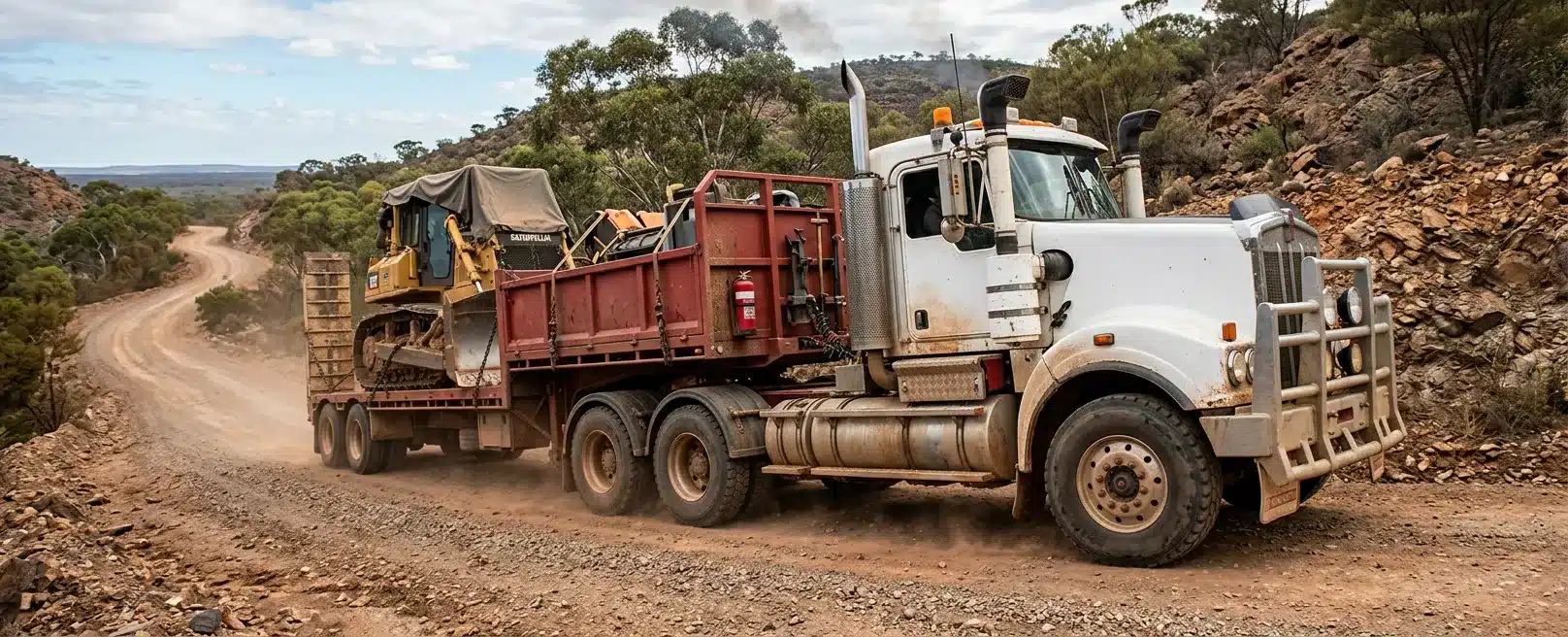
Road trauma costs Western Australia more than lives; it reshapes families, communities, and futures. In 2023 alone, 171 people died on WA roads, with heavy vehicle incidents representing a disproportionate share of serious crashes. When a loaded work vehicle fails to stop in time, the consequences extend far beyond the immediate collision. For fleet managers and business owners operating utes, light trucks, and commercial vehicles across Australian mine sites and regional roads, braking system performance is not a luxury specification. It represents the primary engineering control between normal operations and catastrophic failure.
Standard factory braking systems are engineered for average consumer use, not the sustained heavy loads and harsh conditions that define Australian industrial operations. A dual-cab ute rated for 3,500 kg GVM might leave the dealership with brakes adequate for weekend camping trips, but those same components face exponential stress when loaded with toolboxes, water tanks, and towing a 2,500 kg trailer across the Pilbara. The physics are unforgiving. Kinetic energy increases with the square of velocity and linearly with mass, meaning a fully loaded vehicle travelling at highway speed requires dramatically more braking force than the manufacturer’s baseline specification accounts for.
The Weight-Braking Performance Relationship
Vehicle Mass Fundamentally Changes Braking Dynamics
Vehicle mass fundamentally changes braking dynamics. When a 2,000 kg vehicle accelerates to 100 km/h, it accumulates approximately 772,000 joules of kinetic energy that must be dissipated through friction to bring the vehicle to rest. Double that mass to 4,000 kg, and the energy requirement doubles to 1,544,000 joules. Standard brake systems sized for the lighter configuration simply cannot dissipate this thermal energy quickly enough without experiencing brake fade, which is the loss of braking effectiveness caused by overheating friction materials.
Loaded vehicle stopping distance calculations reveal the practical danger. Under optimal conditions with functioning brakes, a passenger vehicle travelling at 100 km/h requires approximately 75 metres to stop, including reaction time. Add 2,000 kg of load and towing weight to a light commercial vehicle with standard brakes, and that stopping distance can extend beyond 95 metres. This creates an additional 20 metres where the vehicle remains uncontrolled. On gravel roads or in wet conditions common across northern Australia during the wet season, these distances increase further, often exceeding 150 metres for loaded vehicles with inadequate braking capacity. For any EIG client operating in these environments, the mine-spec vehicle fitout must account for these physical realities and incorporate heavy vehicle braking solutions that meet these elevated demands.
Heat generation compounds the problem. Brake systems convert kinetic energy to thermal energy through friction. During a single emergency stop from highway speed, brake rotor temperatures can exceed 400°C. For vehicles making repeated stops, such as those operating in hilly terrain or making frequent deliveries, standard brake components reach thermal saturation. This is where the friction coefficient drops and braking effectiveness diminishes precisely when it is most needed.
High-performance braking system upgrades address this through larger thermal mass (bigger rotors), better heat dissipation (ventilated designs), and friction materials engineered for high-temperature stability.
The relationship between heavy vehicle braking performance and load management extends beyond simple stopping distance. Loaded vehicles experience different weight distribution, affecting how braking force should be balanced between front and rear axles. A rear-heavy load shifts the vehicle’s centre of gravity, reducing front axle load during braking due to weight transfer and potentially causing premature rear brake lockup if the system is not properly balanced. Modern designs incorporate load-sensing proportioning valves that adjust brake force distribution based on actual vehicle load, maintaining optimal braking balance across varying load conditions.
Australian Regulatory Framework for Heavy Vehicle Braking
Australian Design Rules (ADRs) Establish Minimum Braking Performance Standards
Australian Design Rules (ADRs) establish minimum braking performance standards for vehicles operating on public roads. ADR 35 specifies that a loaded vehicle must achieve a minimum deceleration rate and stop within prescribed distances during type-approval testing. However, these regulations apply to vehicles as manufactured; they do not account for aftermarket modifications that increase GVM or towing capacity. When a business uprates a vehicle’s load-carrying capacity through suspension modifications or adds a bullbar, toolboxes, and auxiliary fuel tanks that collectively add 400 kg to kerb weight, the factory braking system may no longer meet ADR requirements for the modified vehicle’s actual operating mass.
GVM compliance requirements create legal obligations for vehicle owners and operators. Gross Vehicle Mass represents the maximum a vehicle can legally weigh when fully loaded, including the vehicle itself, all cargo, passengers, fuel, and accessories. State transport authorities enforce GVM limits through roadside inspections and weigh stations. Operating a vehicle above its rated GVM is not just unsafe; it voids insurance coverage and exposes businesses to significant liability. For vehicles modified to carry heavier loads, comprehensive braking system upgrades become mandatory to maintain legal compliance with the modified GVM rating.
Western Australia and Queensland enforce specific regulations around heavy vehicle modifications. WA’s Vehicle Standards Bulletin 14 outlines requirements for brake system modifications, specifying that any changes affecting braking performance must be signed off by qualified engineers and meet ADR standards for the modified vehicle configuration. Queensland’s Transport Operations (Road Use Management) Act imposes similar requirements, with additional scrutiny for vehicles operating in mine site environments where safety standards exceed general road requirements.
The consequences of non-compliance extend beyond fines. Following a serious accident, investigators examine vehicle maintenance records and modification history. If an incident investigation reveals that a vehicle’s braking system was inadequate for its operating weight, or that modifications were not properly signed off, business owners face potential criminal charges under workplace safety legislation. Insurance companies routinely deny claims for vehicles operating outside their documented specifications, leaving businesses liable for damages that can reach millions of dollars in serious injury cases.
Modern Braking System Upgrade Technologies
Contemporary braking system upgrades for loaded work vehicles incorporate multiple technological improvements over standard factory specifications. The foundation of any upgrade involves larger brake rotors and upgraded caliper assemblies. Rotor diameter directly affects braking torque. A 330mm rotor provides approximately 10% more braking force than a 300mm rotor with equivalent caliper pressure, simply through increased leverage. Larger rotors also offer greater thermal mass, absorbing more heat before reaching critical temperatures where brake fade occurs.
Advanced Rotor and Caliper Engineering
Material selection in brake component installation determines performance under sustained use. Standard cast iron rotors serve adequately for light-duty applications, but loaded work vehicles benefit from upgraded metallurgy. High-carbon cast iron rotors offer improved thermal stability and crack resistance. For severe-duty applications, such as vehicles regularly operating in the Kimberley or Cape York where sustained braking on long descents generates extreme heat, slotted or drilled rotors improve heat dissipation by increasing surface area and promoting air circulation through the brake assembly.
This level of technical detail is what an on-site technical team looks for when maintaining fleet safety.
These environments demand heavy vehicle braking solutions that provide consistent friction coefficients regardless of the operating temperature.
Friction Material Technology
The engineering team at Engineered Installations Group matches that duty to the vehicle in the bay.
Friction material technology has advanced significantly beyond basic organic brake pads. Semi-metallic compounds incorporate metal fibres that maintain friction coefficient at elevated temperatures, preventing fade during repeated heavy stops. Ceramic brake pads, while more expensive, offer exceptional thermal stability and produce less dust, reducing maintenance requirements for vehicles operating in dusty mine site environments. The selection depends on specific operating conditions. A vehicle primarily used for highway transport between Perth and regional sites has different requirements than one making frequent stops in urban delivery work.
Electronic Braking Control Systems
3D services help when a guard hides the face that has to be measured.
Modern braking system upgrades increasingly incorporate electronic control systems that actively manage braking force distribution. Anti-lock Braking Systems (ABS) prevent wheel lockup during emergency stops, maintaining steering control and optimising stopping distance. While ABS has been mandatory on new vehicles since 2004, many older work vehicles still operating in industrial fleets lack this critical safety feature.
ABS and Electronic Braking Systems
System design belongs on the same sheet as the brake duty, not as a later add-on.
Retrofitting ABS during a brake upgrade provides substantial safety benefits, particularly for loaded vehicles operating on variable-surface conditions common in mine site access roads. Electronic Braking Systems (EBS) represent the next evolution beyond basic ABS. EBS uses electronic sensors to monitor wheel speed, vehicle load, and brake temperature, adjusting braking force in real-time to optimise performance. Load-sensing brake force distribution automatically adjusts the front-to-rear brake bias based on actual vehicle weight distribution, ensuring optimal braking balance whether the vehicle is empty or fully loaded.
Trailer Brake Integration
Finite element analysis belongs when a mount or caliper bracket is the question.
Trailer brake controller integration becomes critical for vehicles regularly towing heavy loads. Electric brake controllers send proportional current to trailer brakes based on the tow vehicle’s deceleration, ensuring the trailer brakes activate in coordination with the prime mover. Poor trailer brake coordination causes multiple problems. Insufficient trailer braking forces the tow vehicle’s brakes to work harder, accelerating wear and increasing stopping distance. Excessive trailer braking can cause trailer sway or jackknifing. Modern integrated systems coordinate tow vehicle and trailer braking reliably, dramatically improving safety and reducing loaded vehicle stopping distance.
Selecting the Right Upgrade for Your Application
Determining Appropriate Brake System Specifications Requires
Vibration data analysis belongs when a repeating mechanical mode shows up in the running gear.
Determining appropriate brake system specifications requires systematic assessment of vehicle operating conditions. Start with actual vehicle weight data. Weigh the vehicle in its typical loaded configuration, including all accessories, tools, cargo, and fuel. Do not rely on estimates. Use a certified weighbridge to obtain accurate GVM data. This actual operating weight, not the manufacturer’s base vehicle weight, determines the braking capacity required. In one instance I observed, a fleet manager discovered that their light vehicle was consistently operating 15% over GVM once the full site kit was installed, necessitating an immediate engineering review.
Next, analyse the operating environment. A vehicle primarily used for highway transport between Perth and mine sites faces different demands than one operating entirely within a mine site, making frequent stops between workshops and active areas. Highway vehicles require braking systems optimised for high-speed emergency stops and sustained descents on routes like the Great Northern Highway through the Pilbara. Mine site vehicles need brake systems resistant to dust contamination and capable of repeated moderate-speed stops. Technical consultants can assess specific operating profiles to match brake specifications to actual use cases.
Towing requirements significantly influence brake system selection. A vehicle rated for 3,500 kg towing capacity needs braking force sufficient to control the combined mass of vehicle, cargo, and trailer, which is potentially 7,000 kg or more. Australian regulations require electric brakes on trailers exceeding 2,000 kg ATM (Aggregate Trailer Mass), but the tow vehicle’s braking system must also be adequate for the combined weight. Vehicles regularly towing at maximum capacity benefit from tailored heavy vehicle braking solutions, including larger rotors, upgraded calipers, and integrated electronic brake controllers that coordinate tow vehicle and trailer braking.
Cost-benefit analysis of braking system investment requires looking beyond initial installation costs. A comprehensive upgrade for a dual-cab ute or light truck typically represents a modest percentage of the vehicle’s value. This is a substantial investment, but small compared to the potential costs of a braking-related incident. Consider that a single serious accident can result in injury compensation exceeding $1 million, vehicle damage costs, regulatory fines, increased insurance premiums, and reputational damage that affects future contract opportunities.
Professional Installation and Quality Assurance
Brake System Modifications Require Technician Expertise
Brake system modifications require technician expertise and proper engineering validation. Unlike simple consumable replacement, such as changing worn brake pads, system upgrades involve modifications to safety-critical components that must meet regulatory standards and perform reliably under extreme conditions. Qualified technicians understand the integration requirements. Larger rotors may require wheel spacers or different wheel offsets; upgraded calipers need proper hydraulic line sizing; electronic systems require correct sensor placement and calibration.
Pre-installation vehicle assessment verifies that the proposed upgrade suits the specific vehicle configuration. This assessment examines the existing brake system condition, wheel and suspension clearances, hydraulic system capacity, and electronic system compatibility. For vehicles with existing modifications, such as suspension lifts or wheel changes, the assessment checks that the brake upgrade integrates properly with these modifications.
The electrical engineering solutions team handles the electronic integration requirements for advanced systems incorporating ABS, EBS, or trailer brake controllers.
Post-installation testing protocols validate that the upgraded system performs as specified. This includes static testing of hydraulic pressure and electronic system function, followed by dynamic testing to verify stopping distance, brake balance, and pedal feel. For vehicles operating in mine site environments, testing should replicate practical operating conditions: loaded weight, gravel surfaces, and gradient braking. Proper documentation of testing results provides evidence of GVM compliance requirements and creates a baseline for future maintenance reference.
Workshop installation services facilitate these detailed verification protocols to ensure safety standards are exceeded.
Ongoing maintenance requirements for upgraded braking systems differ from standard vehicles. High-performance brake pads typically wear faster than standard organic pads due to their higher friction coefficients, and high-carbon rotors may require more frequent inspection for thermal checking in severe-duty applications. Regular brake fluid flushes are critical in humid or dusty environments to prevent moisture absorption and boiling point degradation. Consistent maintenance helps keep the safety benefits of the initial upgrade are preserved throughout the vehicle’s service life.
Speak with us to arrange an assessment of the vehicle, the duty, and the installation path.



Leave A Comment