
When a vehicle arrives at a professional installation workshop, the process that follows is far more structured than most operators expect. A vehicle fit out is not simply a matter of bolting on components and sending the vehicle back out the door. It involves careful intake assessment, detailed installation planning, staged execution by qualified technicians, and a series of quality checks before any vehicle is returned to service. Understanding what happens at each stage helps fleet operators, procurement managers, and site supervisors prepare effectively and set realistic expectations for scope, timeline, and outcome.
EIG, based in Forrestdale, Perth, runs a dedicated workshop facility where vehicle fit out work is carried out to strict engineering and safety standards. This article walks through each stage of the workshop vehicle fit out process so you know exactly what to expect from intake through to handover.
What Is a Workshop-Based Vehicle Fit-Out?
A workshop vehicle fit out refers to the installation of systems, components, and equipment onto a vehicle within a controlled, facility-based environment. This is distinct from field installations, which are conducted at remote or operational sites under different logistical and environmental constraints.
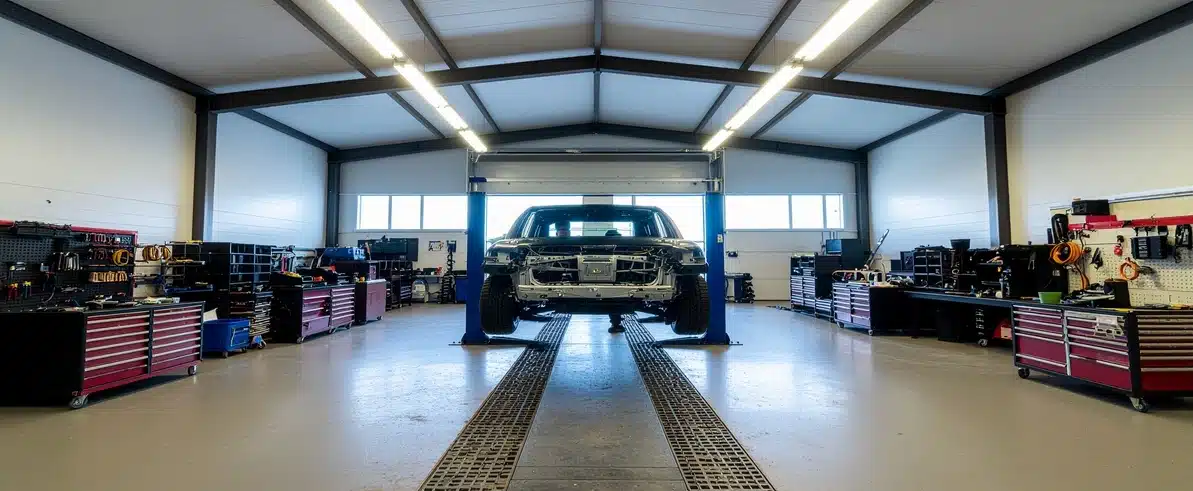
The workshop setting offers several practical advantages. Technicians have access to fixed tooling, overhead lifting equipment, engineered drawings, and staged component storage. Environmental conditions are controlled, which matters for precision electrical work and system calibration. Vehicles can be positioned on hoists or in dedicated bays, allowing full access to chassis, underbody, and cab areas that would be difficult to reach in the field.
For heavy vehicles, light vehicles, and mine-spec equipment alike, a workshop vehicle fit out is typically the preferred method when vehicles can be brought to the facility and when installation complexity is high.
The Perth Facility: EIG’s Workshop Capability
EIG’s Perth workshop is located in Forrestdale, Western Australia. The facility is equipped to handle a range of vehicle types, from light commercial vehicles through to heavy plant and mine-spec equipment. Bay capacity, overhead lifting, and component staging areas are all configured to support concurrent vehicle fit out programs without compromising quality or turnaround time.
The technician team based at the Perth facility holds certifications relevant to the systems being installed, including electrical, mechanical, and integrated safety systems. All work is carried out against engineered drawings and job-specific documentation, ensuring traceability for every installation.
EIG also maintains a Mackay, Queensland presence for eastern operations, but the Perth workshop remains the primary hub for workshop installation services across Western Australia and for clients operating in the Pilbara, Goldfields, and broader WA mining regions.
Step 1: Vehicle Intake and Initial Assessment
Every workshop vehicle fit out begins with a formal intake process. When a vehicle arrives at the facility, it is assessed against a pre-installation condition checklist. This covers the vehicle’s existing systems, component condition, any prior fitments that may affect the new installation, and confirmation that the vehicle matches the specification documented in the job order.
The intake stage is not a formality. It is where discrepancies between expected and actual vehicle condition are identified before work begins. If a vehicle arrives with wiring damage, missing mounting points, or undocumented prior modifications, these are recorded and raised with the client before the installation proceeds.
Photographs, condition notes, and pre-installation documentation are completed at this stage. These form part of the job record and support the post-installation handover package. The intake assessment also confirms that all components, hardware, and materials for the vehicle fit out are on hand and staged correctly before the technician team begins work.
Step 2: Installation Planning and Parts Preparation
Before a single component is fitted, the installation is planned in detail. EIG’s workshop team works from engineered drawings, wiring schematics, and job cards that specify exactly what is to be installed, where, and to what standard.
Parts preparation involves staging all components in the correct sequence for the installation workflow. Wiring harnesses, mounting hardware, system modules, connectors, and ancillary items are checked against the bill of materials. Any shortfalls are identified and resolved before work commences, reducing the risk of mid-installation delays.
Technician briefing is also completed at this stage. The lead technician reviews the job card, confirms the installation sequence, and identifies any access or fitment considerations specific to that vehicle. For complex workshop vehicle fit out programmes involving multiple vehicles, this planning stage is documented and repeated consistently across the fleet to ensure uniform outcomes.
Step 3: The Installation Process
The core installation stage of a vehicle fit out proceeds according to the job card and engineered drawings established in the planning phase. Work is divided across electrical, mechanical, and systems integration disciplines depending on the scope of the fitment.
Electrical work typically involves routing and securing wiring harnesses, connecting system modules, installing switches and operator interfaces, and integrating with the vehicle’s existing electrical architecture. All wiring is run to EIG’s internal standards, which include correct cable sizing, appropriate loom protection, and secure termination at all connection points.
Mechanical work covers bracket fabrication or fitment, component mounting, underbody hardware, and any structural modifications required to support the installed systems. Where structural modifications are involved, these are carried out to engineered specifications and documented accordingly.
Systems integration brings the electrical and mechanical elements together. This includes configuring system parameters, verifying communication between installed modules, and confirming that all components function correctly as an integrated assembly within the vehicle. Throughout the workshop vehicle fit out, technicians record progress against the job card, noting any deviations or field modifications for inclusion in the final documentation package.
Step 4: Quality Assurance and Testing
Quality assurance is not a single checkpoint at the end of a vehicle fit out. It is a staged process that runs throughout the installation. EIG applies hold points at defined stages of the work where the installation is checked before the next phase begins. This approach catches errors early and avoids compounding issues through subsequent stages.
Functional testing is conducted on all installed systems before the vehicle proceeds to final inspection. This includes electrical continuity and insulation resistance testing on wiring circuits, functional operation checks on all switches, sensors, and operator interfaces, and system-level commissioning where applicable. For collision avoidance systems, fleet management modules, or other networked technologies, commissioning includes configuration verification and communication testing between installed components.
Torque verification is applied to all critical mechanical fasteners. Any items requiring specific torque values are checked with calibrated tools and recorded in the job documentation. The quality assurance installation record is completed in full for every vehicle that passes through the workshop, providing a traceable record of all checks performed.
This level of documented quality assurance is particularly important for mine-spec vehicles, where equipment must meet site entry requirements and where installation non-conformances can result in vehicle rejection at the mine gate.
Step 5: Final Inspection and Vehicle Handover
The final inspection is the last stage before a vehicle is released from the workshop vehicle fit out process. A senior technician or workshop supervisor conducts a complete review of the installation against the job card, engineered drawings, and quality assurance records. Any items identified during this review are rectified before handover.
Once the final inspection is complete, the vehicle handover package is assembled. This includes the completed job card, installation documentation, quality assurance records, test results, photographs, and any system configuration records relevant to the installed equipment. This documentation is provided to the client and retained by EIG for ongoing reference.
Clients are notified when their vehicle is ready for collection or, where applicable, for transport to the operational site. EIG’s team is available to walk through the installation with the client’s representative at handover, covering the work completed, any notes from the installation, and guidance on system operation.
Turnaround times vary with installation complexity, but EIG’s workshop scheduling is managed to provide realistic timeframes at the point of booking. Clients are kept informed of progress throughout the vehicle fit out, with any schedule impacts communicated promptly.
What to Prepare Before Bringing Your Vehicle In
A smooth workshop vehicle fit out starts well before the vehicle arrives at the facility. There are several things fleet operators and procurement managers can do to ensure the process runs efficiently.
Confirm the vehicle specification matches the installation scope. If the vehicle has been modified since it was last assessed, or if it differs from the model used to develop the installation design, advise EIG’s team in advance. Surprises at intake add time and can affect the installation schedule.
Ensure the vehicle arrives with adequate fuel and that all existing systems are operational. Vehicles that arrive with pre-existing faults unrelated to the installation scope should be noted, as these may affect testing and commissioning outcomes if they interact with the systems being installed.
Bring or arrange transfer of any relevant documentation, including prior installation records, system manuals, or site-specific requirements the vehicle must meet. For clients with mine-site entry requirements, providing EIG with the relevant standards or checklists in advance allows the workshop vehicle fit out to be planned against those requirements from the start.
Early engagement with EIG’s technical support team during the quoting and planning phase pays dividends during execution. The more clearly the scope is defined before the vehicle arrives, the more efficiently the installation proceeds.
For fleets requiring multiple vehicles to be processed through the workshop, scheduling coordination is important. EIG’s workshop capacity can accommodate concurrent programmes, but advance planning ensures bay availability and component procurement timelines are aligned with the client’s operational needs.
Conclusion
A workshop vehicle fit out is a structured, multi-stage process that extends well beyond the physical act of fitting components. From formal vehicle intake and detailed installation planning through to staged quality assurance checks and documented handover, every step is designed to ensure the installed system performs reliably from day one and remains compliant with site entry requirements throughout the vehicle’s working life.
EIG’s Perth facility brings together the infrastructure, the certified technician team, and the documented processes that a professional vehicle fit out demands. Whether the scope involves a single mine-spec vehicle or a coordinated fleet programme across multiple units, the same engineering standards, the same hold-point QA system, and the same documentation rigour apply. For fleet operators, procurement managers, and site supervisors who need installations they can rely on, that consistency is what matters most.
Whether you are preparing a single vehicle or coordinating a fleet-wide vehicle fit out programme, Engineered Installations Group has the facility, the team, and the processes to deliver a workshop installation that meets your technical and operational requirements.
To discuss your requirements or book a vehicle in for assessment, call +61 (08) 9419 7318 and speak directly with the workshop team.



Leave A Comment