
An installation is not a one-time event. For fleet operators managing vehicles fitted with complex electrical systems, safety technologies, and integrated hardware, the quality of the initial installation sets the standard, but it is the ongoing maintenance and aftercare programme that determines how long that standard is maintained. Systems degrade, connections work loose, software configurations drift, and components accumulate wear. Without a structured approach to scheduled maintenance and aftercare, even a well-executed installation will eventually underperform.
EIG’s workshop services are designed to support fleet operators beyond the point of initial installation. This article explains what fleet maintenance services involve, how they are structured, and why a consistent aftercare programme is one of the most cost-effective investments a fleet operator can make in the systems fitted to their vehicles.
Why Aftercare Matters as Much as the Initial Installation
The performance of an installed system over time depends on more than the quality of the original fitment. Vehicles operate in demanding environments where vibration, heat, dust, and load variation place continuous stress on every installed component. Connections that were correctly made at installation can loosen. Protective sleeving can wear. Software parameters can be affected by vehicle system updates. Sensors and switches accumulate contamination.
None of these are failures of the original installation. They are the predictable consequences of operating in mining and heavy industry environments, and they are best addressed through scheduled fleet maintenance services rather than reactive repair after a fault develops.
The cost of reactive maintenance is consistently higher than the cost of preventive maintenance. A fault that is identified and resolved during a scheduled service visit takes a fraction of the time and resource to fix compared with the same fault discovered after a system failure in the field. For fleet operators managing vehicles across multiple sites, the cumulative effect of avoided reactive maintenance events represents a significant reduction in total operating cost.
What Fleet Maintenance Services Cover
EIG’s fleet maintenance services cover the inspection, testing, adjustment, and where necessary, replacement of installed system components across the vehicles in a client’s fleet. The scope of each maintenance engagement is defined by the systems installed on the vehicle, the operating environment, and the maintenance interval schedule established at the time of the original installation.
Typical fleet maintenance services activities include visual and physical inspection of all installed hardware, electrical testing of wiring circuits and connections, functional verification of all installed systems, re-torquing of mechanical fasteners where specified, software and configuration checks for networked technologies, and cleaning and re-protection of connectors and exposed wiring in high-contamination environments.
For vehicles fitted with collision avoidance systems, fleet management modules, or other safety-critical technologies, maintenance activities also include system-level functional testing to confirm that the installed technology is performing to its specified parameters. These checks are documented and the results retained as part of the vehicle’s ongoing service record.
Scheduled Preventive Maintenance: The Foundation of Fleet Aftercare
Preventive maintenance is maintenance that is planned and executed before a fault develops, at defined intervals based on time, kilometres, or operating hours. For installed systems on heavy vehicles, a preventive maintenance programme is the most reliable way to extend service life, maintain compliance, and avoid unplanned downtime.
EIG structures preventive maintenance programmes for fleet operators based on the systems installed, the vehicle duty cycle, and the operating environment. Maintenance intervals are set conservatively enough to catch developing issues before they become faults, but practically enough to minimise vehicle off-road time. For high-duty-cycle vehicles in harsh mining environments, shorter intervals are appropriate. For lower-utilisation vehicles in less demanding conditions, longer intervals may be suitable.
Each scheduled preventive maintenance visit follows a defined checklist derived from the original installation documentation. The same installation records that were produced at the time of the vehicle fit out form the reference point for every maintenance visit, ensuring that technicians are checking the installation as it was built and identifying any deviations from that baseline.
Vehicle aftercare services at EIG are delivered by technicians who are familiar with the systems installed on the vehicles they are maintaining. Where possible, EIG assigns technicians with direct knowledge of the original installation to the ongoing maintenance programme for that fleet, ensuring continuity of understanding and consistency of standard.
System Re-Commissioning After Major Service or Repair
Heavy vehicles undergo major service events, mechanical repairs, and body repair work throughout their working lives. Some of these events can affect installed systems, either directly through physical interference with hardware, or indirectly through changes to the vehicle’s electrical architecture or software configuration.
When a vehicle returns from a major service or repair event, installed systems should be re-commissioned before the vehicle returns to operational service. Re-commissioning confirms that all installed hardware is still correctly secured, all electrical connections are intact, all software configurations are unchanged, and all systems are functioning to their specified parameters.
EIG’s vehicle aftercare services include re-commissioning as a defined activity following major service events. The re-commissioning process follows the same verification sequence used during the original post-installation inspection, adapted to the specific nature of the service or repair that was carried out. Results are documented and added to the vehicle’s service history record.
For fleet operators who use third-party service providers for major vehicle maintenance, EIG can provide post-service re-commissioning as a standalone workshop activity, ensuring that installed systems are verified regardless of where the vehicle maintenance work was performed.
Fault Diagnosis and Corrective Maintenance
When a fault develops in an installed system, efficient diagnosis is the first requirement. Misdiagnosis leads to unnecessary component replacement, extended downtime, and the risk of the underlying fault recurring. EIG’s workshop-based fault diagnosis process draws on the original installation documentation, the vehicle’s service history, and the technician team’s direct knowledge of the installed systems to identify faults accurately and efficiently.
Workshop-based diagnosis has advantages over field-based troubleshooting. Access to calibrated test equipment, engineered drawings, and a controlled environment allows systematic fault isolation that is not always possible at a remote site. For intermittent faults that are difficult to replicate in the field, the workshop environment provides the conditions needed to conduct thorough testing.
Corrective maintenance follows a documented workflow: fault identification, root cause analysis, rectification, and verified resolution. The verified resolution step is critical. A fault is not closed out until the corrective action has been confirmed effective through testing, and the result is recorded in the vehicle’s service record. This prevents the same fault from being logged multiple times without resolution and provides a clear audit trail of all corrective maintenance activity.
For fleet operators whose vehicles require corrective maintenance at remote locations, EIG’s field installation services extend the same diagnostic and corrective capability to on-site environments, supported by the same documentation standards applied in the workshop.
Documentation and Service History
A vehicle’s service history is only as useful as the documentation that comprises it. EIG’s fleet maintenance services produce a consistent, structured service record for every vehicle and every maintenance visit. This record builds on the original installation documentation and creates a continuous history of the vehicle’s installed systems from first fitment through every subsequent maintenance event.
Service records include the date and scope of each visit, the findings from inspection and testing activities, any adjustments or replacements made, re-commissioning results where applicable, and the sign-off of the technician who performed the work. Photographic records are included where relevant, particularly for corrective maintenance activities.
This documentation serves fleet operators in several ways. It provides the evidence base for compliance reviews and site safety audits. It supports warranty management by establishing a clear record of maintenance adherence. It informs future maintenance planning by identifying recurring issues or components approaching the end of their service life. And it provides an accurate picture of the installed system’s condition at any point in time, which is valuable when planning fleet upgrades or vehicle disposals.
For clients managing fleets across multiple sites, EIG’s workshop services documentation output can be structured to align with the client’s own fleet management system, providing a consistent data format that integrates with existing maintenance records.
Supporting Multiple Vehicle Types Across a Fleet
Fleet compositions in mining and heavy industry are rarely uniform. A typical fleet might include light vehicles fitted with communications and safety systems, medium service vehicles with toolbox and auxiliary power installations, and heavy plant fitted with collision avoidance and fleet management technologies. Each vehicle type has different installed systems, different maintenance requirements, and different service intervals.
EIG’s fleet maintenance services are structured to accommodate this diversity. The workshop team works from vehicle-specific installation documentation for each unit in the fleet, ensuring that maintenance activities are appropriate to the systems installed on that particular vehicle rather than applied generically across the fleet.
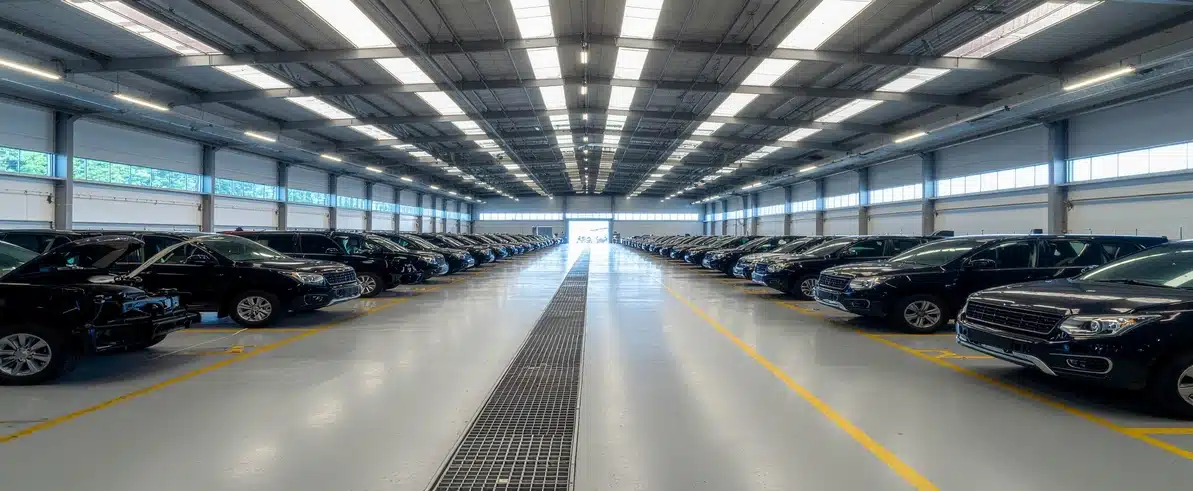
Workshop capacity at EIG’s Perth facility allows concurrent maintenance programmes to be managed across multiple vehicle types without compromising the standard applied to individual units. For clients with large fleets, maintenance scheduling is coordinated to minimise the number of vehicles off-road at any given time while maintaining the required service intervals across the entire fleet.
The Value of a Single Provider for Installation and Aftercare
When the same provider that installed a system also maintains it, the continuity of knowledge, documentation, and workmanship standard is significant. The technicians who built the installation understand its design intent, its known characteristics, and the specific decisions that were made during the build. That institutional knowledge is directly applicable to maintenance and fault diagnosis.
Using a different provider for maintenance introduces a gap. The incoming team must work from documentation alone, without the contextual knowledge that the installation team carries. In most cases this is workable, but it increases diagnosis time, introduces interpretation risk, and means that any undocumented adjustments made during the original installation are unknown to the maintenance team.
EIG offers fleet operators a single-provider model for installation and ongoing vehicle aftercare services. From the initial workshop vehicle fit out through to long-term fleet maintenance, the same team, the same documentation standards, and the same quality framework apply. For procurement managers and fleet operators who value consistency and accountability, this integrated approach reduces risk and simplifies the management of installed system performance over the vehicle’s working life.
To understand EIG’s full engineering capability supporting installation and maintenance programmes, the engineering team is available to discuss system design, specification reviews, and technical assessments as part of the broader fleet support offering.
Conclusion
Scheduled maintenance and aftercare are not optional extras for fleet operators managing vehicles with complex installed systems. They are the mechanism by which installation investment is protected, system performance is sustained, and compliance is maintained over the full operating life of the vehicle. EIG’s fleet maintenance services provide a structured, documented, and technically consistent approach to this ongoing responsibility, delivered by the same team and to the same standards as the original installation.
For fleet operators who want more than a one-time fit-out, EIG’s workshop services offer a long-term partnership built on shared knowledge of the installed systems, disciplined maintenance practices, and the documentation rigour that mining and heavy industry demands.
To discuss a scheduled maintenance programme or vehicle aftercare services arrangement for your fleet, call +61 (08) 9419 7318 and speak with the workshop team.
Engineered Installations Group supports fleet operators across Australia with installation, maintenance, and aftercare services delivered from its Perth workshop facility and field teams.



Leave A Comment