
When a critical component fails on a mine site, the immediate response focuses on replacement and operational recovery. The more valuable question often goes unanswered: why did it fail in the first place? Without understanding the true cause, operators face recurring failures, escalating costs, and persistent safety risks. Root cause analysis through FEA provides the engineering methodology to move beyond guesswork and identify the actual structural conditions that led to failure.
Why Visual Inspection Misses the Real Problem
What Fracture Evidence Reveals and What It Hides
A fractured mounting bracket, a cracked chassis component, or a failed suspension member presents obvious physical evidence. What remains hidden are the stress patterns, load distributions, and material behaviours that created the conditions for failure. Visual inspection identifies where a component broke but rarely reveals why the stresses concentrated in that location or what operational factors contributed to the failure mode.
Forensic engineering analysis addresses this gap by reconstructing the mechanical environment that existed before failure. Rather than examining only the damaged component, engineers analyse the entire load path, material properties, operational conditions, and design characteristics that influenced structural behaviour. Mining equipment operates in conditions that amplify stress factors – vibration from rough terrain, shock loads from material handling, thermal cycling from environmental extremes, and corrosive atmospheres all contribute to accelerated degradation. Understanding which factors drove the failure requires quantitative analysis, not assumption.
How FEA Reconstructs Failure Conditions
Building the Digital Model of the Failed Component
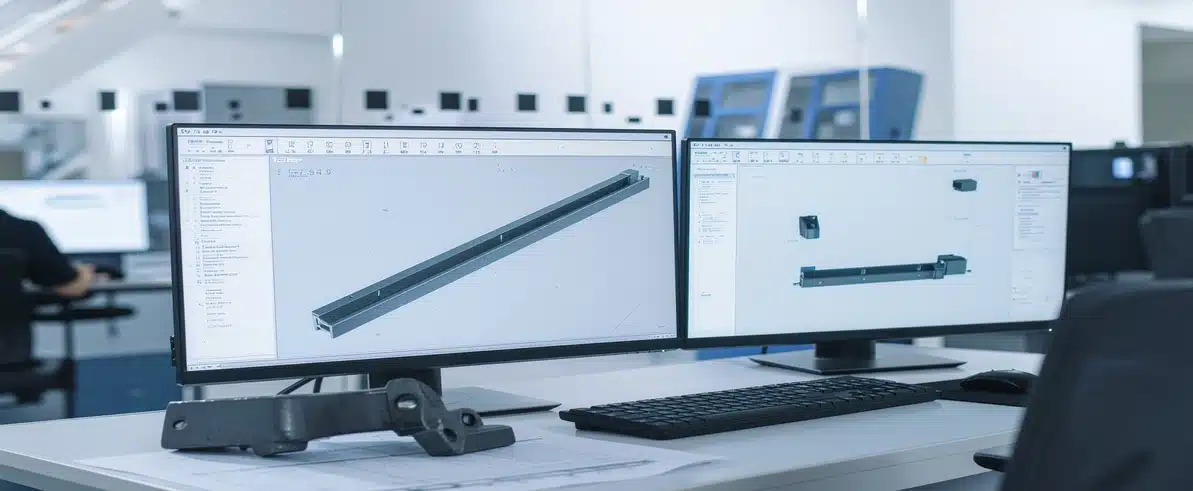
Root cause analysis through FEA begins with detailed documentation of the failed component, including measurements, photographs, material samples, and operational history. Engineers create a digital model that replicates the component’s geometry, material properties, and mounting configuration. This model becomes the foundation for stress analysis under various loading scenarios.
The analysis applies loads that represent actual service conditions: static loads from component weight and mounted equipment, dynamic loads from vehicle motion and terrain irregularities, thermal loads from operational temperature ranges, and any special loading from specific mining applications.
What the Stress Analysis Reveals
The finite element model calculates how these loads distribute through the component structure, revealing stress concentrations, deflection patterns, and areas experiencing fatigue cycles. Structural failure investigation through FEA identifies whether a component failed due to a single overload event, accumulated fatigue from repeated stress cycles, stress corrosion from environmental exposure, or a combination of factors.
By comparing the digital analysis results with the physical evidence from the failed component, engineers determine which mechanism initiated the failure sequence. Component stress analysis reveals critical information invisible to other inspection methods. A mounting point may appear adequately designed based on static load calculations but show dangerous stress concentrations when subjected to dynamic loading. A material substitution may provide equivalent strength in tension but inadequate performance under cyclic loading.
Distinguishing Failure Mechanisms From One Another
Failure mode identification requires distinguishing between different structural mechanisms. Ductile overload produces characteristic deformation patterns as material yields before fracture. Brittle fracture shows minimal deformation with rapid crack propagation. Fatigue failure displays progressive crack growth from a stress concentration point. Stress corrosion combines mechanical loading with chemical attack. Each mechanism demands different preventive strategies.
The finite element model allows engineers to test multiple scenarios without physical prototypes. What happens if the component experiences a shock load higher than the design specification? How do stress patterns change if the mounting configuration shifts? These questions receive quantitative answers through parametric analysis.
Identifying Failure Modes With Engineering Precision
Combining FEA With Measured Vibration Data
Vibration data analysis often complements FEA investigation. Accelerometer data from operating equipment reveals the actual vibration frequencies and amplitudes experienced during service. When this measured data feeds into the finite element model, the analysis reflects true operational conditions rather than theoretical assumptions. This combination of measured field data and computational analysis produces the most accurate structural failure investigation results.
Separating Design Limitations From Installation and Operational Factors
Forensic engineering analysis also examines whether the failure resulted from a design limitation, a manufacturing defect, an installation error, or operational factors exceeding design parameters. A component may be correctly designed for its intended application but installed in a configuration that creates unanticipated loads. Manufacturing variations may introduce stress concentrations not present in the design model.
Fracture mechanics simulation supports this separation of causes by characterising crack propagation paths and growth rates under different loading histories. This technique determines whether a crack progressed gradually over many cycles – indicating fatigue – or advanced rapidly, pointing toward a single overload event. Accurate root cause determination separates these contributing factors and directs corrective action at the right level.
From Analysis Results to Preventive Engineering
Addressing Root Causes Rather Than Symptoms
Understanding why a component failed provides the foundation for preventing future failures. If component stress analysis reveals that a mounting bracket experiences stress concentrations at weld locations, the solution may involve relocating welds, changing the weld profile, adding reinforcement, or redesigning the bracket geometry. If structural failure investigation shows that vibration induces fatigue in a specific frequency range, the solution may require vibration isolation, structural damping, or resonance frequency modification.
The engineering recommendations emerging from FEA-based failure investigation address root causes rather than symptoms. Strengthening a failed component without understanding the stress distribution may simply shift the failure location. Proper analysis identifies the most effective intervention – sometimes a minor geometry change eliminates a stress concentration more effectively than significant material addition.
For fleet operators managing multiple vehicles or equipment units, root cause analysis through FEA provides scalable solutions. Once the true failure mechanism is identified and corrected, the same modification prevents failures across the entire fleet. Engineered Installations Group applies this methodology across mining and heavy vehicle applications, where component reliability directly affects operational safety and productivity.
Informing Maintenance Scheduling and Inspection Protocols
Failure mode identification also informs maintenance scheduling and inspection protocols. If analysis reveals that a component accumulates fatigue damage predictably over a specific number of operating hours, preventive replacement can occur before failure. If stress analysis shows that a particular area experiences the highest stress, inspection efforts can focus on monitoring that location for crack initiation. Engineering analysis converts reactive maintenance into predictive maintenance.
The EIG Investigation Process
Data Collection and Physical Documentation
The forensic engineering analysis process begins with comprehensive data collection. Engineers document the failed component’s condition, service history, operating environment, and any unusual events preceding failure. Physical measurements capture geometry, and material samples enable laboratory testing to verify properties and identify any degradation. Photographs record damage patterns and fracture surfaces. This documentation provides the reference data for model validation.
Digital Modelling and Analysis Execution
Digital modelling recreates the component geometry using 3D scanning or CAD reconstruction services. Material properties from testing or engineering databases populate the model. The finite element mesh divides the geometry into elements small enough to capture stress gradients accurately. Analysis execution applies each load case and calculates the resulting stress, strain, and displacement fields throughout the component. Engineers compare these computational results with the physical damage patterns observed on the failed component.
Results Interpretation and Engineering Recommendations
Results interpretation distinguishes between contributing factors and root causes. Multiple factors may influence component performance, but the root cause is the condition that, if corrected, prevents failure recurrence. The investigation report documents the failure mechanism, identifies the root cause, quantifies the stress conditions that led to failure, and provides specific engineering recommendations for corrective action.
Implementation Support
Implementation support ensures that recommended modifications achieve the intended result. System design services translate analysis findings into detailed engineering drawings and specifications. Workshop or field installation applies the modifications to operational equipment. Follow-up monitoring verifies that the corrected design performs as predicted.
When to Apply FEA-Based Failure Investigation
High-Value Scenarios for Forensic Analysis
Not every component failure requires detailed forensic engineering analysis. However, when failures occur during normal operation, recur across multiple units, affect safety-critical components, or result in significant downtime and repair costs, root cause analysis through FEA provides clear value.
Structural failure investigation proves particularly valuable for custom-engineered components where design margins may be optimised for weight or packaging constraints. Mining equipment modifications, vehicle upfitting for specialised applications, and purpose-built attachment systems all benefit from failure analysis that validates design assumptions and identifies improvement opportunities.
Proactive Application During Design
Component stress analysis also supports proactive engineering during the design phase. Rather than waiting for a failure to occur, FEA identifies potential weak points before equipment enters service. This predictive approach prevents failures rather than explaining them after the fact. Fracture mechanics simulation can be applied during design to verify that geometry choices don’t create hidden crack propagation risks under service loading. Electrical engineering and mechanical system design both benefit from stress analysis that validates structural integrity under operational loading.
Conclusion
Mining and heavy industrial operations cannot afford recurring failures. Equipment downtime disrupts production schedules, repair costs accumulate, and safety risks escalate when component reliability becomes unpredictable. Root cause analysis through FEA provides the engineering foundation for reliable solutions by identifying the actual conditions that cause failure rather than treating visible symptoms.
Forensic engineering analysis transforms component failures from operational setbacks into engineering insights. Each investigation builds knowledge about how equipment performs under actual service conditions, how design assumptions compare with operational reality, and how modifications improve reliability.
Whether investigating a single component failure or addressing recurring problems across a fleet, Engineered Installations Group applies finite element analysis methodology to identify true root causes and develop effective engineering solutions. Call +61 (08) 9419 7318 to discuss failure investigation services and how structural analysis supports reliable equipment operation.



Leave A Comment