
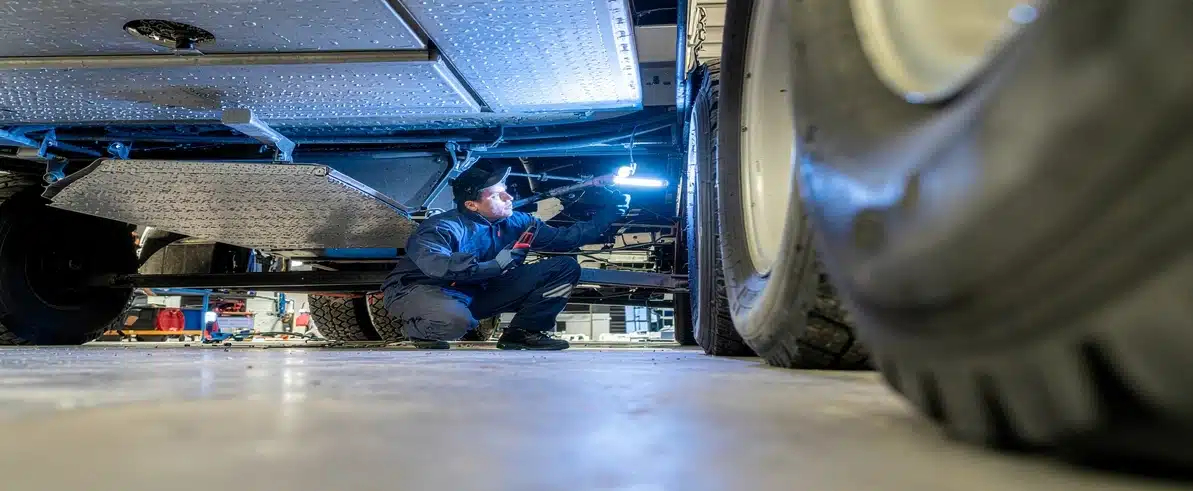
In a standard vehicle workshop, an inspection at the end of the job is often considered sufficient. The vehicle goes in, work is done, it comes out and gets checked. For mining vehicle fit-outs, that approach is not adequate. The operational environment, the compliance requirements, and the safety stakes of mining and heavy industry demand something more rigorous: a formal inspection before the installation begins and another after it is complete. These are not administrative steps. They are technical processes that directly determine whether a vehicle is fit to return to service and compliant to operate on site.
Mining vehicle inspection discipline is what separates installations that perform reliably in the field from those that create problems after the vehicle leaves the workshop. This article explains what pre- and post-install inspections involve, what they are designed to catch, and why skipping or shortcutting either one is a risk no serious operator should accept.
The Stakes of Getting It Wrong in a Mining Environment
Mining vehicles operate under conditions that would quickly expose any weakness in an installation. Sustained vibration, extreme dust loading, temperature cycling, and high-load duty cycles are continuous. A wiring termination that was not properly crimped, a bracket that was not torqued to specification, or a system that was not correctly commissioned will degrade rapidly under these conditions.
The consequences extend beyond the vehicle itself. On a mine site, a vehicle that fails due to an installation defect can result in unplanned downtime, production delays, and, in the worst cases, safety incidents. Mine operators take vehicle compliance seriously, and vehicles that do not meet site entry standards are turned back at the gate. The cost of returning a vehicle to the workshop for rectification after a failed mine-gate inspection is significant, and it falls on the operator who commissioned the work.
A structured pre post install inspection process is the primary mechanism for ensuring that these outcomes do not occur. It catches problems before they become failures, and it provides documented evidence that the installation was carried out to the required standard.
What Is a Pre-Installation Inspection?
A pre-installation inspection is a formal assessment of a vehicle conducted before any installation work begins. Its purpose is to establish a verified baseline of the vehicle’s condition and confirm that the installation can proceed as planned against the documented scope.
The pre-installation mining vehicle inspection is not a cursory walk-around. It is a structured review of the vehicle’s existing systems, physical condition, and readiness to receive the planned installation. The findings are documented, and any issues identified are resolved before the technician team begins work.
This stage matters because the assumptions built into an installation design are based on an expected vehicle specification. When a vehicle arrives in a condition that differs from those assumptions, the installation plan may need to be adjusted. Identifying this at intake, before work begins, is far less disruptive than discovering it mid-installation.
What the Pre-Installation Inspection Covers
The pre-installation mining vehicle inspection covers several distinct areas, each relevant to a different aspect of the planned installation.
Vehicle condition assessment documents the physical condition of the vehicle on arrival. This includes bodywork, chassis, cab, and underbody condition, any existing damage, and any prior modifications that were not part of the agreed scope. Prior modifications are particularly important, as they can affect mounting locations, wiring routing, and the electrical load budget for the vehicle.
Existing systems review assesses the vehicle’s current electrical architecture, including the state of existing wiring, connectors, fuse protection, and any previously installed systems that the new installation will interface with. If existing wiring is damaged or substandard, this is documented and the client is advised before work proceeds.
Mounting surface verification confirms that the surfaces and structures intended to carry the new installation are in adequate condition. Missing or damaged mounting points, corroded chassis sections, or compromised body panels are identified at this stage.
Drawing and specification confirmation verifies that the engineered drawings and installation specifications being used are appropriate for the vehicle as it actually exists, not just as it was expected to be. Any discrepancies are flagged and resolved through an engineering review before installation begins.
All findings are recorded in the pre-installation inspection report, which forms the opening entry in the vehicle’s installation job record.
Why Pre-Install Findings Matter
The value of the pre-installation mining vehicle inspection is most clearly demonstrated by what it prevents. Consider a vehicle that arrives with undocumented prior modifications to its electrical system. Without a pre-install inspection, the installation team may route new wiring through circuits that are already overloaded, or connect to a power source that has been modified in a way the original schematic does not reflect. The resulting installation may appear correct but will perform unpredictably in the field.
Or consider a vehicle with a chassis section that has been repaired but not fully restored to original specification. A mounting bracket installed to that section may carry load correctly in the workshop but fail under the dynamic loads of mine-site operation.
Pre-installation inspection catches these conditions before they are built into the installation. The findings either result in a scope adjustment, a rectification of the pre-existing condition, or a client notification that allows an informed decision to be made before work proceeds. In every case, the outcome is better than discovering the problem after the installation is complete.
What Is a Post-Installation Inspection?
A post-installation inspection is a formal verification of the completed installation before the vehicle is released from the workshop. Its purpose is to confirm that all work has been carried out to specification, that all systems function correctly, and that the vehicle is ready to return to service.
The post-installation mining vehicle inspection is the final hold point in EIG’s installation quality process. It is conducted by a senior technician or workshop supervisor who was not the primary installer on the vehicle, providing an independent review of the completed work. Nothing leaves the workshop without passing this stage.
The post-install inspection is also the point at which the installation documentation package is finalised. All test results, commissioning records, photographs, and sign-off entries are assembled into the handover package that travels with the vehicle.
What the Post-Installation Inspection Covers
The post-installation mining vehicle inspection is comprehensive. It covers the full scope of work completed on the vehicle, verified against the job card, engineered drawings, and any scope adjustments documented during the installation.
Electrical verification includes continuity testing on all installed wiring circuits, insulation resistance testing to confirm cable and connection integrity, and functional testing of all installed switches, sensors, and operator interfaces. For networked systems, communication between modules is confirmed and commissioning parameters are verified.
Mechanical verification covers torque checking of all critical fasteners, visual inspection of all brackets, mounts, and structural hardware, and confirmation that all penetrations through body panels or chassis members are correctly sealed.
System commissioning verification confirms that all installed technologies are operating correctly as configured, that operator interfaces function as intended, and that the installed systems do not introduce interference with the vehicle’s existing systems.
Visual and presentation review checks the overall quality of the installation, including loom dressing, cable management, label placement, and the general condition of the vehicle. A vehicle that leaves EIG’s workshop should present well, not just function correctly.
The results of every check are recorded in the post-installation inspection report. Any items that do not pass are rectified and re-checked before sign-off is granted.
The Compliance Dimension: Mine-Site Entry Requirements
For vehicles destined for mine-site operation, the post-install mining vehicle inspection has a direct compliance dimension. Mine operators impose documented vehicle entry standards that cover everything from electrical system integrity to the fitment of specific safety technologies. Vehicles that do not meet these standards are identified at the gate and returned for rectification.
EIG’s pre post install inspection process is designed with these requirements in mind. The pre-installation inspection confirms that the vehicle is a suitable platform for the planned installation. The post-installation inspection confirms that the installation meets the relevant standards. The documentation produced at both stages provides the evidence that mine operators and safety auditors require.
For clients who supply EIG with their mine site’s vehicle entry checklist or relevant standards at the point of booking, these requirements are incorporated into the inspection criteria from the outset. The result is a vehicle that arrives at the mine gate ready to pass, with the paperwork to support it.
EIG’s Inspection Process: Documentation and Traceability
Documentation is what transforms an inspection from a physical activity into a traceable record. EIG’s inspection process produces a complete documentary record for every vehicle, covering both the pre-installation and post-installation stages.
Pre-installation records include the vehicle condition assessment, existing systems review, mounting surface findings, and any scope adjustments made as a result of inspection findings. Post-installation records include all test results, torque verification entries, commissioning records, photographic evidence of the as-installed condition, and the final sign-off by the reviewing supervisor.
These records are provided to the client as part of the vehicle handover package and retained by EIG for ongoing reference. For fleet operators managing vehicles across multiple sites, this documentation provides a consistent baseline for future maintenance, modifications, and compliance reviews.
The traceability built into EIG’s facility-based installation services means that every decision made during the installation process, including those arising from inspection findings, is recorded and attributable. There are no undocumented adjustments, no verbal-only scope changes, and no gaps in the job record.
For vehicles that require on-site installation support at remote locations, the same pre post install inspection discipline is applied by EIG’s field teams, adapted to the site environment while maintaining the same documentation standard.
Conclusion
Pre- and post-install inspections are not procedural formalities. They are the technical foundation on which reliable, compliant mining vehicle fit-outs are built. The pre-installation mining vehicle inspection ensures the installation starts from a verified baseline. The post-installation inspection ensures it finishes to a verified standard. Together, they close the loop on installation quality and provide the documented evidence that operators, site managers, and safety auditors need to have confidence in the vehicles they are sending to site.
EIG’s structured inspection approach is built into every workshop installation programme, not offered as an optional add-on. For clients operating in mining and heavy industry, where the cost of an installation failure is measured in downtime, compliance risk, and safety exposure, that consistency is precisely what the process is designed to deliver.
To discuss your mining vehicle fit-out requirements or to understand how EIG’s inspection process applies to your fleet, call +61 (08) 9419 7318 and speak with the workshop team.
Engineered Installations Group works with fleet operators, procurement managers, and site supervisors across Australia to deliver mining vehicle installation outcomes that are compliant, documented, and built to last.



Leave A Comment