
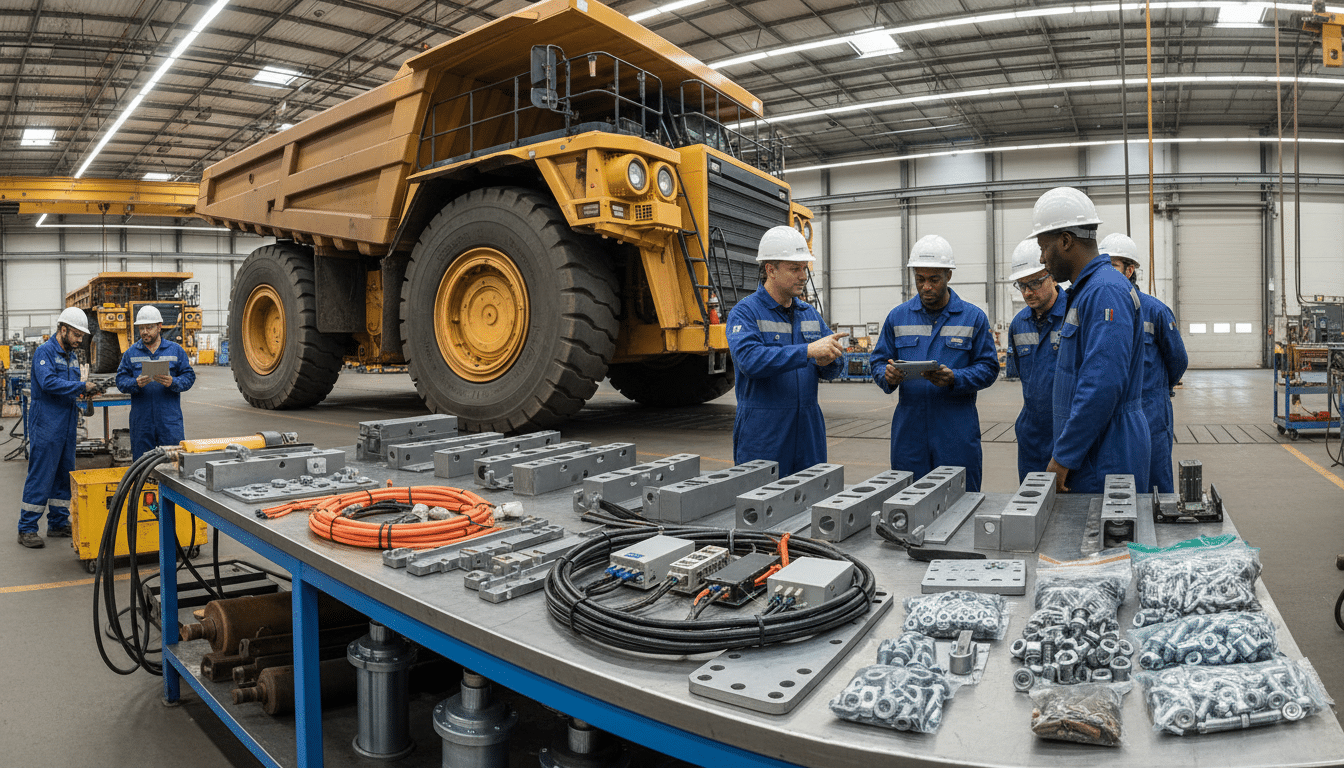
Heavy vehicle fleets operating in mining and transport sectors face a persistent challenge: upgrading multiple units with new safety systems, fleet management technology, or compliance-driven components while minimising downtime and maintaining quality consistency. Customised engineering kits address these operational pressures by delivering pre-configured, tested component packages designed for specific vehicle platforms and upgrade requirements.
What Defines a Customised Engineering Kit
A customised engineering kit is a pre-assembled package containing all necessary components, hardware, wiring, mounting systems, and documentation required to complete a specific vehicle upgrade or installation. Unlike purchasing individual components and designing integration solutions on-site, these kits arrive with the engineering work already completed: compatibility verified, mounting solutions designed, and installation sequences documented.
How Kits Differ From Off-the-Shelf Products
Bespoke retrofit kits differ fundamentally from commercial off-the-shelf products. While standard products offer fixed configurations, customised kits account for specific vehicle chassis variations, existing electrical architectures, operational environment requirements, and integration with legacy systems already installed on the vehicle. For mining operations upgrading collision avoidance systems across a haul truck fleet, or transport companies installing fleet management system integration across prime movers, kits eliminate the repetitive engineering work that would otherwise occur with each vehicle. The design phase happens once, validation occurs in controlled workshop conditions, and subsequent installations follow proven procedures.
A mine-spec vehicle fitout kit for a particular haul truck model, for example, incorporates mounting solutions designed around that chassis geometry, wiring harnesses that interface with existing vehicle networks, and component selections rated for the dust, vibration, and temperature extremes of that specific operating environment.
What Goes Into a Complete Kit
The composition of engineering kits varies with application, but typical packages include electrical, mechanical, and documentation elements designed as integrated systems rather than discrete parts. This integration is what separates a genuine bespoke retrofit kit from a collection of compatible components: every element has been selected and configured with awareness of every other element in the same package.
The Electrical Foundation of Every Kit
Electrical components form the foundation of most heavy vehicle upgrade kits. Getting the electrical layer right determines whether every other system in the kit performs reliably across thousands of operating hours.
Custom Wiring Harness Design and Circuit Pre-Configuration
Custom wiring harness design reduces field splicing and keeps routing closer across multiple vehicle installations. Harnesses arrive pre-terminated with connectors matched to both new components and existing vehicle electrical systems, with wire gauge selections based on current loads and circuit protection requirements.
Control modules, relays, fuses, and circuit protection devices come pre-configured and tested as complete circuits. For fleet management system integration projects, this means communication modules, GPS antennas, and sensor inputs arrive as functional systems rather than components requiring on-site programming and integration troubleshooting. This front-loading of electrical assembly work into a controlled workshop environment is one of the primary efficiency gains that fleet modernisation solutions built on kit packages deliver.
Connector Selection and Environmental Ratings
Connector selections account for vibration resistance, environmental sealing requirements, and maintenance accessibility. Mining applications often specify sealed connections in high-vibration zones, while connections requiring periodic maintenance receive tool-free designs accessible without vehicle disassembly. The cost of a connector failure at a remote mine site, in technician mobilisation time alone, justifies the upfront specification effort many times over.
The Mechanical and Structural Layer
Mounting brackets, reinforcement plates, and fastener packages address the mechanical integration challenge. Heavy vehicle component installation often requires custom fabrication to mount equipment on chassis rails, in cab spaces, or on vehicle superstructures not originally designed for aftermarket additions.
Mounting Design and Structural Analysis
Engineering kits include mounting solutions developed through CAD modelling of specific vehicle platforms, with finite element analysis used to check load paths and stress distributions before a bracket is fabricated. Bracket designs account for thermal expansion, vibration isolation requirements, and access for installation without requiring chassis modifications that void manufacturer warranties.
This analysis matters in practical terms. A mounting bracket that appears structurally adequate on paper may develop fatigue cracks under the dynamic loading of a haul truck operating on rough ore haul roads. Validating the design computationally before fabrication prevents these failures from appearing in the field, where the cost of rectification is orders of magnitude higher than the analysis cost.
Material Selection for Harsh Environments
Material selections reflect operating environment demands: zinc-plated or stainless steel hardware for corrosion resistance, vibration-dampening isolators for sensitive electronics, and grade ratings appropriate for structural loads. Kits designed for mine-spec vehicle fitout applications include corrosion protection exceeding road transport requirements, acknowledging the combination of dust, moisture, and chemical exposure that mining vehicles encounter across their operating life.
How Pre-Engineering Streamlines the Installation Process
The efficiency advantage of engineering kits becomes apparent during installation execution. Traditional component upgrade projects require technicians to interpret instructions, fabricate mounting solutions, route wiring through chassis structures, and troubleshoot integration issues as they arise. Each vehicle becomes a custom project with unique challenges and unpredictable timelines.
Converting Custom Projects Into Repeatable Procedures
Pre-engineered kits transform this variable process into a repeatable procedure. Engineered Installations Group keeps that procedure with the kit pack. Installation documentation includes vehicle-specific instructions with photography showing exact mounting locations, wiring routing paths, and connection sequences. Technicians follow proven procedures rather than solving problems, reducing both installation time and the skill level required for consistent results.
For fleet modernisation solutions covering multi-vehicle upgrade programs, this standardisation delivers compounding benefits. The first installation validates the kit design and installation procedure. Subsequent installations benefit from technician familiarity, refined processes, and elimination of the learning curve that occurs with custom builds. A fleet upgrade program that might require many hours per vehicle for custom installations can reduce substantially per vehicle with proven kit procedures – a difference that accumulates significantly across a large program.
Quality Consistency Across a Fleet
Quality consistency improves alongside efficiency. When each installation follows identical procedures using identical components, the variation between vehicles decreases. Wiring routes match across the fleet, mounting integrity remains consistent, and troubleshooting simplifies because technicians know exactly how correctly installed systems should appear. This consistency is particularly valuable for fleet modernisation solutions where maintenance teams need to service vehicles across multiple sites without encountering vehicle-specific configurations.
Quality Assurance and Testing Before Deployment
Engineering kits undergo validation before deployment that individual component installations cannot practically achieve. 3D services can capture the as-fitted layout before later kits are copied. Workshop-based testing occurs in controlled conditions where electrical systems receive functional verification, mechanical assemblies undergo fit checks on representative vehicle samples, and documentation accuracy is confirmed through trial installations.
Workshop Validation and Pre-Deployment Testing
Electrical harnesses receive continuity testing, insulation resistance verification, and connector retention checks before packaging. For complex systems involving multiple circuits, functional testing with actual control modules confirms proper operation before kits leave the assembly facility. This front-loaded quality assurance prevents the scenario where installation teams discover wiring errors or component incompatibilities only after vehicle disassembly has begun – a situation that halts installations and requires emergency engineering support.
Documentation packages include electrical schematics, mechanical assembly drawings, torque specifications, and commissioning checklists. 3D services can capture the as-fitted layout before later kits are copied. These materials support both initial installation and future maintenance, providing service teams with accurate system information rather than requiring reverse-engineering of installations. EIG’s on-site installation teams use this documentation to execute kit installations at remote locations with confidence, without requiring real-time engineering consultation for every fitment decision.
Compliance Built Into Kit Design
Standards checks for mining and transport work belong in kit design, not only after the kit is on the vehicle. When regulatory requirements mandate specific wire types, circuit protection methods, or component certifications, kit specifications incorporate these requirements from the outset. Installation teams receive components that meet compliance standards rather than making field decisions about regulatory interpretation – a meaningful risk reduction on sites where non-compliant equipment is turned away at the gate.
Applications Across Mining and Transport Fleets
The versatility of bespoke retrofit kits extends across the full range of heavy vehicle upgrades common in mining and transport operations.
Collision Avoidance, Fleet Management, and Autonomous Systems
Collision avoidance system installations represent a frequent kit application. These systems require radar or camera sensors mounted at specific vehicle locations, wiring integration with vehicle power and communication networks, in-cab displays and alert systems, and often integration with existing fleet management platforms. A kit approach delivers sensor mounting brackets designed for specific vehicle models, pre-routed harnesses that account for chassis structures and moving components, and tested integration with vehicle electrical systems.
Fleet management system integration projects benefit similarly. Vibration data analysis can show whether a newly mounted module is seeing more shake than the design assumed. GPS tracking modules, engine data interfaces, driver behaviour monitoring sensors, and communication hardware arrive as complete systems with vehicle-specific mounting and wiring solutions. For transport operators upgrading large prime mover fleets, kit standardisation ensures consistent data quality across the fleet and simplified maintenance when components require service or replacement.
Autonomous vehicle preparation for mining applications involves substantial electrical and sensor system additions. LIDAR sensors, redundant control systems, emergency stop circuits, and autonomous operation interfaces require precise installation and integration. Engineering kits designed for specific haul truck or loader models provide the foundation for consistent autonomous system deployment across mining fleets.
The Cost and Time Case for Kit-Based Upgrades
The financial case for engineering kits centres on reduced labour costs, predictable project timelines, and decreased vehicle downtime.
Labour Savings and Downtime Reduction
Labour cost reduction stems from faster installation times and reduced troubleshooting. When installation hours decrease compared to custom builds, labour savings accumulate quickly across multi-vehicle programs. Additionally, the reduced skill level required for kit installations allows deployment of broader technician pools rather than requiring senior staff for every installation.
Workshop installation services give a controlled place to build and check the first kit. Kit-based projects follow proven procedures with known durations, allowing accurate scheduling of vehicle downtime and resource allocation. Mining haul trucks and transport vehicles on tight schedules make downtime expensive – reducing installation time and making that time predictable allows maintenance scheduling during planned windows rather than extended unplanned outages. Engineered Installations Group manages these programs from initial kit engineering through to field deployment, providing the single-point accountability that multi-vehicle upgrade programs require.
Selecting the Right Approach for Your Fleet
Not every vehicle upgrade justifies a full engineering kit approach. Customized kits still need the same vehicle-platform check. Single-vehicle installations or upgrades to uncommon platforms may prove more economical through custom builds. The kit advantage emerges when installation quantities justify the upfront engineering investment, or when operational requirements demand consistency across a fleet.
Fleet managers should consider vehicle platform commonality within their operations. Fleets operating standardised vehicle models gain maximum benefit from kits designed for those specific platforms. The complexity of the upgrade also influences viability – complex installations involving multiple systems, extensive wiring, custom mounting, and integration with existing vehicle systems deliver the greatest efficiency gains through kit standardisation. System design should sit in the same pack as the kit drawing.
For kit solutions matched to a fleet upgrade, Contact us to check the current scope.



Leave A Comment