
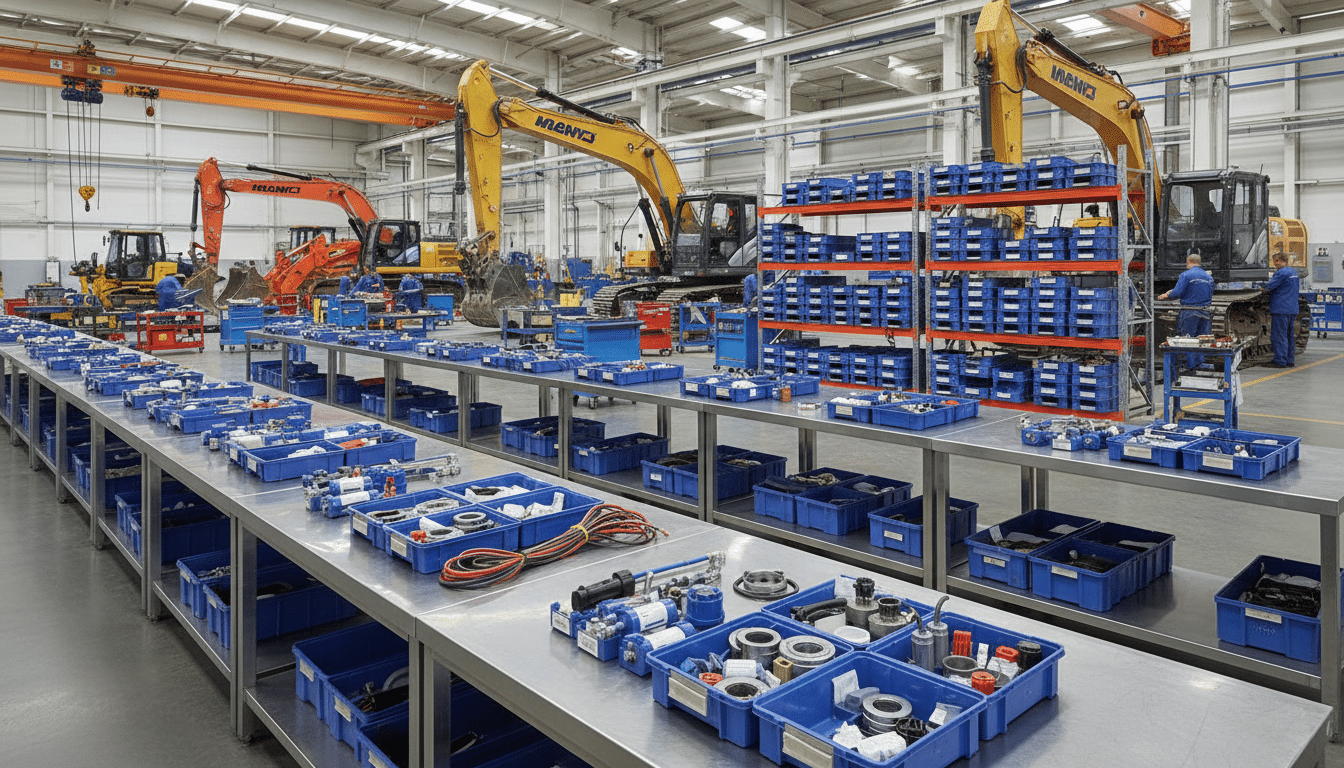
Fleet managers operating dozens or hundreds of heavy vehicles face a persistent challenge: maintaining consistent service quality across multiple units while controlling inventory costs and minimising downtime. When each vehicle requires regular preventive maintenance, parts procurement becomes chaotic, technician efficiency drops, and compliance documentation fragments across disparate systems. A single comprehensive kit package addresses these issues by standardising components, streamlining inventory, and ensuring every maintenance event follows the same quality protocols.
The Fleet Manager’s Maintenance Challenge
Managing maintenance for high-volume fleets creates compounding complexity. A fleet of mine-spec vehicles requiring monthly servicing, quarterly inspections, and annual overhauls generates significant procurement activity. Without standardisation, each maintenance event involves sourcing components from multiple suppliers with varying lead times, verifying part compatibility across different vehicle configurations, managing inventory across hundreds of individual part numbers, training technicians on inconsistent component specifications, and documenting compliance separately for each maintenance event.
How Fragmentation Drives Costs Up
This fragmentation drives costs upward. Emergency procurement of missing parts adds significant cost premiums. Technician time spent identifying correct components reduces productive service bay time. Inventory holding costs accumulate as safety stock multiplies across part variations. Most critically, maintenance delays extend vehicle downtime, directly impacting operational capacity.
The compliance dimension adds further pressure. Mining operations require documented evidence that maintenance follows manufacturer specifications and safety standards. When components vary between maintenance events, documentation becomes inconsistent. Audit trails fragment. Regulatory risk increases. Mine-spec vehicle preparation that accounts for the specific duty cycles and environmental conditions of each site is difficult to demonstrate when components are sourced reactively rather than specified systematically.
What a Comprehensive Kit Package Resolves
Standardised maintenance kits consolidate all components required for specific service intervals into pre-assembled packages. A comprehensive kit for quarterly heavy vehicle servicing might include filters (oil, fuel, air, hydraulic) matched to vehicle specifications, fluids in correct quantities, wear components with predictable replacement cycles, fasteners and consumables, inspection supplies, and documentation templates pre-populated with kit specifications. The customisation process begins with vehicle audits – engineers assess operational conditions, duty cycles, and environmental factors affecting component wear rates, so that a vehicle operating in Pilbara dust conditions receives different air filtration specifications than one working in a Goldfields operation.
Quality assurance protocols apply throughout kit assembly. Components undergo incoming inspection against manufacturer certifications. Assembly follows documented procedures with verification checkpoints. Each kit receives pre-delivery testing where applicable, and documentation provides traceability from component manufacture through installation. Those protocols apply across workshop installation services and field work, whether the check happens at Forrestdale or on a remote site.
How Bulk Inventory Streamlining Works in Practice
From Hundreds of SKUs to Managed Kit Inventory
Standardised maintenance kits align directly with preventive maintenance scheduling. When service intervals are predetermined, kit requirements become predictable. A fleet manager knows that a fleet on quarterly service cycles needs a defined number of kits every 90 days. Procurement shifts from reactive ordering to scheduled delivery.
This predictability transforms inventory management. Instead of maintaining safety stock across hundreds of individual components, operations stock complete kits. Bulk inventory streamlining reduces inventory holding costs, decreases warehouse space requirements, and simplifies stock rotation because kits have uniform specifications and shelf life. Budget forecasting gains similar benefits: kit pricing remains consistent across orders, eliminating variance from spot market component purchases. Workshop installation services operating on kit-based programs can schedule service bays with confidence because component availability is guaranteed rather than assumed. Maintenance cost per vehicle becomes a known quantity, which means financial planning improves because major cost drivers stabilise.
Reducing Downtime Through Component Availability
The operational impact shows most clearly in reduced downtime. When a vehicle enters service, technicians have all required components immediately available. No delays waiting for parts. No productivity loss from component identification. Service bay turnaround times improve compared to ad-hoc maintenance approaches.
Fleet management system integration extends these benefits further. 3D services can lock as-fitted module positions before later kits are copied. Modern telematics platforms track vehicle hours, kilometres, and operational parameters. When integrated with kit-based maintenance programs, these systems automatically trigger kit orders as vehicles approach service intervals. The entire maintenance cycle operates with minimal manual intervention, and fleet managers have visibility of upcoming kit demand rather than discovering parts shortages when vehicles are already in the service bay.
Quality Assurance and Compliance Through Standardisation
Pre-assembled kits enable quality controls that are not practical with individual component procurement. Engineered Installations Group keeps those checks with the kit pack. Every kit undergoes identical assembly verification. Component compatibility is confirmed before deployment. Installation errors from incorrect part selection are eliminated.
Pre-Assembly Verification and Documentation Consistency
Documentation standardisation makes later audits easier to follow. Customized kits still need the same record pack. 3D services can lock as-fitted positions before later kits are copied. Each kit includes service checklists pre-populated with component specifications, torque values, and inspection criteria. Technicians complete identical documentation for every maintenance event. Audit trails become consistent and comprehensive.
For mining operations, this standardisation directly supports safety management systems. When maintenance follows documented procedures using named components, later checks are easier to follow. That is a record, not a safety result. Third-party audits proceed efficiently because documentation follows uniform formats across the entire fleet, regardless of site or technician. On-site field teams executing kit-based maintenance at remote locations produce records identical in format and content to those generated in controlled workshop environments.
Traceability for Incident Investigation and Warranty Claims
The traceability dimension is useful during incident investigations or warranty claims. Finite element analysis can sit beside that pack when a mount is being changed. Complete component history exists for every maintenance event. If a failure occurs, engineers can immediately identify which kit supplied the component, trace it to manufacturer batch records, and determine whether similar components in other vehicles require inspection. This capability transforms what would otherwise be a wide-ranging investigation into a targeted, evidence-based process.
Scalability for Multi-Site and Remote Operations
Comprehensive kit packages help geographically dispersed operations. Vibration data analysis can show whether a replaced module is seeing more shake than expected. Mining companies operating multiple sites face logistical complexity when each location manages its own parts inventory. Standardised kits centralise procurement while enabling distributed deployment.
Centralised Procurement, Distributed Deployment
A company operating several mine sites can consolidate kit assembly at a central facility, then distribute to locations based on scheduled maintenance. This approach captures volume procurement discounts while ensuring consistent quality across all sites. Remote locations receive complete kits rather than managing hundreds of individual part numbers with variable lead times from multiple suppliers.
Bulk inventory streamlining at the supply chain level means freight costs decrease through consolidation, receiving and inventory processes at remote sites simplify, and incoming shipments contain complete, documented kits rather than mixed component deliveries requiring cross-referencing against order documentation.
Training Efficiency and Field Service Consistency
Training efficiency improves substantially. Technicians working with standardised kits learn consistent procedures applicable across all vehicles. A technician trained at one site can immediately work effectively at another because component specifications and installation procedures remain identical. This flexibility proves valuable when operations scale workforce between sites based on production demands.
Field service teams deploying to remote locations carry complete kits with verified components. That reduces the chance of a missing part. Local supply can still run short. Service quality still depends on the check on the day. This is the practical benefit of system design that considers long-term supportability from the outset – component selections favour readily available parts, wiring colour codes and labelling remain consistent, and mounting locations are standardised so replacement components install in the same positions years after initial fitment.
Implementation and Integration With Existing Systems
From Vehicle Assessment to Full-Scale Deployment
Transitioning to kit-based maintenance begins with comprehensive vehicle assessment. Engineers document current maintenance practices, component specifications, and service intervals. This baseline identifies standardisation opportunities and customisation requirements. Kit specification development follows, selecting components based on operational conditions, manufacturer recommendations, and historical performance data. This specification work is the engineering equivalent of mine-spec vehicle preparation – defining exactly what is required for the specific operating environment before a single component is ordered.
Pilot programs validate kit specifications before full deployment. Initial kits undergo field testing during actual maintenance events. Technicians provide feedback on component selection, packaging, and documentation. Adjustments address any gaps or inefficiencies identified during pilots. Full-scale implementation then proceeds in phases – rather than converting entire fleets simultaneously, operations transition vehicle cohorts as they reach scheduled maintenance intervals, minimising disruption and allowing continuous refinement.
Integration With Maintenance Management Platforms
Integration with maintenance management systems requires technical coordination. Electrical engineering solutions and finite element analysis sit in that pack when the job includes harness or mount changes. Vibration data analysis can show whether a replaced module is seeing more shake than expected. Kit identifiers must populate work order systems. Inventory management platforms need configuration to track kits as discrete units. Documentation templates integrate with compliance management software. This systems integration ensures kit-based maintenance aligns seamlessly with existing operational workflows rather than operating as a parallel, manually managed process.
Measuring the Performance Improvement
Quantifiable metrics demonstrate kit package value for operations that track maintenance performance. Service bay time per vehicle typically decreases when technicians work with pre-assembled kits versus sourcing individual components. Inventory holding costs reduce as operations shift from stocking hundreds of individual part numbers to managing complete kit inventory. Purchasing workload decreases substantially – instead of processing many purchase orders for individual components, procurement manages scheduled kit deliveries.
Compliance documentation preparation time reduces because standardised documentation creates consistent, comprehensive records that map directly to audit requirements. Unplanned downtime decreases as preventive maintenance scheduling improves: standardised kits ensure scheduled maintenance occurs on time because component availability no longer causes delays. New technician onboarding accelerates when maintenance procedures follow consistent protocols using standardised components.
For a high-volume maintenance kit program, Contact us to check the current fleet scope.



Leave A Comment