
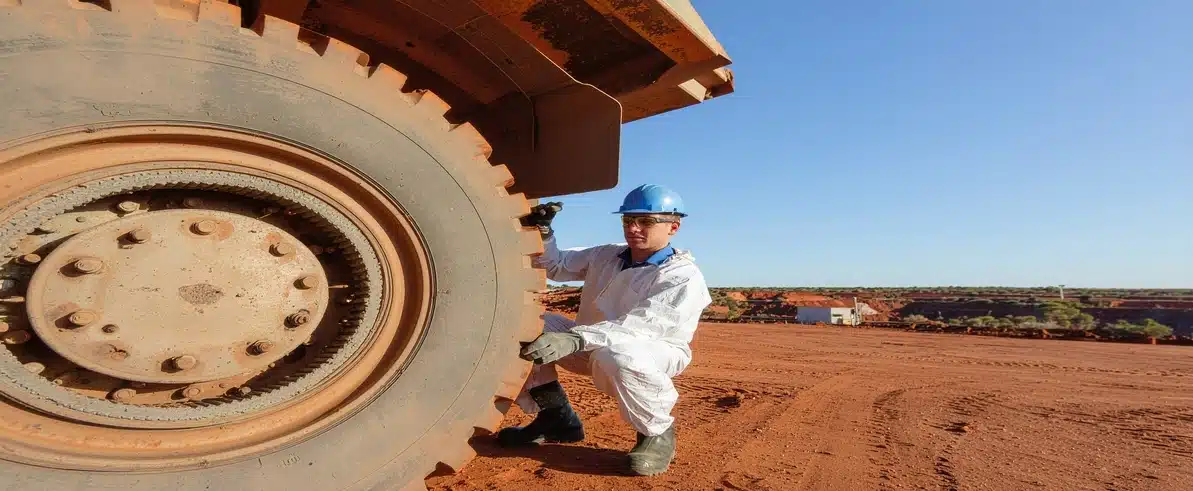
Mining operations depend on continuous equipment availability. A single unexpected failure in critical fleet assets can halt production, trigger safety incidents, and generate repair costs that dwarf planned maintenance budgets. Vibration data analysis provides mining operators with advance warning of developing mechanical problems, enabling intervention before minor issues escalate into catastrophic failures.
Why Machinery Health Monitoring Matters in Mining
The Cost of Reactive Maintenance on Mining Equipment
Every piece of rotating or reciprocating machinery generates characteristic vibration patterns during normal operation. These patterns function as a mechanical fingerprint, unique to each piece of equipment in its healthy state. Machinery health monitoring involves capturing these patterns through specialised sensors, establishing baseline signatures, and continuously monitoring for deviations that indicate developing problems.
Mining equipment operates in demanding environments where dust, temperature extremes, and heavy loads accelerate wear. These conditions make condition monitoring systems particularly valuable, as deterioration progresses faster than in less demanding applications. Haul trucks, excavators, loaders, and processing equipment all generate vibrations that reveal their internal mechanical condition.
What Vibration Signatures Reveal About Mechanical Condition
Vibration data analysis focuses on multiple vibration characteristics: amplitude (intensity), frequency (cycles per second), and phase (timing relationships between components). Changes in these parameters correlate with specific mechanical problems. A bearing beginning to fail generates distinct frequency patterns. Shaft misalignment produces characteristic phase relationships. Rotor imbalance creates amplitude changes at specific frequencies.
Signal processing techniques applied to this raw data extract meaningful diagnostic information from the complex vibration waveforms that mining equipment produces during normal operation.
How Machinery Health Monitoring Works
Sensor Installation and Baseline Establishment
Implementing machinery health monitoring begins with sensor installation at strategic locations on equipment. Accelerometers mounted on bearing housings, gearbox casings, and structural points capture vibration data during operation. These sensors convert mechanical motion into electrical signals that data acquisition systems record and store.
Initial data collection establishes baseline vibration signatures when equipment is new or freshly overhauled. These baselines represent the healthy state against which all future measurements compare. Mining operators typically collect baseline data across various operating conditions: different loads, speeds, and temperatures that equipment experiences during normal work cycles.
Ongoing Monitoring and Analysis
Ongoing monitoring involves periodic or continuous data collection, depending on equipment criticality and failure consequences. High-value assets or those with severe failure implications receive continuous monitoring. Less critical equipment undergoes periodic testing at intervals ranging from weekly to quarterly, based on operating hours and historical reliability data.
Analysis compares current vibration data against established baselines and known failure signatures. Experienced analysts or automated diagnostic software apply signal processing techniques to identify patterns indicating specific problems, distinguishing between normal operational variations and genuine deterioration signals. Engineered Installations Group integrates machinery health monitoring capabilities with broader engineering solutions, supporting mining operators in protecting fleet investments through systematic condition assessment.
Early Detection of Equipment Failures
Bearing Failure Detection
Vibration analysis excels at detecting common failure modes before they cause equipment shutdown. Bearing failures represent one of the most frequent problems in rotating machinery. As bearings deteriorate, they generate vibrations at characteristic frequencies related to bearing geometry and rotational speed. Analysis detects these signatures weeks or months before bearings reach failure, providing ample time for planned replacement during scheduled maintenance windows.
Shaft Misalignment and Rotor Imbalance
Shaft misalignment produces forces that accelerate bearing wear and generate excessive vibration. Misalignment creates distinctive patterns in vibration phase relationships between measurement points. Detecting and correcting misalignment prevents secondary damage to bearings, seals, and couplings, extending component life significantly.
Rotor imbalance occurs when mass distribution around a rotating component becomes uneven, generating vibration at frequencies matching rotational speed. Imbalance develops gradually through material buildup, erosion, or component wear. Early detection allows rebalancing before vibration levels damage bearings or cause structural fatigue.
Gear Faults and Structural Looseness
Gear problems manifest through vibrations at frequencies related to tooth engagement patterns. Worn teeth, cracked gears, or lubrication problems each produce characteristic signatures. Identifying these problems early prevents catastrophic gear failures that damage gearboxes and require extensive repairs.
Looseness in mounting bolts, structural cracks, or worn couplings creates vibration patterns distinct from other problems. The progression from detectable vibration changes to catastrophic failure typically spans weeks or months, providing opportunities for planned interventions that avoid production disruptions and control repair costs.
Predictive Maintenance Strategies for Mining Fleets
Condition-Based Replacement vs Fixed Schedules
Traditional maintenance approaches follow fixed schedules based on operating hours or calendar time, replacing components regardless of actual condition. Predictive maintenance strategies use condition data to schedule interventions based on actual equipment health, extending component life while maintaining reliability.
Fleet asset management programmes integrate vibration data with other condition indicators: oil analysis, thermography, and performance monitoring. Mining equipment diagnostics combining multiple data sources provide higher confidence in condition assessments than any single indicator.
Cost Advantages of Predictive Approaches
Emergency repairs following unexpected failures cost significantly more than planned maintenance due to production losses, overtime labour, expedited parts procurement, and secondary damage from catastrophic failures. Predictive maintenance reduces these emergency situations while avoiding premature component replacement.
Maintenance resource allocation improves when condition data guides scheduling. Technicians focus efforts on equipment requiring attention rather than performing unnecessary work on healthy assets. Finite element analysis capabilities complement vibration monitoring by assessing structural integrity and predicting stress concentrations that accelerate component wear.
Benefits for Mining Operations
Production Continuity and Equipment Lifespan
Unplanned downtime represents the most significant cost that machinery health monitoring addresses. Preventing unexpected failures through early detection maintains production schedules and revenue streams. Equipment lifespan extends when problems receive attention before causing secondary damage – a failing bearing detected early requires bearing replacement, while the same bearing allowed to fail catastrophically damages shafts, housings, and adjacent components, multiplying repair costs.
Safety and Maintenance Efficiency Improvements
Safety improvements accompany reliability gains. Catastrophic mechanical failures create hazards for operators and maintenance personnel. Early problem detection and controlled shutdowns eliminate these hazards.
Production planning benefits from advance warning of required maintenance. Scheduling equipment downtime during lower-demand periods or coordinating with other maintenance activities minimises production impact. On-site installation support and workshop services provide the technical capabilities required for sensor installation, system commissioning, and integration with existing fleet management infrastructure.
Implementation Considerations
Equipment Selection and Sensor Placement
Successful machinery health monitoring programmes require appropriate equipment selection. Mining environments demand rugged sensors withstanding shock, vibration, temperature extremes, and contamination. Wireless systems reduce installation complexity but require reliable communication in challenging environments.
Sensor placement follows established guidelines based on equipment type and monitoring objectives. Bearing locations, gearbox casings, and structural mounting points provide optimal vibration transmission. Poor sensor placement yields unreliable data regardless of equipment quality.
Data Analysis, Training, and Programme Integration
Data analysis capabilities determine programme effectiveness. Automated diagnostic systems apply signal processing techniques consistently but may miss subtle problems requiring experienced interpretation. Many operations combine automated screening with periodic expert review for critical assets.
Personnel training ensures data collection consistency and appropriate response to findings. Integration with existing maintenance management systems provides maximum value, feeding vibration data directly into work order systems, parts procurement, and scheduling tools.
Establishing a Vibration Monitoring Programme
Prioritisation, Baselines, and Alarm Thresholds
Programme development begins with equipment criticality assessment. Prioritisation considers failure consequences: production impact, repair costs, safety implications, and replacement lead times. Baseline establishment requires capturing vibration signatures across representative operating conditions.
Monitoring intervals balance detection requirements against resource constraints. Alarm thresholds define when vibration levels trigger maintenance action – threshold refinement based on experience optimises the balance between early warning and false alarm rates.
Trending and Documentation
Trending capabilities reveal deterioration rates. Absolute vibration levels provide snapshots, but trends show whether conditions are stable, improving, or degrading. Trend analysis supports maintenance timing decisions by predicting when vibration will reach critical levels.
Documentation systems capture baselines, measurement history, maintenance actions, and findings. Digital systems with automated reporting reduce administrative burden while improving data accessibility. Building comprehensive condition monitoring systems takes time – starting with critical assets and expanding coverage in phases builds expertise while delivering early benefits.
Conclusion
Vibration data analysis transforms mining fleet maintenance from reactive crisis management to proactive asset protection. By detecting developing problems weeks or months before failure, machinery health monitoring enables planned interventions that prevent production disruptions, control costs, and eliminate safety hazards. For mining operations seeking to protect fleet investments and maintain production reliability, implementing systematic condition monitoring systems represents a proven approach to reducing unplanned downtime and controlling maintenance costs. Call +61 (08) 9419 7318 to discuss vibration monitoring solutions for your mining fleet.



Leave A Comment