
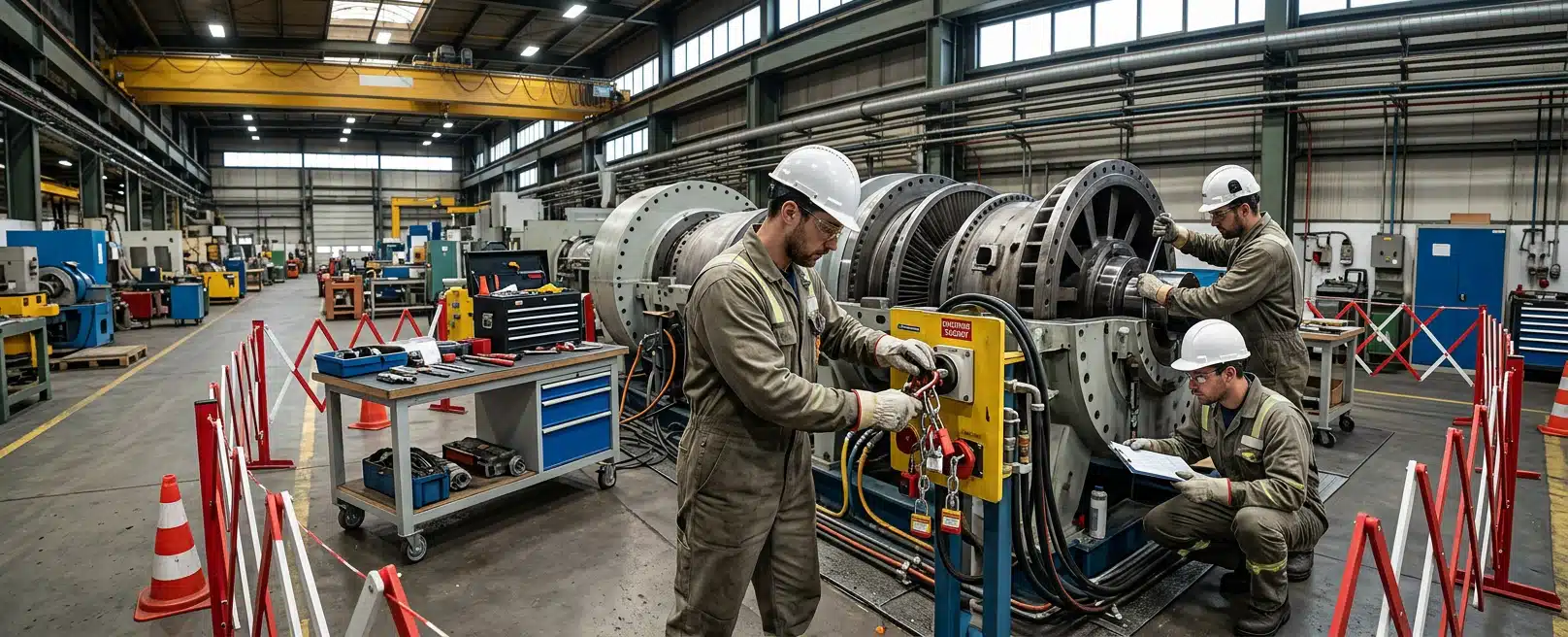
Lockout, tagout and isolation sit in the same job as the install itself. On a mine-spec vehicle or a plant-mounted system, energy that is still live decides whether a harness, sensor or control module can be fitted without putting people next to stored electrical, hydraulic or pneumatic energy.
The engineering team plans that work against one asset, not a generic kit list. Isolation ownership, stored-energy checks, PPE for the step in front of you, and a controlled return of power all have to be agreed before the first connector is opened on that vehicle or machine.
The engineering team brings mechanical fit-out and electrical work together at the engineering team so the isolation interface is written against the vehicle or machine you actually run. Site rules, OEM manuals and the host isolation procedure remain the documents that govern the lock.
Isolation Comes First on the Asset
Installations often share circuits with starting systems, lighting, telemetry, cameras and hydraulic controls. Opening a cabinet while a battery isolator is still closed, or cracking a hydraulic fitting that has not been depressurised, puts the fitter against stored energy rather than against a drawing.
A practical sequence is deliberate. Identify the energy sources that can reach the work area. Isolate them with the hardware the site already uses. Prove the isolation with the test the authorised procedure names. Only then start routing, terminating or mounting in that area.
Skipping the proof step turns isolation into an assumption. Emergency stop buttons, lanyards and similar stop devices are not isolation points on their own. They are not designed as lockable cuts, and they can leave control circuits live.
The schematic from the electrical engineering work should name the real feeds, isolation points and termination points for the new circuit. A loom drawing that ignores a dual-battery back-feed or a jump-start post leaves the fitter guessing which cut actually makes the work area safe.
Who Owns Isolation on This Job
The first planning decision is ownership. If the engineering team is supplying people into an existing bay, the host names the permit and the engineering team follows it. If the engineering team is running isolation for a workshop job, that fact needs to be stated in the pack so two people do not both think they own the lock.
Writing a second isolation method that fights the site method creates two sources of truth. Mines, workshops and transport depots already have padlock colours, permit boards and group lock boxes. The useful content in an installation pack is the interface to that method, not a private substitute.
Host Permit Versus Workshop Control
Agree who coordinates isolation before tools come out. That person needs to know the plant well enough to find every relevant isolator, including local isolators that shut a motor while the associated plant stays in service. Name that coordinator in the pack with the asset identity.
Programmable logic is not a lock. Use the local isolating switches the asset already has rather than treating a controller or a control circuit as the cut. Plug-and-socket equipment still needs a competent person to isolate the supply, not only the control circuit.
Group Lockout When Trades Overlap
Group lock boxes matter when more than one trade is in the same space. Electrical termination, mechanical mounting and configuration should not share an informal all-done signal. Each person applies and removes their own lock under the site rule.
If several lockout points are in play, a lock box can hold the plant keys so each worker still has a personal lock without hanging a padlock on every isolator. Handover at shift change has to name the status of the work and who replaces personal danger tags with out-of-service tags if the plant must stay isolated overnight.
Stored Energy the Battery Cut Does Not Cover
Electrical isolation is the step people remember. Hydraulic accumulators, air tanks, raised bodies and spring-applied brakes are easier to miss. The isolation list has to name those sources in the same planning pass as the battery cut, because the work area can still move after the switch is open.
After the supply is isolated, remaining energy still has to be taken to a safe state under the authorised procedure for that asset. That can include confirming motion has stopped, relieving trapped pressure, blocking parts that could fall, and bleeding lines where the procedure requires it. If energy can re-accumulate, it needs watching so it stays below a hazardous level.
Electrical Feeds That Can Back-Feed
Name the electrical feeds that can still reach the work. Include battery negative or a labelled battery isolator, any dual-battery setup that can back-feed, auxiliary inverters and jump-start posts. Remote control stations and process computers can restore a circuit the local switch appeared to kill.
It is not safe to assume an isolator has opened an electricity source because the handle is in the open position. Contact points can weld, so the authorised proof step still has to confirm the circuit is dead before work starts.
Hydraulic, Pneumatic and Gravity Loads
A tray or toolbox job can leave a body panel that still wants to move. Braking and suspension upgrades on Australian utes still put people next to a chassis on stands, brake circuits and suspension components that can hold energy. Plan those vehicle energy sources on that ute before anyone works under the chassis.
Air tanks matter if a ram is still in the job. Springs and torsion bars can move a wheel or a cab. Raised assemblies belong on rated props, not on an unsecured rest position. Do not operate hydraulic actuators or open pressurised circuits except inside the competent, authorised procedure written for that asset.
LOTO as the Interface, Not a Private Method
LOTO is a method: lock the isolator, tag it with who owns the lock, and keep the key with the person who applied it. One person, one lock, one key is the usual discipline, with a secured master key only for emergency release under site control.
A tag is information, not the isolation device. A lock holds the isolator. The tag explains who applied it, when, and which plant item is isolated. Personal danger tags protect the people on the job. Out-of-service tags mark plants that must not be used. Keep each tag on the circumstance it describes.
The installation pack should record the interface. It should show which isolators the new circuit uses, and whether a battery isolator, a fused feed or a hydraulic valve is the primary cut. It should also name who holds the lock during harness routing, and when the lock comes off for a controlled power-up so commissioning can start.
Drawings from system design help when they show isolation points next to the new circuit, power architecture and safety circuits, not in a separate appendix nobody opens on the floor. Feasibility and risk assessment at that stage should already have named the energy sources the install will have to isolate.
PPE Matches the Energy State of Each Step
Wear what the energy state of that step actually requires, including while isolating, proving dead and fitting the kit. Change the kit when the energy state changes. The kit follows the permit and the task, not a blanket catalogue.
Engineered Installations Group holds that process against the named asset.
Harness work in a chassis may need cut-resistant gloves, eye protection and hearing protection if adjacent plants are running. Work after isolation is lifted may need the clothing and protection the site electrical procedure names for that energised step. Match the client induction rather than inventing a second list at the gate.
Workshop work at Forrestdale and field work on a mine pad are not the same environment. Dust, heat, vehicle movement and adjacent live plants change what is reasonable. The method should say which PPE is expected for which step after the energy state for that step is defined.
Design Details That Change Isolation and Access
Isolation on the day is a site act. Design still changes whether the isolator can be reached, whether a new mount can take jacking or lifting loads, and whether a controlled test can be run without putting people in the line of fire.
When the job already used analysis for those mount and test questions, put the results next to the mount and test plan so the install crew can see the load path and the sensor locations.
Mount Loads, Lifting and Test Planning
For brackets, frames, mounts, welds and fasteners that have to carry lifting, jacking or transport loads without creating a new crush or drop hazard during the install, finite element analysis is the geometry and load-case check before anyone gets under the asset.
Mounting and dampening for electrical components that have to survive the duty, and a controlled post-repair acceptance check, are where vibration data analysis informs the pack. Plan where sensors sit and how a commissioning test will be run once energy is restored under permit.
Geometry That Blocks Isolators
A new tray, canopy or harness route can physically block an isolator, a drain, a proving point or a lock. That clash is why 3D scanning belongs in the design pack.
If the scan shows the cut will be unreachable after fit-out, the design needs to move the hardware or the isolation point before the job lands on the chassis.
A kit that arrived labelled still lands on a live chassis until the energy list is done. Custom parts still need the same isolation ownership, stored-energy checks and prove step as a one-off loom. Labelled hardware does not change which isolators must be locked before routing starts.
Commissioning Without Restoring Energy Too Early
Commissioning needs power. That need is not a reason to treat isolation as finished. Controlled energisation is a separate step: locks removed under the permit, a named person restoring energy, and a test plan that does not require people to stand in the path of moving plants.
Prove the isolation, complete the install, then energise under that plan. The prove step itself should be the test of the authorised procedure names, carried out by someone who understands the plant, including remote stations. Keep live circuits closed, and keep actuators still, until that authorised procedure calls for the next energy state.
Field Access Versus a Controlled Bay
Plan on-site installation with operations on access, adjacent live plant, multi-team isolation and commissioning windows. A haul road, workshop pad or plant room changes who can approach the asset once energy is restored. Agree the exclusion zone and the person who restores power before the crew mobilises.
A workshop installation in a metro bay is easier to control than an active site, but the logic is the same. Pre-install and post-install checks still need a defined energy state. Check that equipment was not damaged or modified while the plant is isolated, then confirm function only after the controlled energisation.
Once power is back, the remaining question is the function check itself. On a haul road the test plan has to keep people out of moving plants. In a metro bay, name the energy state of adjacent vehicles before anyone confirms the new circuit under power.
Plan the Asset, Then Talk
Safe installation practice on a specific asset is an ownership and energy-state plan. Agree who holds isolation. Name every source that can reach the work, including stored energy the battery cut does not cover. Lock and tag at real isolation points. Prove the isolation under the authorised procedure. Treat PPE as protection for the step. Restore energy only under a commissioning plan.
Bring those facts to a technical conversation rather than a generic enquiry. The engineering team can then plan isolation steps against the drawing for that vehicle or plant item. The pack should show the tie-in, the isolation points and the commissioning sequence the host will permit.
- Site isolation procedure and the named permit owner
- OEM energy sources, isolation points and any dual supplies or jump-start posts
- Installation drawing showing where the new circuit or kit ties in
- How group lockout and shift handover will be handled if more than one trade is present
- When PPE changes after energisation, and who restores power for commissioning
If the pack needs those steps against a named asset, discuss the project with the identity of the vehicle or machine, the host isolation rules, and the drawing that shows the tie-in. That conversation is about the method on the asset, which is how the engineering team keeps LOTO procedures and safe installation practices aligned with the job in front of us.



Leave A Comment