
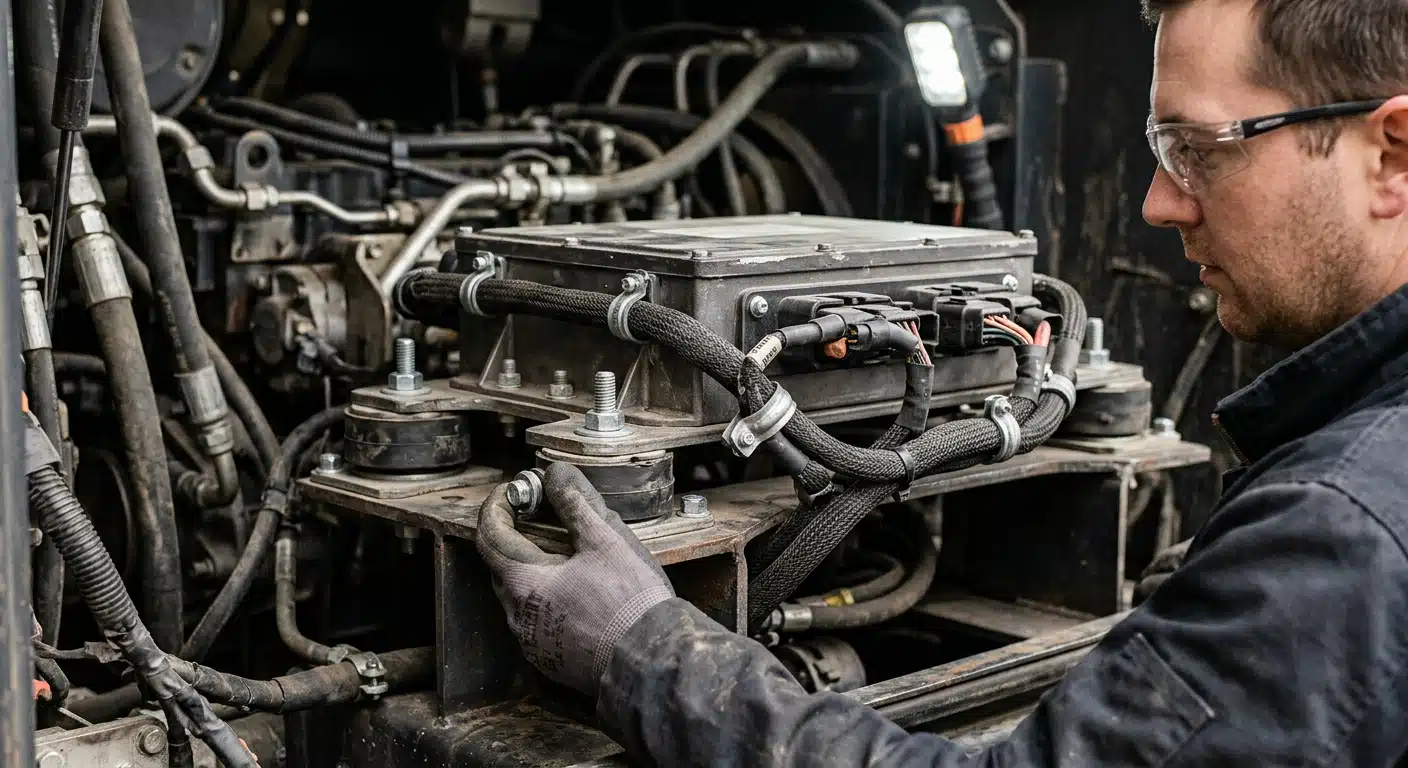
In practice, vibration dampening solutions protect sensitive electrical components from repeated movement. Electrified excavators make this issue more important than older mechanical layouts.
Power electronics, sensors, connectors and control modules need stable mounting. They also need protection from impact, cable strain and resonance.
Vibration Dampening Solutions Start With Measurement
In practice, vibration dampening solutions should be based on the machine’s real behaviour. Guesswork can lead to mounts that look sensible but miss the main vibration source.
Excavators create changing loads through digging, slewing, tracking and attachment movement. Each operating mode can affect electrical components differently.
Engineered Installations Group’s vibration data analysis helps identify dynamic risks. That evidence can guide better mounting and dampening decisions.
A clash around the damper that is hard to see on a sketch can be captured as a damper fit scan.
Why Electrified Excavators Raise the Stakes
Electrified excavators may carry extra sensors, power electronics and battery control systems. These components can be more sensitive than traditional hardware.
Repeated vibration can loosen connections, damage circuit boards and fatigue cable supports. It can also create intermittent faults that are difficult to diagnose.
Dampening should therefore form part of the design, not a late repair.
Electrical Component Protection Depends on Mounting Location
Electrical component mounts are part of that protection, not a separate afterthought.
In practice, electrical component protection begins with choosing the right location. A convenient mounting spot may expose components to vibration, heat or service damage.
The location should be assessed for structure, cable path, access and environmental exposure. Mounting near high movement areas can shorten component life.
3D services can support component design and scanning. This helps fit electrical systems into real machine geometry.
Cable Strain Can Damage Reliable Components
A component can be well made and still fail through poor cable support. Cable movement can transfer vibration into terminals and connectors.
Harness routing should include strain relief, bend radius and support spacing. These details help protect both the component and the connected wiring.
Good electrical component protection treats the cable and module as one system.
Structural Review Helps Confirm Mounting Strength
Vibration dampening is not only about rubber mounts or isolators. The supporting bracket and frame must also suit the expected load.
Weak brackets can amplify movement instead of reducing it. Poor geometry can create stress around fasteners or welded areas.
The mount, the cable and the structure have to agree as a damper system fit.
Engineered Installations Group’s finite element analysis service supports heavy vehicle and industrial systems. Structural review can support stronger mounting decisions.
Dampening Needs the Right Balance
Too much movement can create cable strain. Too little isolation can transfer harsh vibration into the component.
The right balance depends on the component mass, location and operating conditions. It also depends on inspection and service access.
A practical solution should protect the component without creating new maintenance problems.
System Design Keeps Protection Consistent
Mount stress checks belong with the load case when the question is structured.
Sensitive electrical components rarely operate alone. They connect to power supply, control logic, communication wiring and safety systems.
A dampening solution should not compromise electrical architecture. It should support the wider machine layout and maintenance process.
System design can help keep component placement, harness routing and access aligned. That reduces the chance of isolated fixes causing new issues.
Documentation Helps Diagnose Intermittent Faults
Vibration-related faults can be hard to repeat. Documentation helps technicians understand component location, mounting type and cable route.
Records can also show whether a later modification changed the original vibration protection. That matters when equipment works across demanding mine sites.
Without documentation, maintenance teams may replace components without solving the root cause.
Field Support Matters During Installation and Commissioning
Engineered Installations Group can review that mount work from the Forrestdale or Paget workshop.
Vibration data checks come before a mount for vibration dampening solutions is treated as ready.
Dampening measures need proper installation. Incorrect fasteners, poor torque control or changed cable paths can weaken the design.
On-site services can support installation, commissioning and maintenance. Field checks help confirm that design intent survives real equipment conditions.
Commissioning should include physical inspection and operational testing. It should also confirm that cables do not pull or rub during machine movement.
A later look at the mount once the machine has left the workshop is a damper field check.
Maintenance Should Look for Early Warning Signs
Early warning signs include loose connectors, worn sleeving, bracket movement and unexplained electrical faults. These issues should not be ignored.
A small vibration issue can become a larger fault. Regular inspection helps find that fault before the component is left until it fails.
For electrified excavators, these checks should sit inside the maintenance routine.
Inspection should also compare the component against its original installed position. Fresh witness marks can show movement before a fault appears.
Where a machine has recently changed attachment, duty or site conditions, vibration exposure may also change. That makes post-change checks useful.
These checks do not need to slow every service event. They simply make vibration risk visible before it damages electrical component protection.
The Engineering Team Supports Practical Component Protection
Engineered Installations Group works with heavy vehicle, mining and industrial systems. Its service mix covers design, analysis, field support and electrical integration.
That combination suits vibration dampening work. Sensitive components need both engineering judgement and practical installation discipline.
The best result is a protected system that remains accessible, documented and serviceable.
FAQ
What Are Vibration Dampening Solutions?
They are design measures that reduce harmful movement reaching sensitive components. They can include mounting choices, isolation, routing and structural support.
Why Do Electrified Excavators Need Special Attention?
Electrified excavators can carry more sensors, control modules and power electronics. These components can be sensitive to repeated vibration and cable strain.
Repeat clamps and dampers for the same machine class can be held as damper repeat kits.
Can Vibration Cause Intermittent Electrical Faults?
Yes. Vibration can loosen connectors, fatigue terminals or damage wiring. The fault may appear only under certain operating conditions.
What Should Maintenance Teams Inspect?
They should inspect mounts, fasteners, cable supports, sleeving, connectors and rub points. Any change from the baseline condition should be reviewed.
What to Settle Before the Job Moves
The vibration dampening solutions decision is easier when the asset, the site rule and the access limit are written down first. A verbal brief tends to drop the one constraint that changes the fit.
Pair that note with electrical component protection. The field step should use the same names for parts, mounts and records, or the workshop file and the site file drift apart.
Records That Should Travel With the Asset
A useful vibration dampening solutions pack names what was checked, what was fitted and what still needs a site look. It is a work record, not a promise that the asset will perform a certain way.
Photos of access, a parts list and the open questions on electrical component protection are more useful than a slogan on the cover sheet.
Where Workshop Work Stops and Field Work Starts
Some preparation for vibration dampening solutions can be finished at Forrestdale or Paget. What remains depends on the asset as it sits on the day, not on a generic bench claim.
That is why electrical component protection still needs a named handoff. The person who did the workshop work and the person who sees the asset on site should be looking at one list.
Questions Worth Asking Before Fabrication
Ask where the vibration dampening solutions work will be inspected, who signs the site record, and which part has to stay reachable. Those answers change the job more than a generic label.
What that protection job includes should be read as a damper scope list before the mount is called ready.
Use electrical component protection as the second check, not as a new topic. If the second check disagrees with the first sketch, stop and revise the sketch before metal or film is cut.
If cable strain is the open question, reach out to us with the mount points.
Vibration dampening solutions only help if they match the machine’s real movement. A mount that looks tidy can still pass shock into a connector. Cable support matters as much as the damper itself. Inspection should look for fretting, loose clamps and a path that was never meant to move. Write what was measured and what was fitted, so the next visit is not starting from a blank sheet.



Leave A Comment