
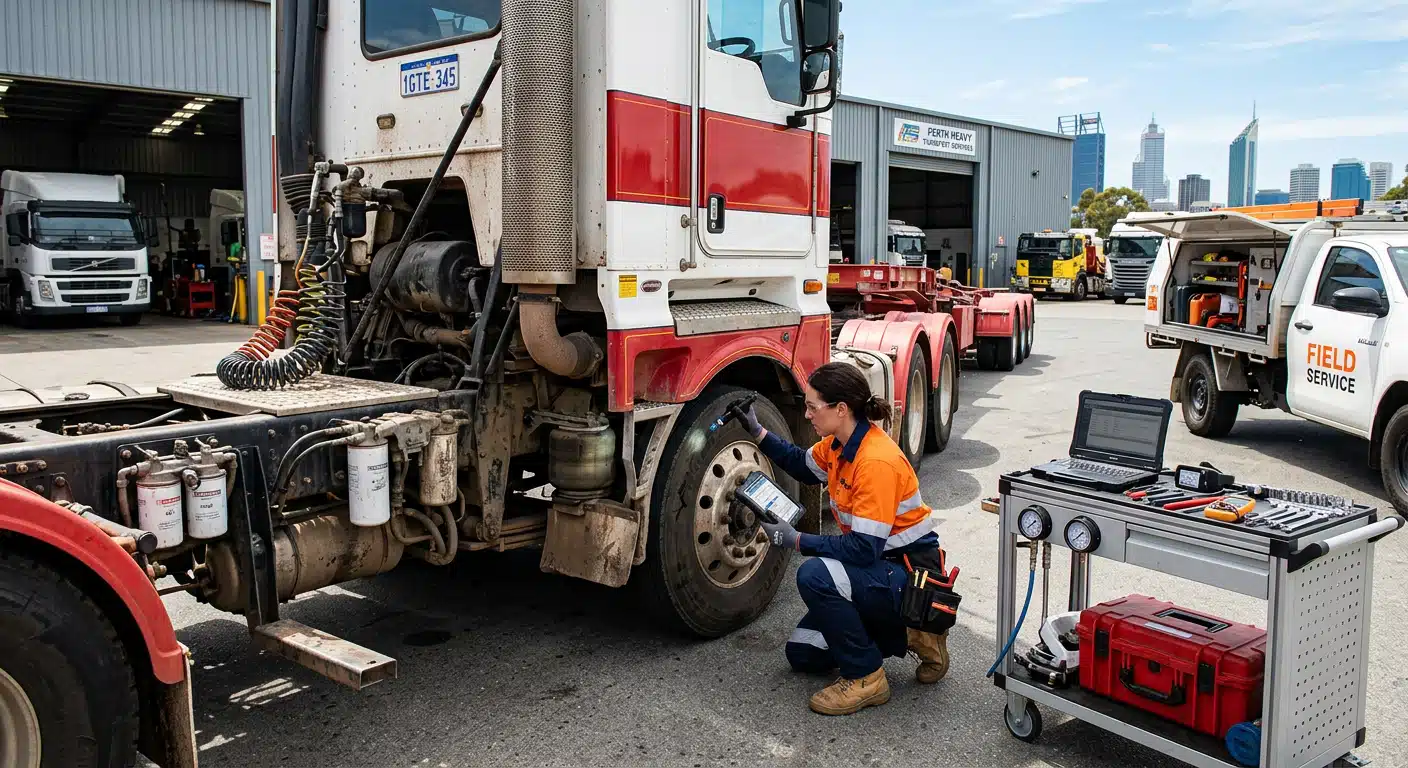
WA mining transport support often depends on what happens before equipment reaches a remote site. Perth Metro field services can help inspect, prepare, modify and coordinate heavy vehicles before they enter demanding operating environments.
A metro presence is useful because many mining and transport decisions need fast access to equipment, suppliers, technicians and documentation. Distance from site does not remove the need for practical, hands-on support.
WA Mining Transport Support Needs a Metro Operating Base
WA mining transport support is not limited to remote mine sites. Many important decisions happen in the Perth metro area, where vehicles are serviced, modified, staged or reviewed before they move into regional work.
A local operating base helps technical teams inspect assets, confirm fitment details and prepare parts before site mobilisation. It also gives fleet managers a clearer path for planned work that should not be left until the vehicle is already in the field.
Engineered Installations Group supports heavy vehicle, mining and industrial clients from a Western Australian base. That presence helps connect workshop capability with site based requirements.
A loom on a transport vehicle is transport loom prep, finished before the vehicle is sent regional.
Why Metro Support Still Matters for Remote Industries
Remote industries still rely on metro infrastructure. Parts, fabrication, labour coordination, specialist equipment and engineering review often sit closer to the city than the mine site.
A Perth metro support model can bring those resources together before the asset travels. This can reduce unnecessary delays when the vehicle reaches a shutdown window or operational site.
The value is not just convenience. It is the ability to resolve avoidable problems before they become remote site issues.
Perth Metro Field Services Help Separate Workshop and Site Work
Site vehicle support covers the WA mining transport job once the vehicle has left the Forrestdale workshop.
Perth Metro field services are useful when a client needs clarity about where a task should be completed. Some jobs are better handled in a workshop. Others need field access because the asset, commissioning environment or site rule makes workshop work impractical.
A metro team can help make that distinction early. It can inspect the equipment, review the scope and confirm what should be staged before the site visit.
Engineered Installations Group’s metro services support planned technical work in the Perth area. On-site services support field installation, commissioning, maintenance and site based work.
Better Decisions Before Mobilisation
A pre-mobilisation inspection can answer questions that are hard to solve remotely. These include mounting locations, access constraints, cable routes, tray layouts, signage visibility and whether additional parts are needed.
Those answers can change the work plan. A task that looks simple on paper may need fabrication, extra labour or engineering review.
Finding that out in Perth is usually easier than discovering it after equipment has travelled.
Perth Support Can Improve Heavy Vehicle Fit-Out Quality
The Perth step, when needed, is Perth metro vehicle prep before regional travel.
Mining and transport vehicles often need fit-outs that must survive vibration, dust, heat, payload demands and daily operator use. A metro support base can help build these systems with better control.
Storage, signage, wiring and mechanical adjustments should be planned around how the vehicle will actually work. That means considering access, maintenance, exposure and site identification requirements.
ID marks on that same vehicle are transport fleet marks, planned to the asset.
Engineered Installations Group’s trays and toolboxes service supports durable storage and vehicle fit-out requirements. The decals and signage service supports safety marking, identification and fleet branding for rugged environments.
Fit-Outs Should Not Be Treated as Cosmetic Work
A tray, toolbox or decal package can affect safety, usability and site records. Poor placement may slow operators down or make site identification harder.
A good fit-out considers how workers use the vehicle, where tools need to sit and how markings will remain visible under mine-site conditions.
Metro support gives these details a better chance of being checked before the asset leaves Perth.
Technical Support Is Stronger When It Includes Engineering Review
Some mining and transport tasks need more than installation labour. Electrical architecture, harness routing, system integration, vibration exposure and structural loads may need engineering input.
A Perth metro presence can support this review because technical staff can access assets and workshop resources more easily. This helps connect design decisions with practical fitment.
Engineered Installations Group’s electrical engineering solutions confirm capability around electrical systems and harness design. Vibration data analysis can support dynamic risk review.
Storage on a mine support ute, when the job includes it, is transport tray prep around the real tools.
Connecting Design With Field Reality
Engineering decisions can fail when they are separated from the asset. A design may look sound until a technician checks available space, vibration exposure or access for future maintenance.
Engineered Installations Group plans Perth metro preparation from the Forrestdale workshop.
Metro inspections help reduce that risk. They allow the design and installation teams to test assumptions before site work begins.
This is especially useful for fleets where the same issue may appear across several vehicles.
Labour Support Can Be Coordinated More Cleanly From Perth
WA mining and transport clients often need temporary labour for shutdowns, backfill or project work. A metro base can help coordinate those requirements before technicians move into the field.
The planning should confirm which roles are required, what documents are needed and whether the work needs workshop preparation first.
Engineered Installations Group’s labour hire services support industrial and technical personnel. These personnel can assist with engineering projects, heavy vehicle systems and site support.
Role Fit Is More Important Than Speed Alone
Fast labour supply is useful only if the technician fits the job. A site may need auto electrical skill, heavy duty mechanical experience, fabrication capability or installation support.
The wrong match creates delays, even if the person arrives quickly. A metro coordination process can help match the role to the scope and confirm readiness before mobilisation.
Repeat fittings on the same vehicle class can be held as transport fit-out kits.
That protects both the client and the field team.
What Perth-Based Clients Should Expect
Perth based mining and transport clients should expect a support partner to explain how metro work and site work connect. The provider should be able to identify what can be inspected locally, what needs field access and what needs engineering review.
They should also expect clear documentation. Any installation, fit-out or technical change should be recorded so future maintenance teams understand what was done.
A metro presence is most valuable when it turns local access into better preparation, not when it is treated as a simple address.
FAQ
Why Do Mining Clients Need Perth Metro Field Services?
Perth Metro field services help inspect, prepare and coordinate equipment before remote site work. This can reduce delays caused by missing parts, unclear scopes or access issues.
What Work Can Be Handled Before a Vehicle Goes to Site?
Common pre-site work includes fitment checks, wiring review, tray and toolbox planning, safety signage, parts staging, documentation and some workshop controlled installations.
Does Metro Support Replace Remote Site Support?
No. Metro support prepares and stages work where practical. Remote site support is still needed when the asset, commissioning environment or site rules require field attendance.
How Does Metro Support Help Fleet Consistency?
It allows repeated vehicle requirements to be checked against a common standard. This can improve consistency across storage layouts, signage, wiring paths and installation records.
Extra hands for a shutdown on those vehicles, when needed, are transport install crews booked against the task list.
What to Settle Before the Job Moves
The WA mining transport support decision is easier when the asset, the site rule and the access limit are written down first. A verbal brief tends to drop the one constraint that changes the fit.
Pair that note with Perth Metro field services. The field step should use the same names for parts, mounts and records, or the workshop file and the site file drift apart.
Records That Should Travel With the Asset
A useful WA mining transport support pack names what was checked, what was fitted and what still needs a site look. It is a work record, not a promise that the asset will perform a certain way.
Photos of access, a parts list and the open questions on Perth Metro field services are more useful than a slogan on the cover sheet.
Where Workshop Work Stops and Field Work Starts
Some preparation for WA mining transport support can be finished at Forrestdale or Paget. What remains depends on the asset as it sits on the day, not on a generic bench claim.
That is why Perth Metro field services still need a named handoff. The person who did the workshop work and the person who sees the asset on site should be looking at one list.
Questions Worth Asking Before Fabrication
Ask where the WA mining transport support work will be inspected, who signs the site record, and which part has to stay reachable. Those answers change the job more than a generic label.
If that fit-out adds weight, a transport load check belongs against the vehicle spec.
Use Perth Metro field services as the second check, not as a new topic. If the second check disagrees with the first sketch, stop and revise the sketch before metal or film is cut.
If the Perth metro prep is the next step, speak with us and send the vehicle details.



Leave A Comment