
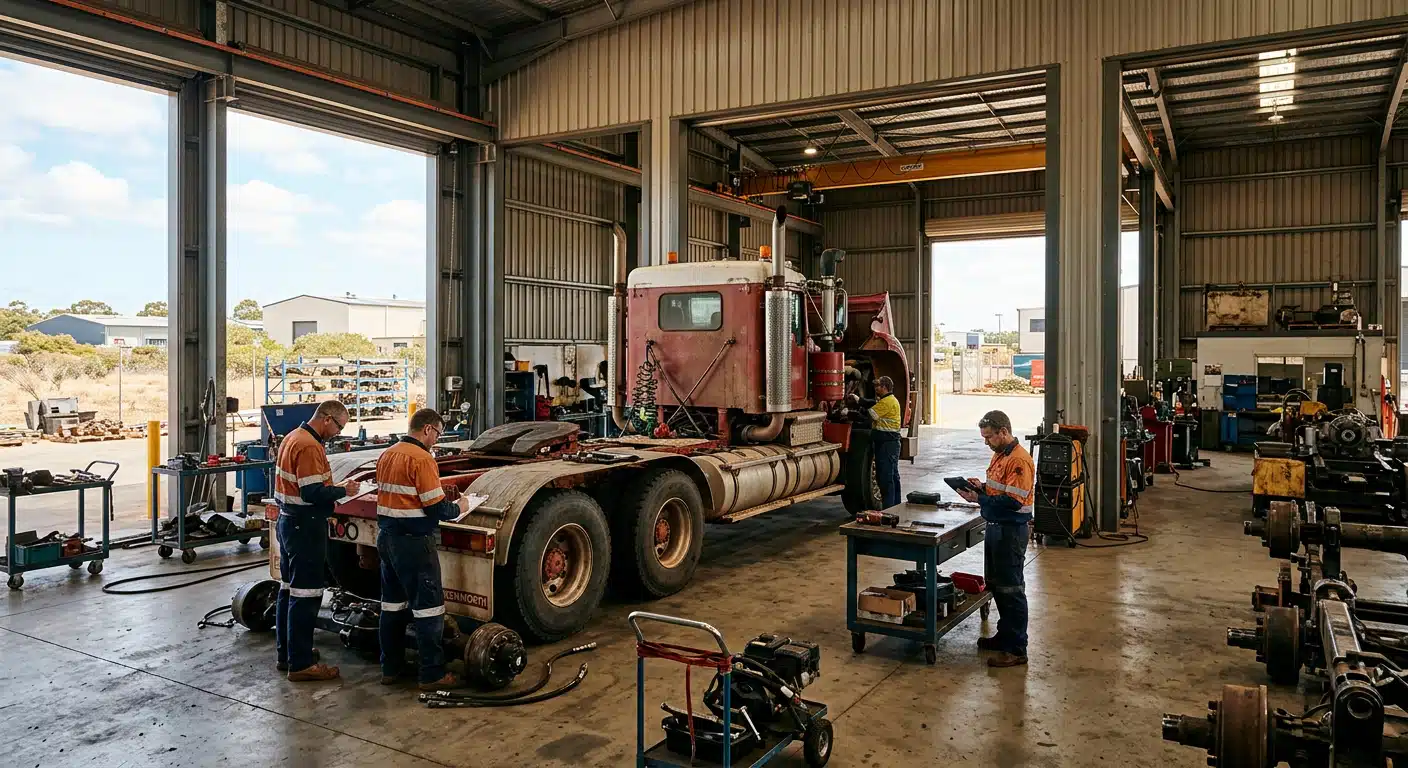
A Forrestdale workshop gives Perth mining and transport clients more than a convenient address. It creates a practical base for inspection, fabrication, integration, field support and controlled workshop work before equipment returns to site.
That matters when vehicles, machinery and electrical systems cannot be treated like standard road equipment. A minor delay can affect rosters, site access, parts procurement and the work window.
Local Workshop Access Supports Faster Technical Decisions
A Perth mining support programme works best when technical decisions can be made close to the equipment. Drawings, measurements and faults are easier to resolve when technicians can inspect the asset directly.
In practice, the engineering team operates from a Western Australian base that supports clients across mining, transport and heavy vehicle environments. The value of that base is not only speed. It is the ability to connect workshop capability with field realities.
Forrestdale sits within practical reach of Perth industrial corridors, transport depots, fabrication suppliers and mine support operations. That location helps teams move between workshop planning and client equipment without turning every technical query into a long mobilisation exercise.
A loom or powered accessory on the same vehicle is workshop loom work, planned before the cable is cut.
Why Distance Affects Engineering Quality
Distance changes how decisions are made. If the nearest capable workshop is too far from the asset, small uncertainties can be left unresolved until they become larger site problems.
A local inspection can confirm mounting space, cabling paths, clearance around moving parts, corrosion exposure, load conditions and access limitations. These details are easy to miss in a remote-only review.
A Forrestdale workshop gives Perth-based operators a better chance of catching those details before a job reaches the installation stage.
Forrestdale Workshop Capability Helps Bridge Metro and Site Work
Work that cannot be finished in the Forrestdale workshop goes out as field installation.
Mining and transport equipment often moves between depot, workshop and remote operating areas. A workshop in the Perth metro area gives support teams a staging point before technicians travel to site or before equipment heads back into service.
For mechanical, electrical and fit-out tasks, that staging point matters. Workshop preparation can reduce uncertainty around parts, tooling, drawings and installation sequencing.
Clients that need metro services can use a local base for planned inspections and component preparation. When work requires field deployment, the same knowledge can support on-site services.
That continuity is useful for Perth mining support. The person planning the work and the person executing it should not be solving different problems.
Common Tasks That Benefit From a Local Base
A local workshop can support pre-installation measurements, electrical fault diagnosis, bracket checks and tray fitment checks. It can also support component preparation, safety decal planning and validation of site-ready kits.
Where a tray or mount clash is hard to see on a sketch, a workshop fit scan captures it before metal is cut.
It can also support asset intake before scheduled shutdowns. This gives clients a clearer view of what can be completed in the workshop and what must be handled on site.
For fleet teams, that distinction can protect shutdown windows and reduce unnecessary site labour.
Perth Mining Support Requires More Than Quick Turnaround
Perth-based mining support often starts with a Perth metro fit-out before the vehicle leaves for site.
Fast turnaround is helpful, but speed alone does not make a workshop valuable. Perth mining support also needs repeatable technical judgement, site awareness and the discipline to document what has changed.
A heavy vehicle or mine support asset may need electrical integration, mechanical adjustment, signage, toolbox fitment or custom kit preparation. Each task can affect site records, maintainability and future service access.
For example, a wiring change needs suitable routing and protection. A tray or toolbox fit-out needs access, payload and durability considered. A decal or signage package needs visibility, placement and site identification requirements checked before installation.
This is where workshop proximity and engineering discipline meet. The workshop helps the technical team see the asset. The process helps the team make changes that can be supported after delivery.
Local Workshop Support Can Reduce Remote Site Disruption
Remote sites are not the best place to discover preventable issues. When a Forrestdale workshop handles preparation before mobilisation, fewer decisions need to be made under site pressure.
A local base can help confirm whether parts are available, whether fabrication is required and whether a field technician needs specialist equipment. It can also highlight when a job should be handled as workshop work rather than rushed into a site visit.
Repeat fittings on the same vehicle class are easier to control as repeat install kits.
This supports safer planning. It also helps clients separate urgent breakdown responses from planned improvement work.
Engineered Installations Group plans this preparation from the Forrestdale workshop.
Engineered Installations Group’s service mix includes labour hire, field support and workshop-backed capability. That combination is useful when a client needs both skilled people and a practical technical base.
Better Preparation for Field Crews
Field crews perform better when the job scope is clear. A workshop can pre-check drawings, package components, label parts and confirm installation notes before a technician leaves Perth.
That preparation reduces wasted travel, duplicated labour and calls back to base for missing details. It also gives clients a cleaner record of what was prepared before site work began.
In mining and transport, clean preparation is often the difference between a planned task and an avoidable delay.
A Workshop Also Supports Fabrication, Kits and Vehicle Fit-Outs
Some tasks need more than diagnostic space. They need controlled fabrication, measurement and fitment. A local Forrestdale workshop can support this kind of work before a vehicle returns to site.
For example, customised kits can be prepared to suit repeat fleet requirements. Trays and toolboxes can be planned around vehicle use, storage needs and exposure to harsh conditions.
Those workshop tasks create consistency. A fleet operator does not want every vehicle treated as a one-off experiment when the actual requirement is repeatable, serviceable and documented.
Storage on those vehicles, when the job includes it, sits with workshop tray builds around the real tools.
When the same base supports multiple vehicles, patterns become easier to identify. Common fitment issues, recurring wear points and preferred layouts can be fed back into the next build.
Why Location Still Matters in a National Service Model
Australia-wide engineering support still needs local anchors. A business can service remote and regional clients, but the quality of that support depends on where people, tooling and technical knowledge are based.
For Perth clients, Forrestdale is close enough to support practical workshop access while still connecting to broader WA mining and transport operations. For Queensland or interstate work, it forms part of a wider support model rather than a disconnected branch.
That local presence can matter during planning meetings, asset reviews and urgent technical clarifications. It gives clients a place where equipment and decisions can meet.
What Perth Clients Should Look for in a Workshop Partner
A useful workshop partner should be able to explain the practical limits of the job. It should know when workshop work is appropriate and when site work is necessary.
The client should also look for evidence of relevant capability. This includes heavy vehicle understanding, electrical and mechanical service pathways, documented work processes and the ability to support follow-up questions after delivery.
Asset marks on the same vehicle are workshop fleet marks, planned to the asset rather than added later.
A local address is not enough on its own. The value comes from combining location with the technical capability to inspect, prepare, build and support work that has to survive Australian operating conditions.
FAQ
Why Does a Forrestdale Workshop Matter for Perth Mining Support?
It gives Perth-based clients a practical local base for inspection, preparation and workshop-controlled work before equipment moves to site. This can reduce avoidable mobilisation problems.
Is Workshop Work Always Better Than on-Site Work?
No. Some work must happen on site because the equipment, operating environment or commissioning requirement is site-specific. Workshop preparation is most valuable when it reduces uncertainty before that field work begins.
What Types of Clients Benefit From a Local Engineering Workshop?
Mining operators, transport fleets, industrial contractors and heavy vehicle teams can benefit when assets need inspection, modification, electrical support, fit-outs or scheduled preparation.
Can Local Workshop Support Help With Urgent Faults?
It can help when the fault can be inspected locally or when parts and preparation are needed before a field response. True site-critical faults still need the right field support pathway.
What to Settle Before the Job Moves
The Forrestdale workshop decision is easier when the asset, the site rule and the access limit are written down first. A verbal brief tends to drop the one constraint that changes the fit.
Extra hands for a shutdown window, when the workshop job needs them, are workshop install crews booked against the task list.
Pair that note with Perth mining support. The field step should use the same names for parts, mounts and records, or the workshop file and the site file drift apart.
When the Forrestdale inspection list is set, contact us before the asset is booked back to site.



Leave A Comment