
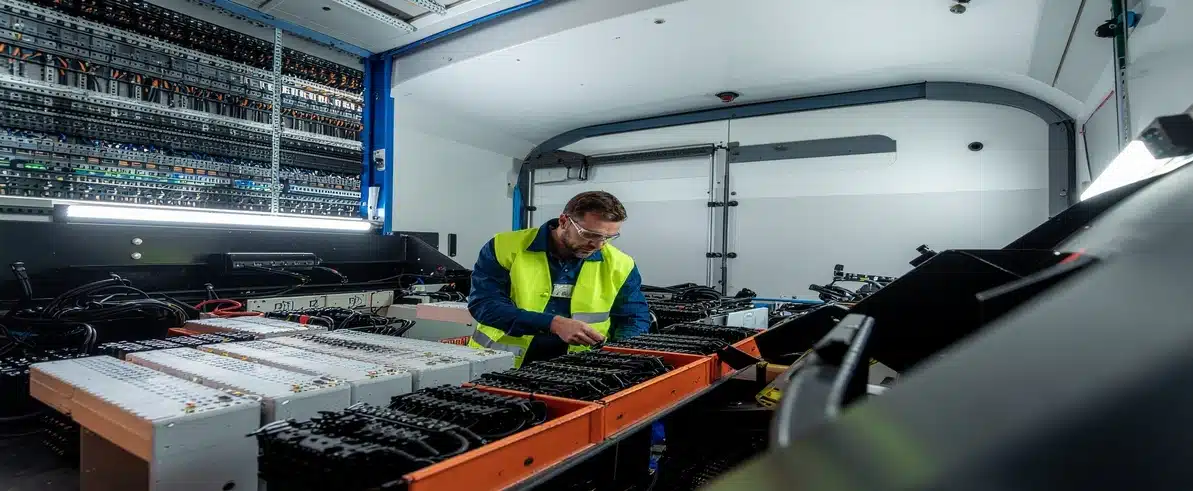
The installation of autonomous mining safety systems represents the most technically demanding category of vehicle fitout work in the resources sector. Unlike standard minespec fitouts, where the primary challenge is meeting a defined set of equipment and documentation requirements, autonomous system installations must satisfy stringent functional safety requirements, interface with complex vehicle control architectures, and be validated through testing protocols that go well beyond a standard pre-start inspection. For mining operators deploying autonomous fleets, and for the contractors responsible for preparing vehicles for autonomous operations, understanding the complexity and compliance requirements of this work is essential.
The Growth of Autonomous Systems in Australian Mining
Australian mining has been at the forefront of autonomous system deployment globally, driven by the productivity, safety, and labour availability considerations that make the technology compelling in large-scale, remote operations. The Pilbara iron ore operations in Western Australia have operated the largest fleets of autonomous haul trucks in the world for over a decade, and the technology continues to expand, into underground mining, autonomous drilling, and the integration of autonomous and manned vehicle operations in mixed fleets.
The safety implications of this expansion are significant. In a fully autonomous zone where no manned vehicles operate, the interaction management challenge is primarily one of system reliability and obstacle detection capability. In mixed operations, where autonomous haul trucks operate in proximity to manned service vehicles, light vehicles, and personnel, the safety architecture must address a broader set of interaction scenarios, and the vehicle-level hardware required to support safe interaction becomes a mandatory fitout requirement for every manned vehicle entering the autonomous operating zone.
This requirement for interaction management hardware on manned vehicles is what drives the demand for autonomous mining safety system installation capability in the vehicle fitout sector. Every light vehicle, service truck, and ancillary vehicle operating in or adjacent to an autonomous zone must carry approved, correctly installed interaction management hardware before it is permitted to enter the area.
Types of Autonomous Mining Safety Systems
Autonomous Haulage System Safety Architecture
The safety architecture of an autonomous haulage system (AHS) is a layered structure that combines vehicle-level sensing and control systems with site-level traffic management infrastructure. At the vehicle level, autonomous haul trucks are equipped with radar and LIDAR obstacle detection systems, GPS-based positioning hardware, and the onboard control systems that execute path planning and speed control. The safety architecture ensures that the vehicle responds predictably and safely to all obstacle detection events, communication losses, and system fault conditions.
For manned vehicles operating in areas where AHS trucks are active, the vehicle-level hardware required typically includes an AHS-compatible transponder or interaction management module, an operator display that shows the vehicle’s status within the AHS traffic management system, and in some cases an emergency stop interface that allows the operator to request a system-wide stop. The installation of this hardware must meet the AHS operator’s specific technical requirements, which vary between system providers, and must be documented to the standard required for interaction zone access approval.
Interaction Management Between Autonomous and Manned Vehicles
Interaction management systems for manned vehicles operating in autonomous zones are designed to ensure that the autonomous system’s traffic management software has accurate, real-time awareness of every manned vehicle’s position and status within the zone. The in-vehicle hardware, typically a transponder, a GPS receiver, and a communications module, transmits the vehicle’s position and speed to the traffic management system at regular intervals, allowing the system to account for the manned vehicle’s presence when planning autonomous truck movements.
Installation of interaction management hardware must achieve the antenna placement required for reliable GPS acquisition and communications link quality in the specific operating environment of the autonomous zone. In open cut pit environments, GPS signal availability and communications coverage can vary significantly between different areas of the pit, and installation teams must verify that the installed hardware achieves the required performance across the full range of locations the vehicle will operate in.
The calibration and configuration of interaction management systems is equally important. Systems that transmit incorrect position data, due to GPS antenna errors, timing offsets, or configuration errors, can create dangerous situations where the traffic management system has an inaccurate picture of manned vehicle locations. Configuration must be verified against the AHS operator’s specifications and validated through testing before the vehicle is cleared for zone access. EIG works directly with AHS operators and system providers to ensure that interaction management installations meet the specific technical requirements of each site’s autonomous system.
Emergency Stop and Remote Override Systems
Emergency stop systems for autonomous operations allow personnel, operators, or control room staff to command an immediate stop of autonomous vehicles in the event of an emergency. The vehicle-level hardware for emergency stop capability includes the activation interface (physical button, wireless transmitter, or control room command), the circuit architecture that translates an activation command into a vehicle stop, and the fail-safe design elements that ensure the system responds correctly even in the event of power loss or communication failure.
Installation of emergency stop systems for autonomous operations must meet the functional safety requirements that govern safety-critical vehicle systems. In Australia, this typically means designing and installing to the requirements of IEC 61508 (Functional Safety of Electrical/Electronic/Programmable Electronic Safety-related Systems) and its sector-specific derivatives. The wiring architecture must ensure that the stop function cannot be defeated by a single point of failure, and the installation must be formally certified by a qualified functional safety engineer before the system is accepted for use.
Autonomous Vehicle Safety: Compliance Framework
The regulatory framework governing autonomous vehicle safety in Australian mining is a combination of general workplace health and safety legislation, mining-specific regulations, and operator-developed autonomous system deployment standards. In Queensland, Recognised Standard 19 addresses the management of risks from light vehicle and mobile plant interactions, and provides a framework within which autonomous system deployment requirements sit. In Western Australia, the Department of Energy, Mines, Industry Regulation and Safety has published specific guidance on autonomous mining equipment, covering the safety case requirements that operators must satisfy before deploying autonomous systems.
At the operator level, each mine site that deploys autonomous equipment develops its own autonomous system deployment standard, which defines the specific hardware requirements for manned vehicles operating in or adjacent to autonomous zones, the interaction protocols that govern manned vehicle entry and exit from autonomous areas, and the training and competency requirements for operators of manned vehicles in these areas. These operator-level standards are the most immediate compliance requirement for vehicle fitout providers, as they define exactly what must be installed and how it must be documented.
Remote operations compliance adds another layer to the documentation requirements for autonomous system installations. Changes to vehicle configuration that affect the interaction management capability of a manned vehicle in an autonomous zone are typically managed through the mine’s management of change process, requiring engineering review, risk assessment, and formal approval before the modified vehicle is permitted to enter the zone.
Remote Operations Compliance: Documentation and Certification
The documentation requirements for autonomous mining safety system installations are more extensive than for standard minespec fitouts, reflecting the higher consequence of system failures in autonomous operations. A complete documentation package for an autonomous system installation typically includes the system design documentation, installation records, component specifications and certifications, commissioning test results, and formal engineering sign-off.
System design documentation for interaction management installations must demonstrate that the installed hardware meets the AHS operator’s technical specifications, that the installation approach complies with the relevant standards, and that all interfaces between the new hardware and the vehicle’s existing systems have been correctly defined and implemented. This documentation is submitted to the AHS operator as part of the manned vehicle approval process and must be of sufficient quality to support a technical review by the operator’s engineering team.
For installations involving emergency stop or safety-critical control systems, formal certification by a qualified functional safety engineer is required. This certification verifies that the installation meets the applicable functional safety standards and that the safety integrity level achieved by the installed system is appropriate for the risk it is controlling.
Mining Safety Installation Best Practice
Pre-Installation Engineering Review
Best practice for autonomous mining safety system installations begins with a thorough engineering review before any hardware is ordered or installation work commences. This review covers the AHS operator’s technical specifications for the specific system being installed, the interface requirements between the new system and the vehicle’s existing architecture, the available mounting positions for all system components, and the documentation format required for the approval submission.
The pre-installation engineering review identifies potential integration challenges, incompatible interfaces, constrained mounting positions, electrical system deficiencies, at the stage where they can be addressed through design decisions rather than installation rework. Time invested in this review is consistently returned through reduced rework, faster commissioning, and smoother approval processes.
Installation Quality Requirements
The quality requirements for autonomous mining safety system installations reflect the safety-critical nature of the systems involved. Wiring must be carried out to the applicable automotive and industrial wiring standards, with conductor sizing, insulation type, and loom protection appropriate for the operating environment and the circuit’s function. Connectors must be selected for the IP rating, current rating, and vibration resistance required at each installation location.
Mechanical installation of system components must ensure that mounting is secure against the vibration, shock, and thermal cycling conditions of the operating environment. Components that loosen, shift, or fail mechanically in service can cause not only system failures but also secondary damage to adjacent vehicle systems. The workshop installation services at EIG’s Perth facility provide the controlled environment, specialised tooling, and quality management processes needed to carry out autonomous system installations to the standard required by AHS operators.
Commissioning and Validation
Commissioning and validation of autonomous mining safety systems is a structured process that systematically verifies the function of every installed component and interface. Functional testing covers normal operation, alert and warning activation, emergency stop function, and recovery from fault conditions. Fault simulation verifies that the system responds correctly to abnormal conditions including power loss, communications failure, and sensor fault.
Performance validation, confirming that the system achieves the detection accuracy, response time, and communications reliability specified by the AHS operator, is carried out using test protocols that simulate the actual operating conditions of the autonomous zone. For interaction management systems, this includes verifying that position reporting accuracy meets the AHS operator’s requirements across the range of GPS signal conditions encountered in the operational area.
Mine Automation Fitout: Integration With Vehicle Platforms
Mine automation fitout at the vehicle level requires integration with the vehicle’s CAN bus, power architecture, and physical structure in ways that preserve the vehicle’s OEM certification and operational capability. CAN bus interfaces must use the correct identifiers and communication protocols for the specific vehicle platform, and must not create communication conflicts with the vehicle’s existing control systems.
Power architecture for autonomous safety systems must ensure that safety-critical functions, emergency stop capability, interaction management communications, remain operational across the full range of vehicle electrical conditions, including engine-off and low-battery states where applicable. In some autonomous system architectures, safety-critical hardware is powered from a dedicated battery bank that is isolated from the vehicle’s main electrical system to ensure that safety functions cannot be compromised by vehicle electrical faults.
For vehicles already in service at a mine site that require autonomous system fitout before they can enter a newly established autonomous zone, on-site installation support provides the engineering capability to complete mine automation fitouts in the field without requiring vehicles to return to a central workshop.
EIG’s Autonomous Mining Safety System Installation Capability
Engineered Installations Group brings the engineering rigour, documentation discipline, and practical installation experience required to deliver autonomous mining safety system installations that meet the technical and compliance requirements of major Australian AHS operators. The team’s experience across interaction management hardware, emergency stop systems, and integration with AHS-equipped vehicle platforms enables efficient, compliant installations that support rather than delay autonomous zone deployment programmes.
Every autonomous system installation is supported by a complete documentation package structured to meet the approval requirements of the target AHS operator, and is carried out under a quality assurance process that provides the evidence needed to support formal engineering certification where required.
Conclusion
Autonomous mining safety system installation is a category of work that demands the highest level of engineering rigour, compliance awareness, and documentation discipline in the vehicle fitout sector. Systems that are correctly installed, thoroughly tested, and completely documented provide the safety assurance that autonomous zone operations depend on. Those that fall short of this standard create approval delays, operational restrictions, and, in the worst case, safety risks in environments where the consequences of system failure are unacceptable. To discuss autonomous mining safety system installation for your fleet or operation, call +61 (08) 9419 7318 to speak with the EIG team.



Leave A Comment